
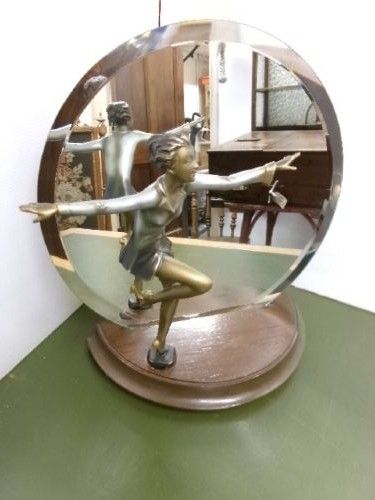

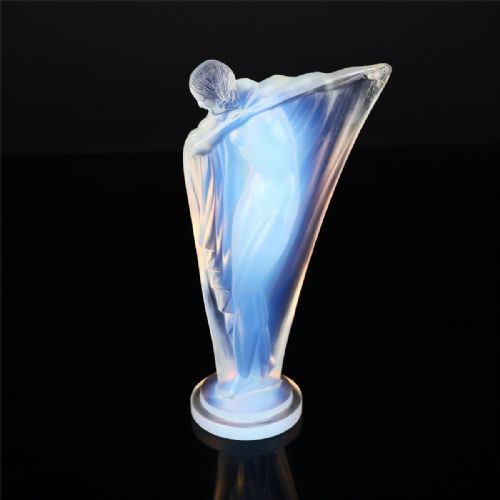


Art Deco Mantle Sculpture
These art deco mantle sculpture pieces bring bold geometry and dynamic figures into a room, offering the sharp modernist style collectors want.
Art Deco Mantle Sculpture
An art deco mantle sculpture brings the energetic silhouettes of the early twentieth century directly onto a shelf or fireplace. These objects take the form of dancing ladies, animal figures, and figural groups designed to catch the eye.
The versions most commonly met here combine metal figures with heavy stone bases like marble or onyx. They span the decades from nineteen ten through the nineteen thirties, capturing the shift toward streamlined elegance.
How they were made
Foundries cast figures in bronze or spelter, frequently applying cold paint, patination, or silver plating to enrich the surface detail. Spelter offers a lighter, more malleable metallic alternative that makers utilised for decorative statuary.
Artists mounted these metal and opalescent glass figures onto substantial bases of marble, alabaster, or onyx. This pairing provides the necessary weight and contrast central to the style.
Three cold painted budgerigars share a leafy branch.
What varies in quality
The choice of base material and the harmony between the sculpture and its stone support dictate the overall success of the piece. Well-balanced proportions and heavy, unblemished marble elevate the work above standard production.
Etling·Lucille Sevin·Le Manceau·Bruno Zach·Ugo Cipriani·Bohumil Rezl
The Art Deco Mantle Sculpture Glossary
- Spelter
- A zinc alloy commonly used as a cost-effective substitute for bronze in decorative figures. It takes patination and paint well.
- Opalescent glass
- A milky, translucent glass that diffuses light and displays shifting colour tones. It appears frequently in French decorative objects.
- Cold painted
- A method where paint is applied to a metal object without being fired in a kiln. This finish requires careful handling to preserve the pigment.
- Alabaster
- A fine-grained, translucent stone used for carved sculptures and bases. It allows light to penetrate slightly beneath the surface.
Art Deco Mantle Sculpture: Frequently Asked Questions
What materials make up these sculptures?
Makers utilised a range of materials including bronze, spelter, marble, onyx, alabaster, and opalescent glass. Metal figures frequently sit atop heavy stone plinths.
Paint and silver plating also appear on the surface of the figures to enhance the visual impact.
How do I date an art deco piece?
Dating relies on the materials, stylistic markers, and recorded production periods spanning from nineteen ten to the nineteen thirties. Pieces from this era lean heavily into geometric forms and stylised movement.
Makers often signed the metal casting or the stone base, providing a clearer indication of origin.
Where should I place a mantle sculpture?
These sculptures suit prominent flat surfaces like mantelpieces, sideboards, and display shelves where their silhouettes can be seen clearly. The heavy stone bases provide natural stability for domestic placement.
Keep them away from direct heat sources to protect the painted and patinated metal surfaces.
Are these pieces French in origin?
Many examples originate from France, reflecting the European centres of design during the period. French studios produced notable glass figurines and metal animals.
Other works reflect broader international participation from makers working within the same stylistic vocabulary.