
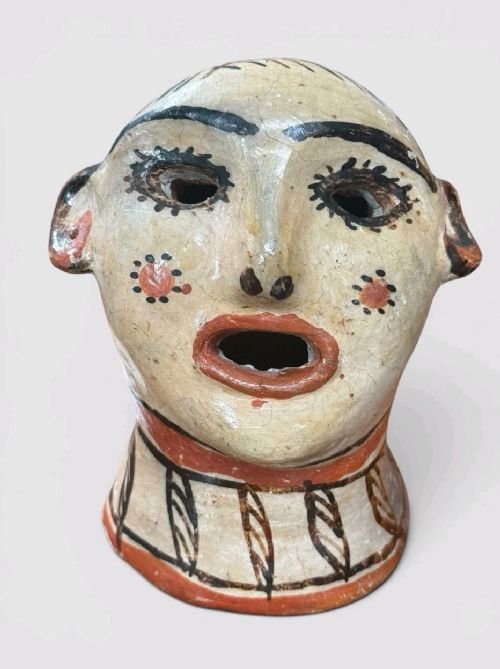
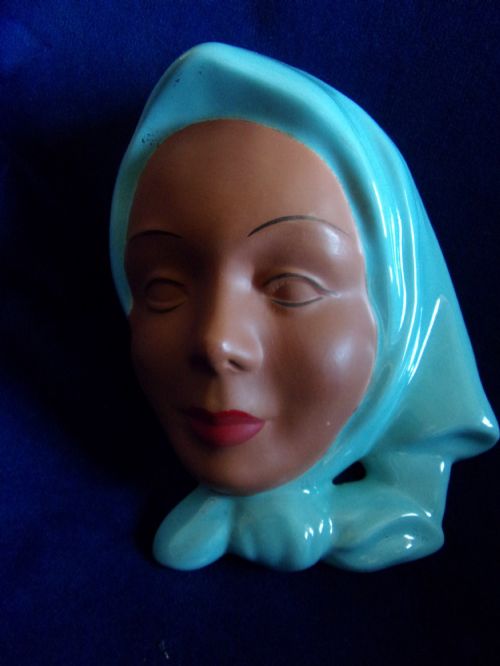


Vintage Ceramic Head Sculpture
These vintage ceramic head sculpture examples bring character to a room, ranging from classical forms to Art Deco studies.
Vintage Ceramic Head Sculpture
A vintage ceramic head sculpture captures the human likeness through modelled clay, terracotta, and earthenware forms. These pieces take various shapes, from standalone figurines to wall masks and portrait busts.
Buyers browsing this selection encounter styles spanning Art Deco, Art Nouveau, and Neoclassical periods, alongside Peruvian folk art. Works originate from different European makers and global traditions, reflecting varied sculptural approaches.
The most common pieces on this page are terracotta busts and ceramic figures dated across the twentieth century and the nineteenth century. These sculptures represent both anonymous folk traditions and signed works by named artists.
Materials and construction methods
Some works incorporate metallic finishes, such as bronzed terracotta, to emulate metal casting while retaining the warmth of fired earth. Wall sculptures feature hollow or flat-backed construction for secure hanging, whilst busts stand independently or upon integrated bases.
Even unpretentious terracotta girls from nineteen thirty manage to look slightly disapproving of modern interior design choices.
Assessing sculptural quality
The distinction between standard works and superior examples lies in the finesse of the modelling and the sensitivity of the facial expression. Master sculptors captured subtle musculature and personality in the clay, whereas lesser pieces rely on mechanical symmetry.
The application of glaze, slip pigment, or paint also defines quality, with hand-painted surfaces showing deliberate brushwork rather than flat, uniform coverage. Signed works by recognised modellers demonstrate a higher degree of artistic intent and studio execution.
Gilbert Privat·Benedicto·Georges Morin·Bohumil Rezl
The Vintage Ceramic Head Sculpture Glossary
- Terracotta
- A porous, unglazed or glazed baked clay used extensively for sculptural busts and figures. This reddish-brown earthenware forms the base material for many nineteenth and twentieth-century pieces.
- Slip Pigment
- Liquid clay mixed with colouring agents, applied to the surface of a sculpture before firing. It provides smooth, matte colouration across earthenware forms.
- Wall Masque
- A decorative sculptural relief depicting a human face, designed specifically for hanging on a wall. These pieces often date from the Art Deco period.
- Earthenware
- Porous pottery fired at relatively low temperatures, forming the primary ceramic body for many figurines and wall sculptures.
Vintage Ceramic Head Sculpture: Frequently Asked Questions
What is a ceramic bust?
A ceramic bust is a three-dimensional sculptural portrait depicting a subject from the chest or shoulders upward, modelled in clay and fired.
These pieces capture facial expressions and hairstyles, serving as decorative art objects for display on tables, shelves, or mantels.
How do I style a wall masque?
A wall masque is designed to hang directly on vertical surfaces, functioning as a focal point within a room's decorative scheme.
Because these pieces project outward from the wall, ensure they are mounted securely using appropriate hardware suited to their weight.
How are terracotta and earthenware different?
Terracotta is a specific type of porous, brownish-red earthenware that is typically fired at lower temperatures.
While all terracotta is earthenware, the term terracotta specifically denotes the characteristic reddish clay body seen in classical and Art Deco busts.