

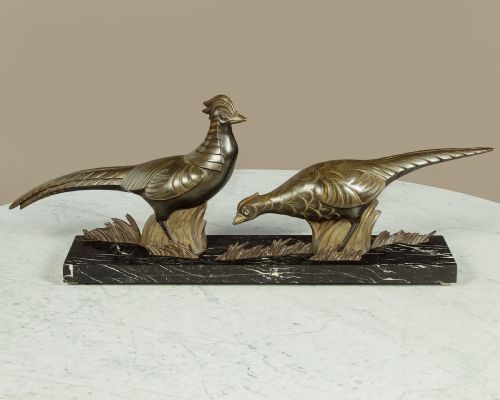






1930s French Spelter Sculpture
These 1930s French spelter sculpture pieces capture the bold geometry and kinetic energy of Art Deco design, bringing unmistakable period character to a mantelpiece or desk.
1930s French Spelter Sculpture
When you examine 1930s French spelter sculpture, you find figures and groups anchored in the dominant Art Deco aesthetic of the period. The selection on this page ranges from single dancers and athletes to animal groups, bookends, mantel clocks, and table lamps.
Most examples originate from the 1930s, though earlier influences from the 1910s and 1920s appear across the broader group of objects. These works depict human figures, birds such as golden pheasants and seagulls, and large cats like panthers.
The dominant format places a metal figure upon a substantial stone base, most frequently black marble or onyx. This combination provides the physical weight and stability necessary to support the taller figural compositions.
How They Were Made
The primary material is spelter, a zinc-based alloy that permitted makers to cast intricate details at a lower cost than solid bronze. These figures typically received a patinated metal finish to simulate more expensive metals or to create tonal depth.
Sculptors mounted these metal castings onto bases hewn from marble or onyx, securing them with threaded rods or screws visible on the underside. Glass and brass elements also appear in functional forms like table lamps and clock sets.
Materials documented across the available pieces include marble, onyx, brass, glass, bronze, and patinated metal.
What Varies in Quality
The choice and preparation of the mounting base also separate standard examples from finer ones. Solid blocks of veined marble or layered onyx provide a more satisfying physical presence than simpler wooden or composition plinths.
P. Sega·Geo Maxim·H. Bal·Chiparus
The 1930s French Spelter Sculpture Glossary
- Spelter
- A zinc alloy commonly utilised as a substitute for bronze in decorative figures and decorative hardware. It takes patination well but is softer than bronze.
- Patinated metal
- Metal treated with chemicals or heat to alter its surface colour and tone. This finish creates aged or metallic effects on the sculpture body.
- Art Deco
- A design style spanning the 1920s and 1930s characterised by streamlined forms, geometric patterns, and stylised representations of figures and animals.
- Onyx
- A banded variety of chalcedony used extensively for decorative bases in clock sets and figural groupings. Its translucent layers add visual depth to the mounting.
1930s French Spelter Sculpture: Frequently Asked Questions
What is spelter metal?
Spelter is a zinc-based alloy that manufacturers utilised widely for decorative sculptures and lamps during the early twentieth century. It allowed for sharp casting detail while remaining more economical than bronze.
Over time, this material develops a distinct surface character that responds well to patination. Collectors appreciate the alloy for enabling the widespread production of accessible Art Deco figures.
How do I identify a 1930s French sculpture?
These pieces typically display the geometric lines, stylised drapery, and dynamic movement characteristic of the Art Deco period. Subjects often include dancers, athletes, and sleek animals mounted on heavy stone bases.
Signatures or foundry marks on the base or figure offer further clues to origin. The combination of patinated metal and marble remains a strong indicator of French manufacture from this era.
Are these sculptures made of bronze?
Most of these pieces are cast in spelter rather than bronze, though patinated finishes can make them look similar at a glance. Spelter is softer and lighter than bronze.
Examining the underside or areas of wear usually reveals the lighter, greyish metal beneath the surface patina. This distinction is standard for decorative figures produced at this price point in the period.
How should I clean my sculpture?
Dust the surface gently with a soft, dry cloth to prevent accumulation in the crevices of the casting. Avoid using water, abrasive cleaners, or chemical solvents that could strip the original patina.
Stone bases benefit from occasional wiping with a damp cloth followed immediately by dry buffing. Maintaining a stable indoor environment protects both the metal and the marble from moisture damage.