






Antique Big Cat Figure
These antique big cat figure examples capture powerful feline forms in bronze, marble, and ceramic across nineteenth and twentieth-century European schools.
Antique Big Cat Figure
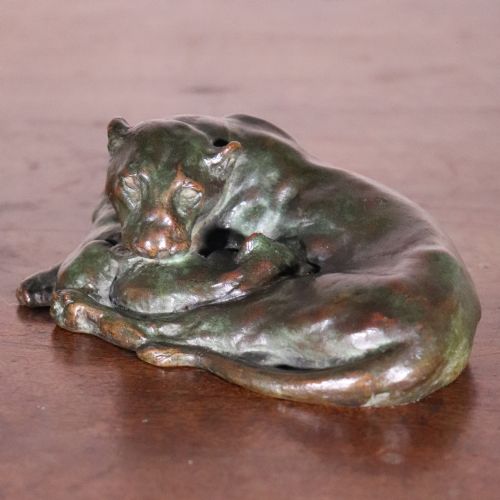
An antique big cat figure represents the pinnacle of animal sculpture, capturing the muscular tension and predatory grace of tigers, lions, leopards, and panthers. When you search for this phrase, you encounter dynamic studies ranging from Victorian Staffordshire earthenware to sophisticated Art Deco patinated metalworks.
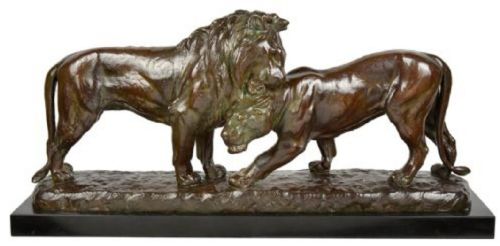
The pieces on this page lean heavily toward nineteenth-century French animalier bronzes and twentieth-century Viennese or Art Deco interpretations. You will find majestic pairs of lionesses, stalking panthers set on carved marble bases, and fierce tigers captured in mid-hunt.
Originating predominantly from French, Austrian, and British workshops, these sculptures utilise diverse media to express naturalistic detail or stylised geometric forms. They serve as striking mantelpiece ornaments, cabinet figures, and commanding desk sculptures.
How They Were Made
Foundries and studios shaped these sculptures using traditional casting and modelling techniques, most notably the lost-wax method for bronze works. Artisans applied cold-painting directly onto metal surfaces or utilised enamel glaze and hand-applied paint on ceramic and earthenware bodies.
Many heavy bronze studies were mounted onto turned or carved bases of marble and alabaster to provide structural stability and visual contrast. Foundries such as Siot and Barbedienne employed skilled chiselling and patination to achieve realistic fur textures and subtle tonal variations.
Listings feature works spanning the nineteenth and twentieth centuries, uniting French animalier bronzes, Art Deco spelter, and Victorian Staffordshire earthenware.
What Varies in Quality
The standard of a casting is defined by the crispness of anatomical detail, from the tautness of the feline sinew to the realistic rendering of facial expressions. Superior pieces display masterly proportions and sensitive handling of texture, whereas lesser examples lose definition in the fur and paws.
The quality of the patination or painted surface dictates the visual depth of the piece, with professional cold-painting retaining its original polychrome subtlety over decades. Furthermore, the integration of the figure with its natural stone base, such as veined marble or alabaster, separates standard production runs from distinguished foundry editions.
Franz Bergman·Michel Decoux·Georges Gardet·Louis Riche·E.Drouot
The Antique Big Cat Figure Glossary
- Animalier
- A nineteenth-century artistic movement dedicated to the realistic portrayal of animals, particularly wild beasts. Practitioners focused on capturing authentic anatomical movement and behaviour.
- Cold-Painted Bronze
- A technique where bronze sculptures are painted with polychrome oil paints and left unheated or gently warmed to set the pigment. This delicate finish is prone to chipping if handled roughly.
- Spelter
- A zinc alloy frequently used as a cost-effective alternative to bronze in the production of decorative figures. It is softer than bronze and often finished with a bronze-effect patination.
- Patination
- The chemical or natural process that alters the surface colour of metal over time through oxidation and applied acids. A deliberate patina enhances the sculptural depth and highlights fine details.
Antique Big Cat Figure: Frequently Asked Questions
How do I clean an antique bronze big cat?
Dust the surface gently with a soft, dry brush to prevent the accumulation of abrasive particles.
Avoid using water, chemical solvents, or metal polishes, as these substances strip the historic patina and damage cold-painted finishes.
Were these figures meant for desks or displays?
Many sculptures served as substantial desk ornaments, paperweights, or decorative mantel centrepieces for studies and libraries.
Larger marble-mounted pieces were designed specifically for display on pedestals, cabinets, or large sideboards.
How can I tell a bronze from a spelter figure?
Bronze objects feel noticeably heavier, possess a resonant ring when lightly tapped, and show a warm golden-brown metal beneath surface wear.
Spelter is lighter, more brittle, and tends to reveal a dull grey metal underneath chipped paint or patination.
What does Art Deco style mean for these animals?
Art Deco big cat figures embrace stylised geometry, sleek streamlined contours, and dramatic posturing rather than strict anatomical naturalism.
These pieces often pair patinated metals with contrasting materials like alabaster or stepped marble bases.