
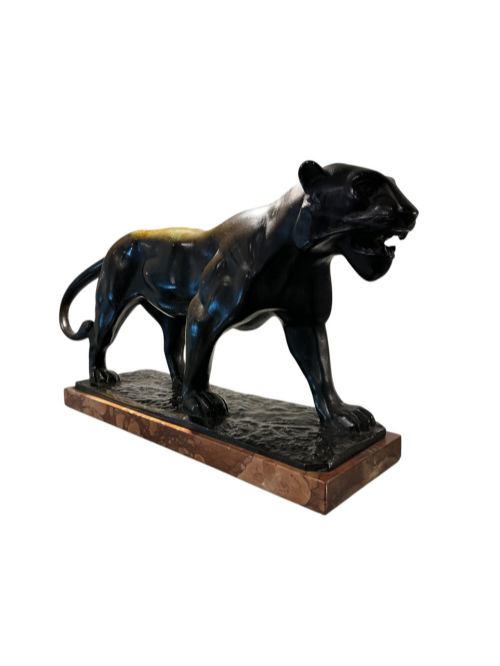
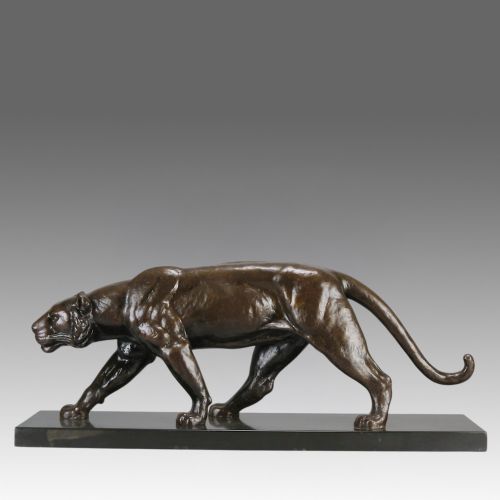


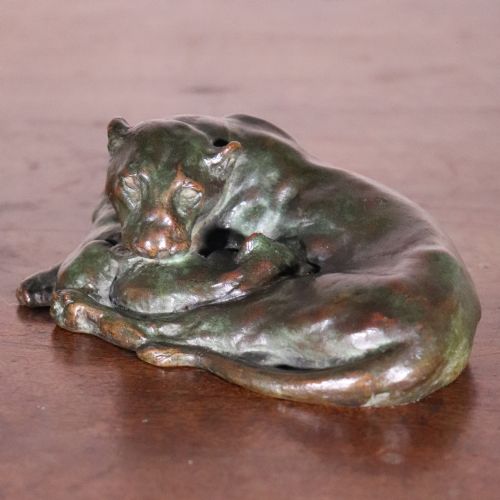


Bronze Panther Statue
A bronze panther statue captures raw predatory power in metal, combining French artistry with striking decorative presence.

Bronze Panther Statue
A bronze panther statue embodies the dynamic energy of big cats, heavily represented by Art Deco and animalier creations. These pieces span from the nineteenth century into the mid-twentieth century, capturing creatures in motion, repose, or dramatic encounters.
Most examples encountered here sit upon polished stone bases, particularly black marble or onyx, which elevate the heavy metalwork. The forms range from small desk ornaments to large sculptural groups involving pythons or human figures.
French workshops dominate the origin of these sculptures, bringing together naturalist observation and stylised modern geometry. Buyers will find both hot-cast bronze and patinated spelter interpretations reflecting the tastes of their respective decades.
How they were made
Foundries utilised the lost-wax casting method for finer bronze pieces, allowing precise muscular definition and fur texture to emerge from the molten metal. Spelter served as a more affordable metallic alternative during the Art Deco period, often receiving dark patination to mimic heavier bronze.
Bases required precision stone masonry, cutting and polishing marble or onyx slabs to support the weight of the metal animals. Sculptors applied patinas ranging from deep black and brown to silvered finishes, altering the reflective qualities of the surface.
Cats stalk through the decades here accompanied by an occasional python, python-slayer, and hunting dog.
What varies in quality
The precision of the casting distinguishes superior works, where muscle tension, claw detail, and facial expression remain sharp rather than softened by worn moulds. Foundry marks and artist signatures provide tangible evidence of origin, separating mass-produced decorative items from master bronzes.
The integration between the metal sculpture and its stone base indicates overall craftsmanship, with premium pieces featuring custom-fitted marble rather than generic slabs. The depth and durability of the patination further dictate the visual impact of the piece over time.
Alexandre Ouline·Anna Vaughn Hyatt Huntington·Chiparus·Clovis Masson·Michel Decoux·Georges Gardet·Siot Foundry·Barye·Barbedienne·Andre-Vincent Becquerel
The Bronze Panther Statue Glossary
- Animalier
- A nineteenth-century artistic movement dedicated to the realistic portrayal of animals, particularly predators in motion. Sculptors in this tradition studied anatomy extensively at menageries.
- Lost-wax casting
- A traditional method of metal casting where a molten metal is poured into a mould that has been created by means of a wax model. This technique permits intricate undercuts and fine surface detail.
- Spelter
- A zinc alloy frequently used as a cost-effective substitute for bronze in decorative sculptures, especially during the Art Deco era. It takes patination well but is softer and lighter than true bronze.
- Patination
- The chemical treatment or natural ageing process that alters the colour and finish of a metal surface. A controlled patina adds depth and highlights anatomical contours.
- Onyx
- A banded variety of chalcedony quartz commonly utilised for decorative sculptural bases during the early twentieth century. Its translucent layers provide a striking contrast to dark patinated metal.
Bronze Panther Statue: Frequently Asked Questions
What is the difference between bronze and spelter?
Bronze is a durable copper alloy that holds sharp sculptural detail and develops a stable historical surface over decades. Spelter is a softer zinc-based metal that feels lighter and shows a different weight distribution.
Examining the underside often reveals the paler grey metal of spelter if the dark surface coating has worn away.
Why are most panthers mounted on marble?
Marble bases provided stability for heavy metal sculptures and added architectural presence to domestic interiors. Black marble and onyx were favoured during the Art Deco period to create a high-contrast foundation.
This mounting style also protected furniture surfaces from the heavy metal feet of the sculptures.
How can I tell Art Deco pieces apart?
Art Deco panther sculptures emphasise streamlined geometries, stylised musculature, and sleek postures that reflect 1920s and 1930s design principles. Nineteenth-century animalier works focus instead on raw anatomical realism and dramatic struggle.
Base materials and signature styles help anchor pieces firmly within their respective decades of production.