




Dark Bronze Panther Statue
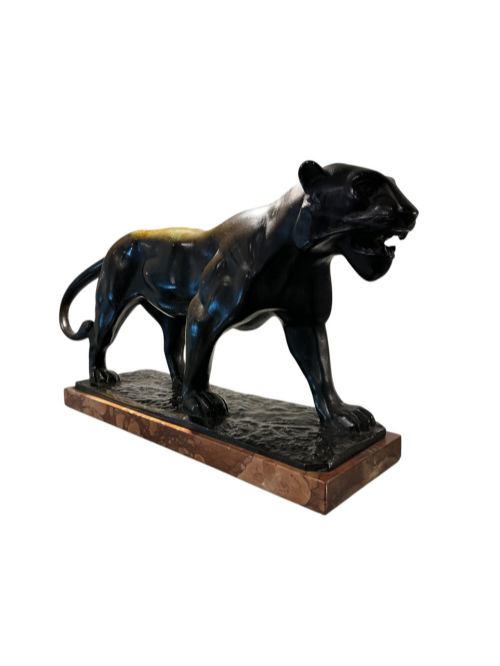
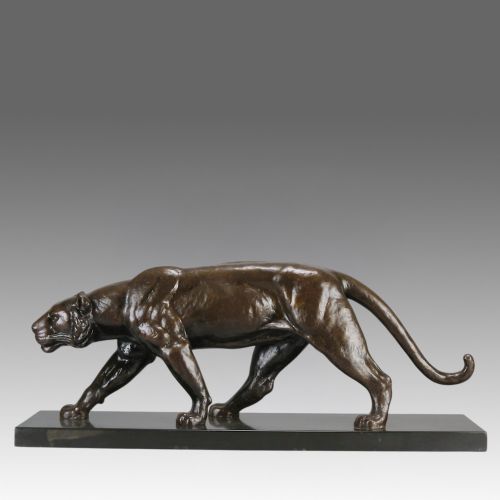
A dark bronze panther statue brings raw feline grace into a room, capturing sleek muscle and predatory tension in cast metal.
Dark Bronze Panther Statue
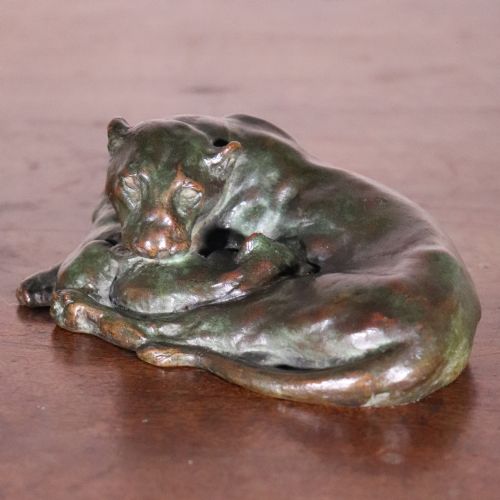
When you search for a dark bronze panther statue, you encounter powerful sculptural representations of big cats modelled with intense realism or stylised geometric lines. These works capture the creature in stalking, resting, or pouncing postures that reflect a fascination with wild animals.
The pieces on this page span the nineteenth century and twentieth century, with strong representation from the Art Deco period. You will find both solid bronze and patinated metal figures mounted upon contrasting stone plinths.
French animalier works dominate the selections, alongside twentieth century interpretations and occasional neoclassical mythological groupings. Sculptors focused closely on anatomy, texture, and movement to convey the raw energy of the panther.
Materials and methods
Foundries utilised traditional casting methods to shape molten metal into intricate feline forms, often applying dark patination to emphasise muscular definition and shadow. Hot cast bronze and spelter served as the primary metallic mediums for these sculptures.
Mounts and bases were frequently fashioned from polished black marble, providing a heavy foundation that anchors the dynamic weight of the animal. Artists signed their work directly into the metal before or after the finishing stages.
At least one panther shares its bronze stage with an unexpected python companion.
The markers of distinction
The richness and depth of the patination distinguish finer examples from simpler production pieces. A well-executed base and a strong compositional balance between the animal and its plinth complete the distinction.
Alexandre Ouline·Anna Vaughn Hyatt Huntington·Clovis Masson·Georges Gardet·Siot Foundry·Barbedienne
The Dark Bronze Panther Statue Glossary
- Animalier
- Art depicting animals, particularly popular among nineteenth century French sculptors who studied live subjects in menageries. These works range from highly academic anatomical studies to stylised modernist interpretations.
- Patination
- The chemical treatment or natural oxidation applied to the surface of bronze to alter its colour. Dark patinations were frequently chosen by makers to simulate the natural coat of a panther.
- Spelter
- A zinc alloy commonly used as a less expensive alternative to bronze for decorative sculptures. It takes patination well but possesses a lighter weight and softer structural strength than bronze.
- Hot cast bronze
- A traditional method where molten bronze is poured into a mould to create a durable sculpture. This technique captures fine details faithfully from the original clay model.
Dark Bronze Panther Statue: Frequently Asked Questions
What is an animalier sculpture?
An animalier sculpture focuses primarily on the realistic or expressive depiction of animals. These works gained immense popularity in nineteenth century Europe.
Artists spent countless hours observing creatures in zoological gardens to master their anatomy and movement.
How do I identify Art Deco style?
Art Deco pieces feature clean geometric lines, stylised forms, and a sense of streamlined modernity. This aesthetic emerged strongly in the nineteen twenties and thirties.
Panthers sculpted in this period often exhibit exaggerated sleekness and are mounted on stepped marble bases.
What is the difference between bronze and spelter?
Bronze is a robust copper alloy prized for its durability and ability to hold fine detail. Spelter is a softer zinc-based metal used for more accessible decorative figures.
Spelter sculptures are generally lighter and require gentler handling than solid bronze casts.
Where should I display a panther statue?
These commanding sculptures suit prominent surfaces such as mantelpieces, heavy sideboards, or dedicated display pedestals. Their strong silhouettes draw the eye naturally within a room.
Ensure the chosen furniture can support the substantial weight of stone and metal combinations.