


1930s Animalier Bronze
These 1930s animalier bronze pieces capture fierce predators and elegant birds in sharp modern lines, bringing intense kinetic energy to any mantelpiece.
1930s Animalier Bronze
When you search for 1930s animalier bronze, you are looking at sculptural representations of wildlife created during the interwar period. These works channel the dynamic spirit of nature through the sleek, geometric lens of the Art Deco movement.
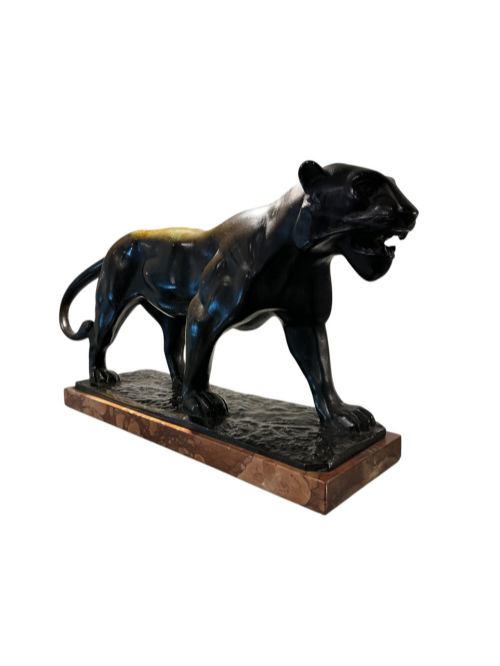
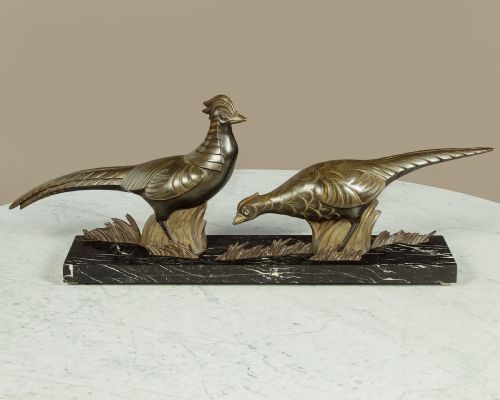
The pieces you are most likely to meet on this page include prowling panthers, hunting dogs, and golden pheasants. They frequently double as practical objects such as bookends or rest upon heavy stone bases.
Originating largely from French workshops, these sculptures range from solid cast metal to mixed media compositions involving stone and marble. They remain enduring favourites for interior styling due to their striking silhouettes.
How they were made
Foundries utilised traditional casting methods to shape molten metal into complex animal forms, employing both bronze and alternative metals like spelter. Silvered and patinated finishes were applied to create varied surface textures and tonal depth.
The resulting figures were then mounted onto substantial bases of marble, onyx, or stone. These plinths provided essential stability while introducing contrasting colours and geometric mass to the compositions.
Materials recorded across the inventory include bronze, spelter, marble, onyx, silvered bronze, and stone bases.
What varies in quality
The distinction between tiers rests upon the crispness of the casting and the fidelity of the animal anatomy. Superior examples capture muscle tension and movement with precision, whereas simpler pieces lose detail in the fur or feathers.
Material selection also dictates the standing of a piece, with genuine bronze commanding greater appreciation than plated spelter. The integration between the sculpture and its marble or onyx base reveals the underlying craftsmanship.
Karl Hagenaur·Chiparus·Michel Decoux
The 1930s Animalier Bronze Glossary
- Animalier
- A nineteenth and twentieth century sculptural genre dedicated strictly to the depiction of animals. Artists focused intensely on capturing the anatomy and kinetic energy of beasts in motion.
- Spelter
- A zinc alloy commonly utilised as a less costly alternative to bronze during the period. It often received patination to imitate the appearance of true bronze.
- Patination
- The chemical or thermal treatment applied to the metal surface to alter its colour and finish. It creates aged tones that highlight the sculptural contours.
- Onyx
- A banded variety of chalcedony used frequently for the decorative bases of interwar sculptures. Its natural strata add colourful contrast to the metal figures above.
1930s Animalier Bronze: Frequently Asked Questions
What is an animalier bronze?
An animalier bronze is a sculpture that focuses specifically on portraying animals, ranging from wild predators to domestic hounds. These works emphasise realistic anatomy combined with the stylised aesthetics of their era.
In the context of the interwar period, these sculptures adopted the sharp, clean lines characteristic of Art Deco design. They served purely as decorative art or functioned as heavy bookends.
How do I identify bronze from spelter?
Bronze is a heavier, more durable copper alloy that typically takes a rich, stable patina over time. Spelter is a softer, zinc-based metal that may show a lighter greyish tone where the surface finish has worn away.
Examining the underside or areas of natural friction often reveals the underlying metal. Bronze pieces also tend to exhibit crisper detail in the casting compared to alternative alloys.
Why are most pieces mounted on marble?
Marble and onyx bases provided essential weight to anchor the metal animal sculptures securely. This structural necessity quickly evolved into a core aesthetic feature of the design.
The contrasting textures of smooth stone and patinated metal defined the visual language of the period. These heavy plinths allowed the sculptures to function safely as standalone art or as functional bookends.
How do I care for these sculptures?
Maintenance requires only gentle dusting with a soft, dry cloth to prevent the accumulation of debris in the recessed details. Avoid using harsh chemical cleaners or polishes that might strip the original patination.
Keeping the pieces away from direct sunlight and excessive moisture preserves the integrity of both the metal and the stone bases. Proper placement ensures the patinated surfaces remain stable for decades.