


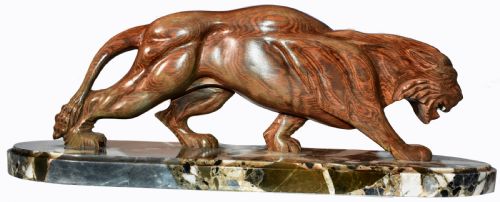
Art Deco Panther Figurine
These art deco panther figurine sculptures capture the sleek predatory grace of the modernist feline, bringing fierce animalier drama to any interior.
Art Deco Panther Figurine
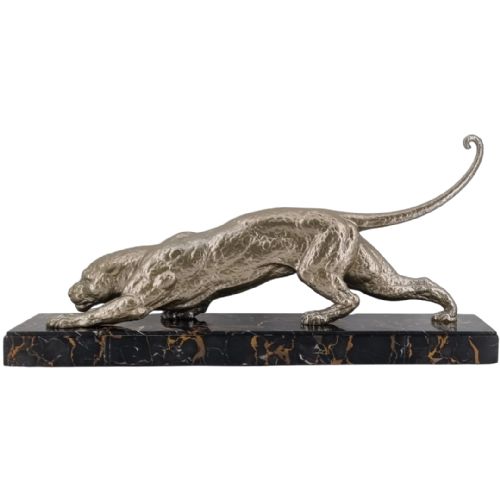
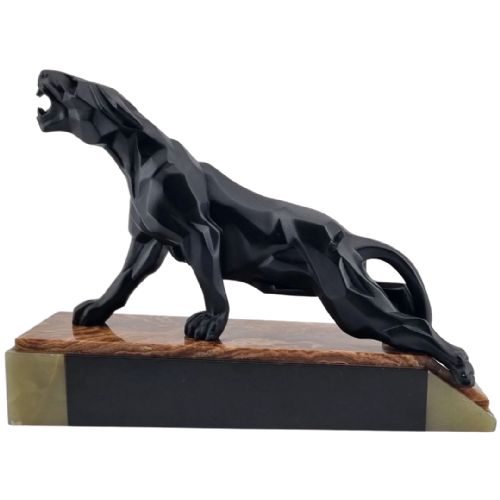
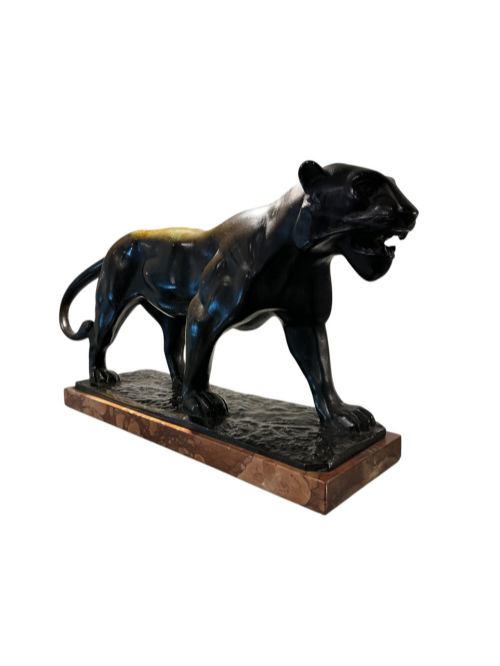
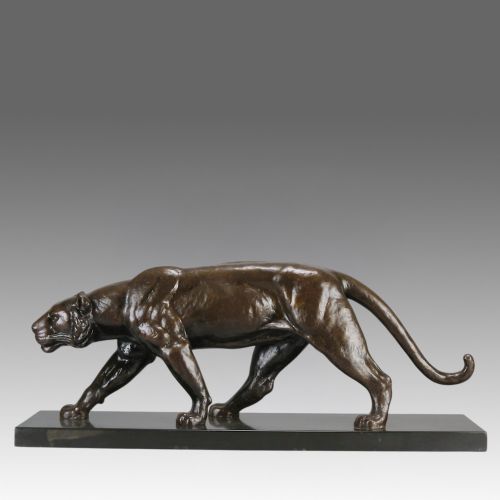
When you search for an art deco panther figurine, you encounter dynamic feline sculptures designed to convey swift movement and predatory tension. The form captures the sleek silhouette of the prowling or resting beast, aligning with the modernist fascination for speed and sleek lines. These pieces serve as striking decorative objects, often positioned as centrepieces on mantelpieces or sideboards.
The most common versions on this page are metal casts mounted on contrasting stone plinths, typically dated across the 1920s and 1930s. You will also find carved wooden interpretations and spelter groups that incorporate human figures alongside the animal. Each object reflects the distinct animalier focus of twentieth-century sculpture.
Origins span French workshops and broader European production, with works reflecting both mainstream commercial manufacturing and named sculptor output. The recurring design motifs emphasise long, stretched bodies, lowered heads, and taut muscles. Understanding these variations helps you map the exact style of feline sculpture before you.
Materials and construction methods
Foundry techniques dominate these listings, utilising hot cast bronze and patinated spelter to shape the animal bodies. Molten metal flows into intricate moulds, capturing muscular definition before undergoing surface patination or silvering. These metal figures receive careful hand-finishing to accentuate the contours of the fur and bone.
Mounting bases rely heavily on heavy decorative stone, specifically black and multi-coloured marble or onyx. Artisans cut, ground, and polished these slabs to provide a stable, contrasting foundation that anchors the heavy metal feline forms. Wood carving offers an alternative organic medium, shaped directly from timber blocks to display natural grain.
Signatures and foundry marks occasionally appear cast directly into the metal or incised into the stone plinth. Artists utilised specialised chisels and patination chemicals to achieve the characteristic dark finish associated with these predatory subjects.
Some panthers prowl across their marble plinths like miniature apex predators on very expensive coffee tables.
Assessing quality in feline sculpture
The choice and execution of the base material significantly influence the overall integrity of the piece. Premium examples feature heavily polished, thick marble or onyx blocks that complement the dynamic weight of the sculpture above. Inferior versions utilise thin or poorly finished stone bases that lack stability and visual balance.
Attribution to known sculptors elevates certain figures beyond anonymous foundry casting. The precision of the signature and the proportion between the animal and its setting demonstrate the skill of the original creator.
Alexandre Ouline·Chiparus·Michel Decoux
The Art Deco Panther Figurine Glossary
- Spelter
- A zinc-based alloy commonly used as a cost-effective alternative to bronze in decorative twentieth-century figures. It accepts patination well to simulate heavier metals.
- Patination
- The surface treatment or chemical coloration applied to metal sculptures. It enhances the visual texture and protects the underlying material from oxidation.
- Animalier
- A nineteenth and twentieth-century artistic genre dedicated primarily to the realistic portrayal of animals. Sculptors in this tradition focused heavily on anatomical accuracy and movement.
- Onyx
- A banded variety of chalcedony quartz frequently utilised for decorative bases in modernist sculpture. Its smooth, translucent layers provide a luxurious contrast to dark metal figures.
- Hot cast bronze
- A traditional foundry method where molten bronze is poured into a mould. This technique preserves fine detail and ensures long-term durability.
Art Deco Panther Figurine: Frequently Asked Questions
What materials are these figurines made from?
The pieces utilise a range of materials including traditional bronze, patinated spelter, and carved timber. Many incorporate solid marble or onyx bases to support the weight of the metal animals.
Foundries selected these media to balance durability with the ability to capture fine surface detail. The contrast between polished stone and dark metal defines the aesthetic of the period.
How do I care for a bronze panther?
Dust the sculpture regularly with a soft, dry cloth to prevent particulate buildup on the metal and stone surfaces. Avoid using harsh chemical cleaners or abrasive polishes that can strip the original patination.
Keep the piece away from direct sunlight and high humidity to protect both the metal finish and the natural stone base. Periodic gentle waxing may be applied to stone sections if required.
Are these sculptures signed by artists?
Certain pieces bear cast signatures or incised marks naming the sculptor or foundry on the body or the base. These signatures provide direct attribution to known designers of the period.
Many other surviving examples remain unsigned, representing commercial studio production from the same era. The absence of a signature does not diminish the decorative quality of the casting.
How can I tell spelter from bronze?
Spelter is generally lighter in weight than bronze and often reveals a greyish or white metal beneath chips in the surface finish. It tends to feel slightly softer to the touch.
Bronze maintains a heavier, denser feel and develops a stable, deep oxidation over time. Expert examination of the underside or mounting points usually clarifies the metal composition.