
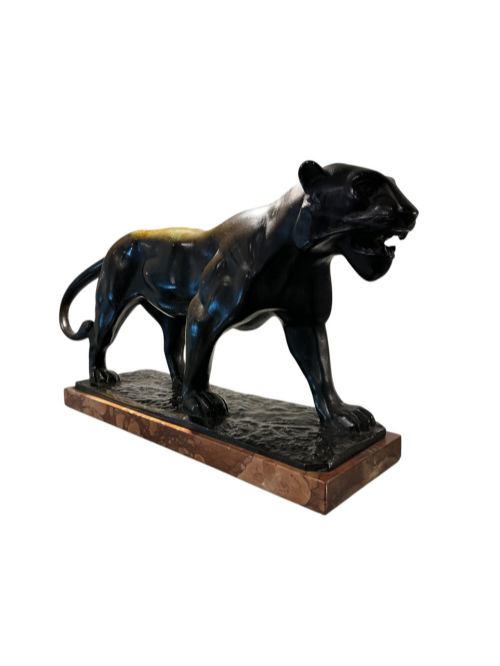


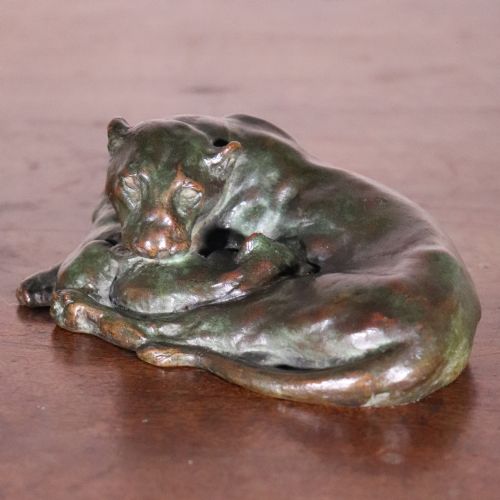

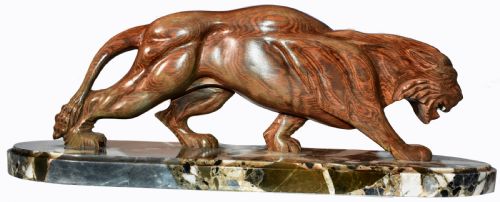
Vintage Feline Sculpture
These vintage feline sculpture pieces bring the sleek power of big cats into your home, offering bold forms that define mid-century display.
Vintage Feline Sculpture
A vintage feline sculpture captures cats, panthers, and lions across various forms including figurines, netsuke, and ceramic figures. These works emerge from distinct eras, spanning the nineteenth century through the nineteen-forties.
The Art Deco style dominates the offerings, alongside French folk art pottery and Japanese Edo influences. Buyers frequently encounter sleek panthers and lionesses mounted on solid marble bases.
Origin points vary from French workshops to traditional carvers, showing both domestic house cats and wild predators. Each piece reflects the sculptural tastes of its specific decade.
How they were made
Artisans shaped these animals using cast bronze, spelter, and carved wood or cherry amber. Metal castings often find themselves paired with contrasting black marble or alabaster bases.
Ceramic and terracotta pieces utilise traditional glazing techniques, seen particularly in French roof tile pottery and feline figures. Wood and amber pieces rely on intricate hand carving to define the musculature.
Makers incorporated inset glass eyes into metal or ceramic bodies to create lifelike expressions. Surface finishes range from polished patinas to matte painted glazes.
Materials across the listings span cast bronze, glazed terracotta, cherry amber, wood, and spelter set on marble bases.
What varies in quality
The refinement of the casting and carving dictates the fidelity of the animal form, separating mass production from master work. Naturalistic proportions and muscular tension reveal the skill of the original hand.
Material pairing influences the overall presence of the object, particularly where heavy stone bases anchor metal or wooden figures. Signed works or identifiable studio pieces carry distinct artistic provenance.
Eugene Emile Borga·Anna Vaughn Hyatt Huntington
The Vintage Feline Sculpture Glossary
- Art Deco
- A design style of the nineteen-twenties and nineteen-thirties characterised by sleek lines and geometric forms. It heavily influences many feline sculptures of this period.
- Spelter
- A zinc alloy used as a substitute for bronze in metal sculptures. It is typically finished with a patina to resemble more costly metals.
- Netsuke
- A small Japanese toggle carved from materials like cherry amber. These miniature sculptures often depict animals in curled, compact postures.
- Animalier
- A nineteenth-century artistic movement focused on the realistic depiction of animals. Sculptors in this tradition studied anatomy closely.
- Terracotta
- Fired clay used for pottery and sculptural figures. Glazed versions appear in French folk art pottery traditions.
Vintage Feline Sculpture: Frequently Asked Questions
What materials are these sculptures made from?
These pieces utilise a range of materials including cast bronze, spelter, glazed terracotta, carved wood, and cherry amber. Many metal and wooden figures are mounted directly onto marble or alabaster bases.
Glass elements also appear, occasionally used for inlaid eyes in ceramic and metal cats. Each medium defines the weight and visual presence of the sculpture.
How do I identify an Art Deco piece?
Art Deco sculptures typically feature streamlined silhouettes, stylised musculature, and geometric bases. The materials often combine metal or wood with polished black marble.
These works generally date from the nineteen-twenties and nineteen-thirties. They emphasise dynamic movement, particularly in prowling panthers and resting big cats.
Where were these feline figures made?
The evidence points to distinct European and Asian origins, with a strong representation of French studios and workshops. French folk art pottery and metal foundries produced many of the larger decorative animals.
Japanese Edo traditions are also represented through miniature carvings such as netsuke. This geographical spread gives buyers diverse stylistic interpretations.
How should I display a marble-based sculpture?
Sculptures set on heavy marble or alabaster bases require stable surfaces capable of supporting substantial weight. Placing them away from active table edges ensures the stone and metal components remain secure.
Keep the pieces out of direct sunlight to protect patinas and glazed ceramic finishes. Dusting with a soft cloth maintains the surface of both the metal and the stone.
Are all the cats depicted as wild animals?
The collection includes both domestic cats and large predators like panthers and lionesses. Wild big cats are particularly common in the Art Deco metal and wooden sculptures.
Terracotta and ceramic pieces more frequently represent domestic or folk art felines. This variety allows collectors to choose between fierce predatory forms and calmer domestic subjects.