




Bronze Big Cat Statue
A bronze big cat statue captures muscular tension and wild grace, bringing powerful presence into a room through enduring metalwork.

Bronze Big Cat Statue
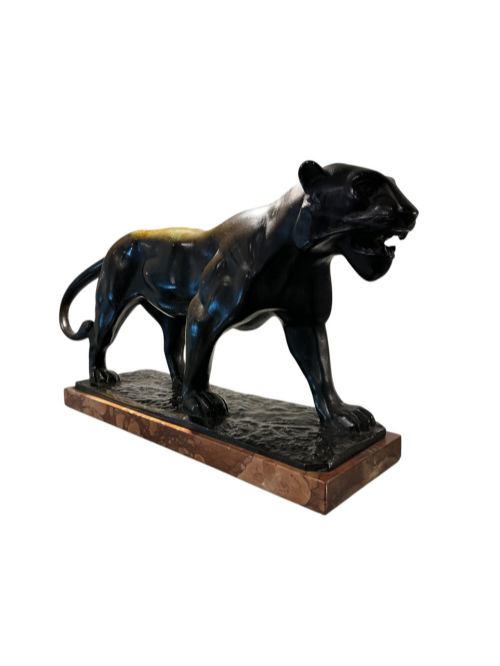
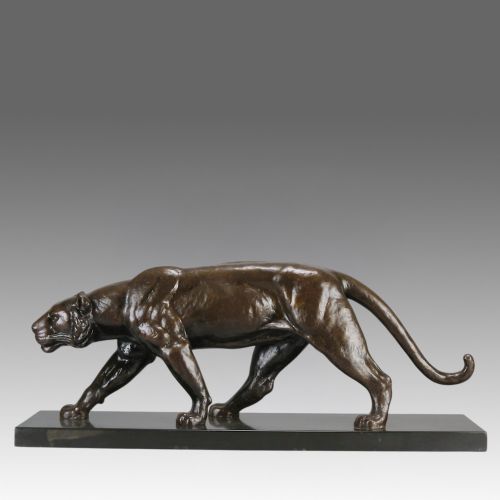
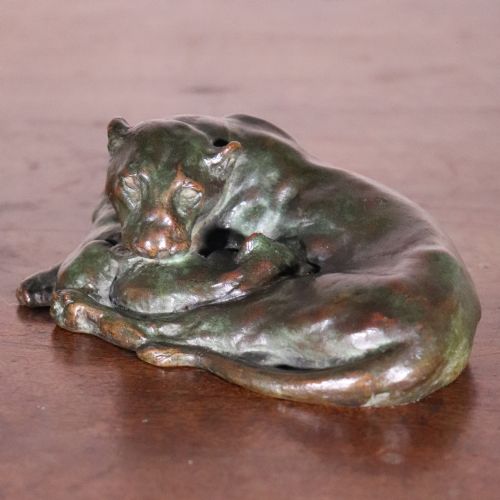
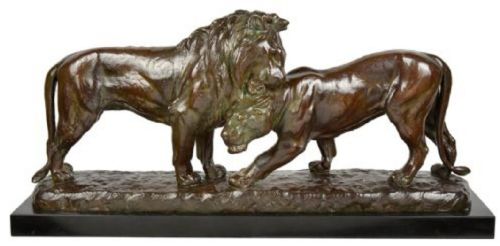
A bronze big cat statue represents powerful felines such as panthers, tigers, lions, and jaguars, captured in dynamic movement or repose. These sculptures draw heavily on nineteenth-century French traditions and later Art Deco aesthetics, translating naturalistic forms into solid metal.
The versions most commonly met on this page span the late nineteenth century through to the mid-twentieth century. Many pieces pair cast metal figures with contrasting bases made from carved marble or onyx.
Makers and sculptors often focused on the predatory focus of the animals, showing prowling panthers, drinking big cats, or snarling tigers. The selection ranges from cabinet-sized studies to large decorative sculptures.
What varies in quality
The refinement of the surface chasing and the crispness of muscle definition separate the finest castings from simpler commercial productions. Skilled finishing preserves the texture of fur and the tautness of sinew.
The integration between the metal sculpture and its stone base indicates overall craftsmanship, with superior pieces showing precise fitting and high-grade marble or onyx selection.
Listings feature works spanning the nineteenth and twentieth centuries, utilising bronze, spelter, marble, and onyx.
Alexandre Ouline·G. Gardet·Vannetti·Anna Vaughn Hyatt Huntington·Clovis Masson·Michel Decoux·Andrey·Georges Gardet·Louis Riche·Barye·Barbedienne·E. Drouot
The Bronze Big Cat Statue Glossary
- Animalier
- A nineteenth-century artistic movement dedicated to the realistic portrayal of animals. Sculptors in this tradition focused closely on anatomical accuracy and natural behaviour.
- Patinated bronze
- Bronze that has been treated with chemical solutions to produce a specific surface colour or tone. This process protects the metal and enhances visual depth.
- Spelter
- A zinc alloy frequently used as a cost-effective substitute for bronze in twentieth-century manufacturing. It accepts patination and paint finishes similarly to heavier metals.
- Cold-painted bronze
- Metal sculptures decorated with paint applied without high-temperature firing. This technique was popular with Austrian and Vienna school workshops.
- Chasing
- The manual refinement of a raw metal casting using hammers and punches. This step restores surface detail lost during the foundry process.
Bronze Big Cat Statue: Frequently Asked Questions
How do I clean a bronze big cat statue?
Dust the sculpture regularly with a soft, dry brush to prevent particle buildup. Avoid using water, household cleaners, or polishes that might strip the original patination.
Apply a very thin coat of microcrystalline wax periodically to protect the metal surface from moisture and handling. Buff gently with a clean cloth after application to maintain a soft sheen.
What is the difference between bronze and spelter?
Bronze is an alloy of copper and tin known for its strength, weight, and durability. Spelter uses cheaper zinc-based alloys that feel lighter and are more brittle.
Spelter figures often appear in Art Deco pieces and rely on painted or patinated surfaces to mimic solid bronze. Examining the underside or weight usually reveals which metal was used.
How do I date a big cat sculpture?
Examine the stylistic cues, such as the streamlined geometry of Art Deco pieces or the naturalistic detail typical of nineteenth-century French animalier works. Base materials like carved marble or onyx also provide clues to the era of manufacture.
Signatures or foundry marks stamped into the metal help narrow down the production period. Comparing the casting technique with known foundry timelines confirms the age.
Where should I place these statues at home?
Position heavier sculptures on sturdy furniture such as sideboards, desks, or mantelpieces where the stone base is fully supported. Ensure the display area avoids direct sunlight and extreme humidity changes.
Keep pieces at a height where the details of the casting can be appreciated up close. Placing them away from heavy traffic areas protects protruding elements from accidental knocks.