


Antique Tiger Statue
An antique tiger statue captures the raw power of the big cat in bronze, wood or carved hardwood.
Antique Tiger Statue
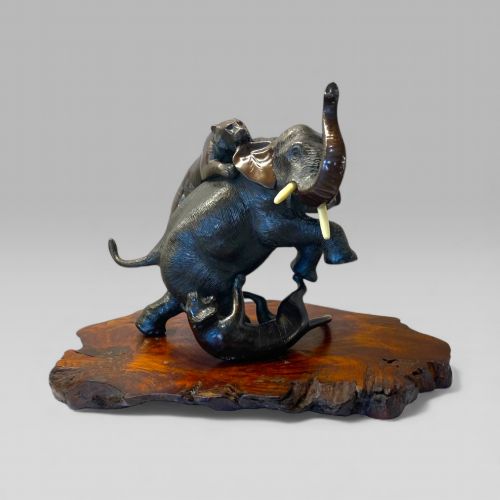
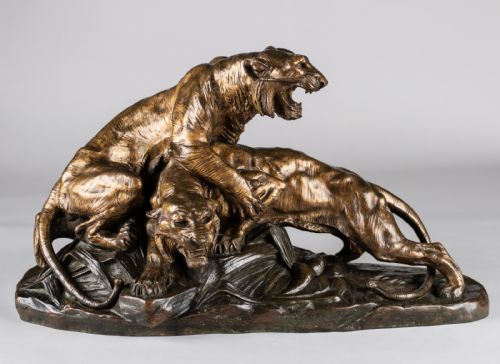
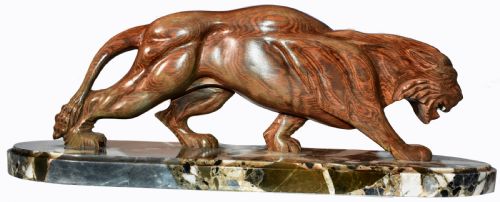
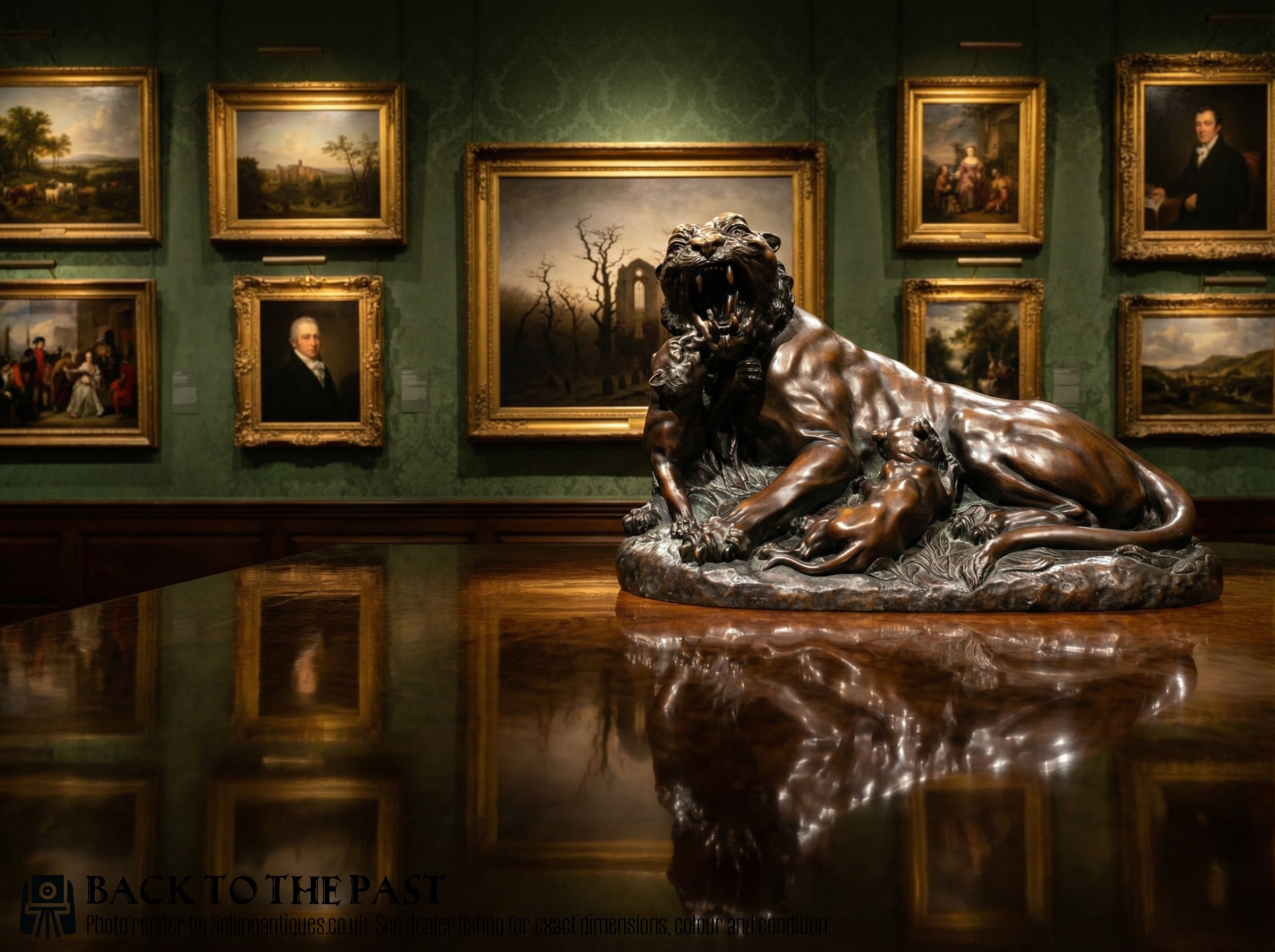
An antique tiger statue takes the form of sculptural studies originating primarily from Japanese Meiji period workshops, Chinese kilns and French animalier foundries. When you search for an antique tiger statue, you encounter fierce representations cast in metal, carved from wood or modelled in pottery.
The domestic selection centres heavily upon dynamic bronze studies, including complex animalier groupings where tigers confront elephants or men. Simpler wooden and hard-stone carvings appear alongside these large bronzes, reflecting both Eastern and Western sculptural traditions of the nineteenth century.
How they were made
Foundries utilised the lost-wax casting method for bronze statues, capturing intricate muscle striations and fur textures before applying dark patination. French animalier bronzes often rest upon fitted marble bases, anchoring the heavy metal compositions securely.
Carved hardwood and bone figures relied upon hand chisels to shape the dense grain, while Japanese Meiji bronzes employed advanced metalworking techniques involving fine chiselling and signature stamps. Ceramic examples such as Shiwan pottery used regional clay bodies fired in traditional kilns with specialised glazes.
Listings span the late nineteenth century and early twentieth century, featuring bronze, carved hardwood, bone, marble and Shiwan pottery.
What varies in quality
The standard of an antique tiger statue depends entirely upon the anatomical precision of the casting or carving and the fidelity of the musculature. Master sculptors captured tension and movement with acute accuracy, whereas lesser pieces exhibit stiff postures and muddy surface detail.
Surface finish and patination dictate the visual depth of the piece, with rich, varied tones outperforming flat, uniform applications. Signed works by documented founders and makers command greater attention due to the verified skill behind the production.
Tsunemitsu 常光·Vannetti·Andrey·E. Drouot
The Antique Tiger Statue Glossary
- Animalier
- A nineteenth-century European sculptural movement dedicated to realistic depictions of animals, particularly predators in motion. Practitioners mastered intense anatomical study.
- Meiji Period
- The era in Japanese history spanning from 1868 to 1912, marked by exceptional bronze casting and intricate decorative arts destined for export. Artisans during this time produced sophisticated okimono.
- Okimono
- A Japanese term for a decorative object designed for display on a tokonoma alcove or cabinet. These freestanding sculptures range from small carvings to large bronze centrepieces.
- Shiwan Pottery
- A traditional style of Chinese ceramic ware known for expressive figures and striking glazes produced in Guangdong province. Kilns here specialised in robust sculptural pottery.
- Patina
- The surface sheen and coloration developed naturally over time or applied chemically to bronze and metalwork. This layer protects the metal while enhancing visual depth.
Antique Tiger Statue: Frequently Asked Questions
What materials were used for these statues?
Makers relied primarily on bronze, carved hardwood, marble, bone and pottery to form these nineteenth-century sculptures.
Bronze dominates the European animalier and Japanese Meiji selections, while dense hardwoods and regional ceramics appear in Eastern works.
How do I identify a Meiji period bronze?
Japanese Meiji bronzes often feature intricate physical detailing such as individual hair strands and complex figural narratives like elephants fighting tigers.
Many bear artist signatures or foundry marks stamped directly into the metal surface during production.
Why are some mounted on marble?
French animalier sculptors frequently set heavy bronze figures onto carved marble bases to provide physical stability and a finished gallery presentation.
This method complemented the dark patination of the metal and elevated the status of the decorative object.
Where should I display a heavy bronze?
Heavy bronze and marble sculptures require sturdy furniture capable of supporting considerable weight without bowing or shifting.
Position the piece away from direct heat sources to preserve the integrity of any wooden bases or chemical patinas.