


Bronze Tiger Statue
These bronze tiger statue pieces bring ferocious power and fine detail into a room, spanning French Animalier works and Japanese Meiji period foundry casts.
Bronze Tiger Statue
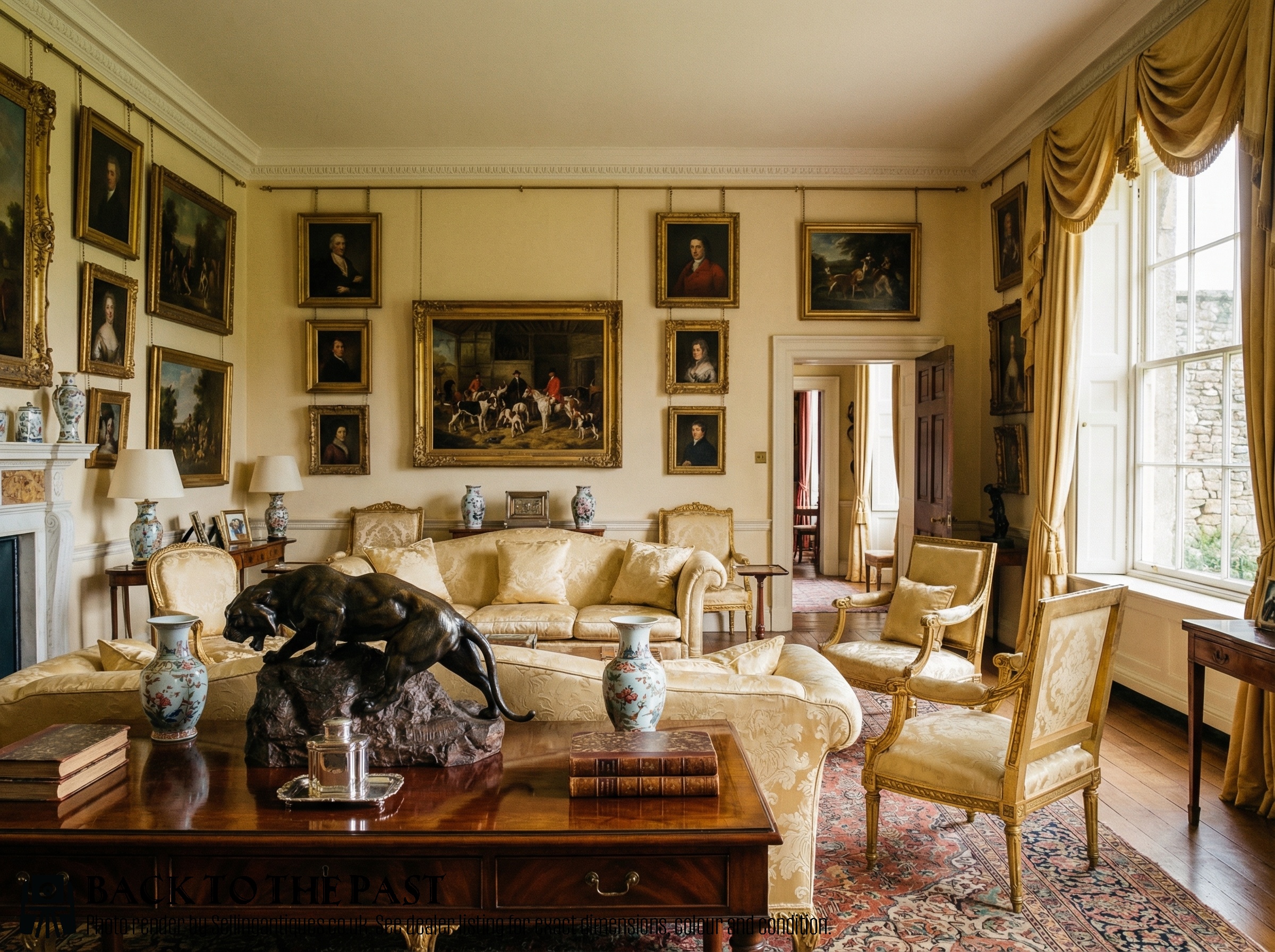
When you search for a bronze tiger statue, you encounter dynamic depictions of wild cats cast during the nineteenth and early twentieth centuries. These figures range from solitary prowling beasts to complex dramatic scenes of conflict.
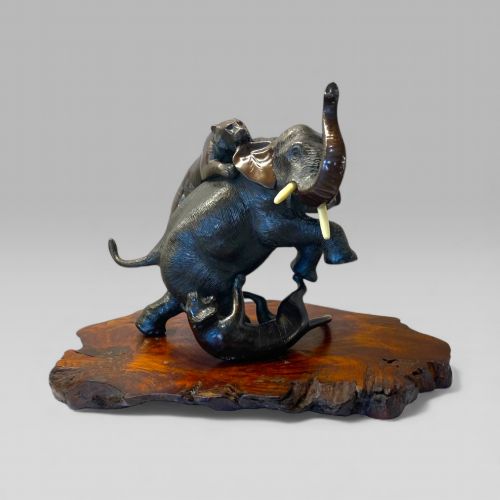
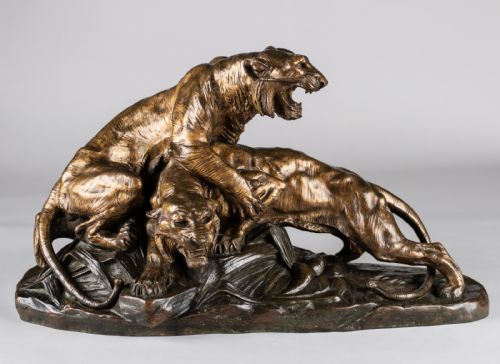
You are most likely to meet two distinct stylistic traditions on this page. The first comprises Japanese Meiji period okimono and sculptures depicting tigers alone or battling elephants, often created by named makers like Tsunemitsu. The second tradition includes French Animalier sculptures showing solitary tigers, groups of cubs, or men fighting tigers, frequently mounted on marble bases.
The forms vary from large decorative centrepieces to smaller studies of animal anatomy. European examples lean towards naturalistic tension on stone plinths, whilst Japanese works prioritise intricate surface chasing and narrative drama.
How they were made
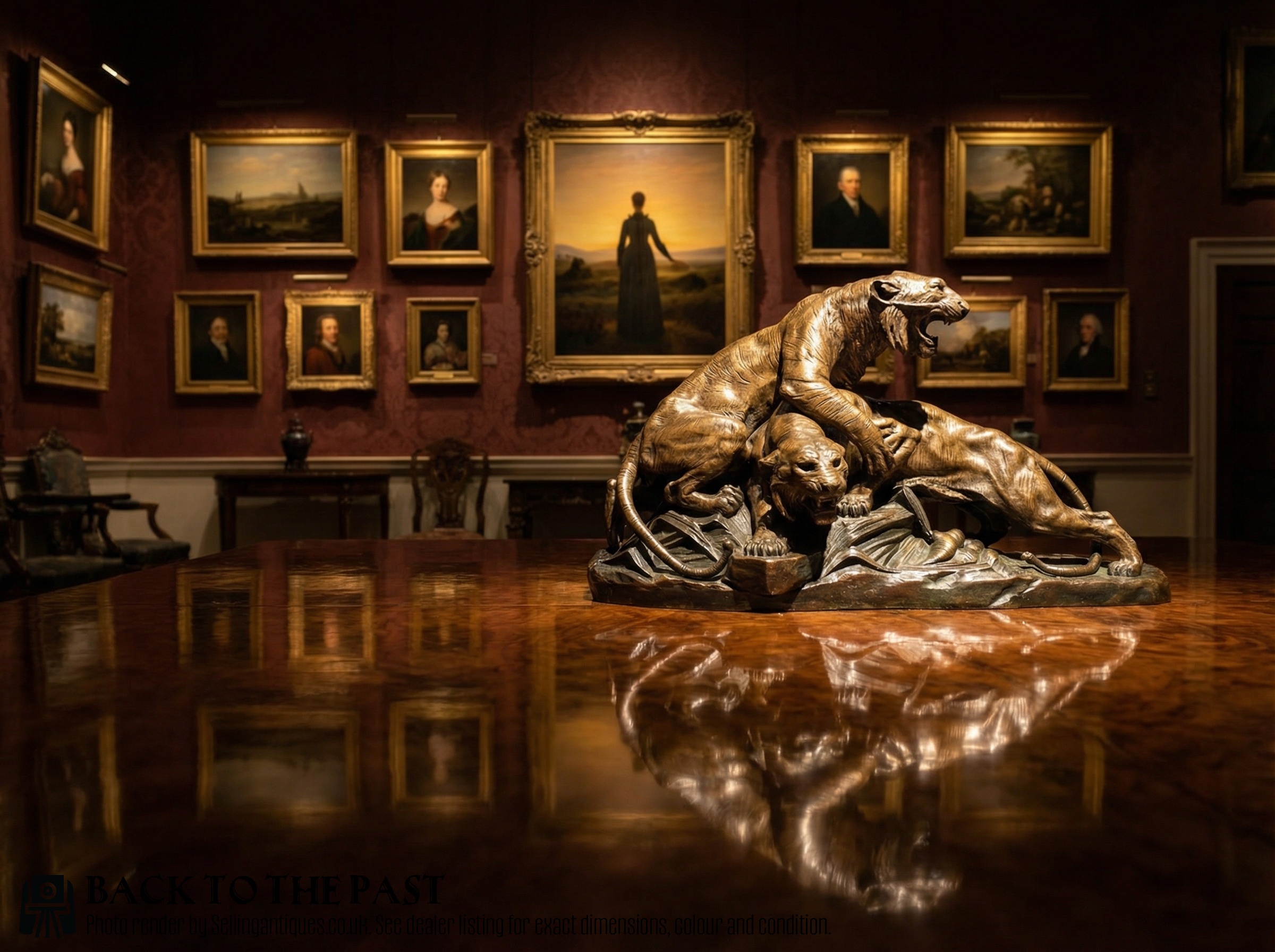
Foundries utilised the lost-wax casting technique to capture the dense musculature and striped pelt of the animal. Molten bronze filled complex moulds, allowing artisans to achieve fine texture across the surface.
Post-casting work involved meticulous hand-chasing of the metal and the application of patinas ranging from deep dark browns to warm golden tones. Many French casts were then secured onto carved marble bases.
Japanese Meiji period pieces often incorporated bone or ivory elements into related narrative compositions, whilst retaining a high standard of bronze metallurgy.
Several pieces capture dramatic encounters where elephants bravely fight back against multiple determined tigers.
What varies in quality
The distinction between standard commercial foundry output and the top of the range lies in the sharpness of the chisel work and the depth of the patination. Master sculptors and skilled finishers ensured that every sinew and expression retained vitality.
Signature placement and foundry marks elevate certain French Animalier pieces and Japanese works above unmarked castings. The integration of the sculpture with its carved marble or hardwood base also indicates the overall ambition of the piece.
Tsunemitsu·Vannetti·Andrey·E. Drouot
The Bronze Tiger Statue Glossary
- Animalier
- A nineteenth-century artistic movement dedicated to the realistic depiction of animals. Sculptors in this tradition focused heavily on anatomical accuracy and behavioral movement.
- Meiji Period
- The era in Japanese history spanning from 1868 to 1912, marked by opening trade with the West and exceptional metalwork artistry. Okimono and bronze sculptures from this time reached international acclaim.
- Okimono
- A Japanese term for an ornamental object meant for display on a shelf or tokonoma alcove. These statues often depict figures, animals, or legendary scenes with high detail.
- Patina
- The surface coloration and sheen developed naturally through age or applied chemically by the artisan. It defines the visual warmth and tone of the bronze.
- Chasing
- The manual refinement of a raw metal casting using hammers and punches. This technique restores texture and sharpens details lost during the primary casting process.
Bronze Tiger Statue: Frequently Asked Questions
What is an animalier bronze sculpture?
An animalier bronze sculpture depicts animals in realistic poses, capturing natural movement and tension. These works gained immense popularity in nineteenth-century Europe.
Artists focused intensely on animal anatomy, translating the raw power of predators like tigers into enduring metal forms.
How do I identify a Meiji period bronze?
Meiji period bronzes originate from Japan between 1868 and 1912, often identifiable through specific subject matter and signature styles. They frequently depict tigers, elephants, and intricate narrative scenes.
Look for high-relief casting signatures and minute surface detailing that characterises Japanese foundry work from this era.
Why are some bronzes on marble bases?
French Animalier sculptors frequently mounted heavy bronze statues onto carved marble plinths to provide structural stability and visual contrast. The stone added weight and a finished architectural framing to the artwork.
This presentation was standard for nineteenth-century salon pieces intended for display on furniture or mantelpieces.
How should I care for antique bronze?
Antique bronze requires minimal intervention, needing only a gentle dusting with a soft dry cloth. Avoid using harsh cleaning products or polishes that can strip the historic patina.
Keeping the piece away from direct moisture and extreme temperature fluctuations preserves the stability of the metal and any fitted stone or wooden bases.