


Art Deco Panther Sculpture
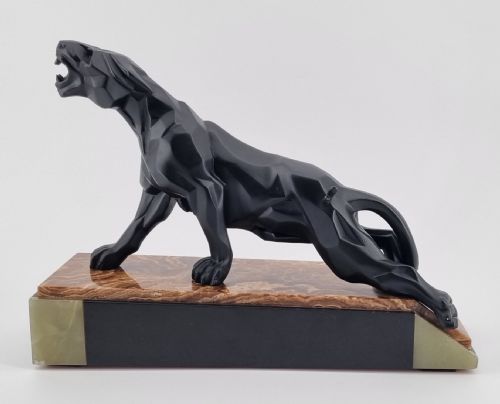
An art deco panther sculpture captures the sleek power of the big cat through sharp geometric lines and confident modernist form.
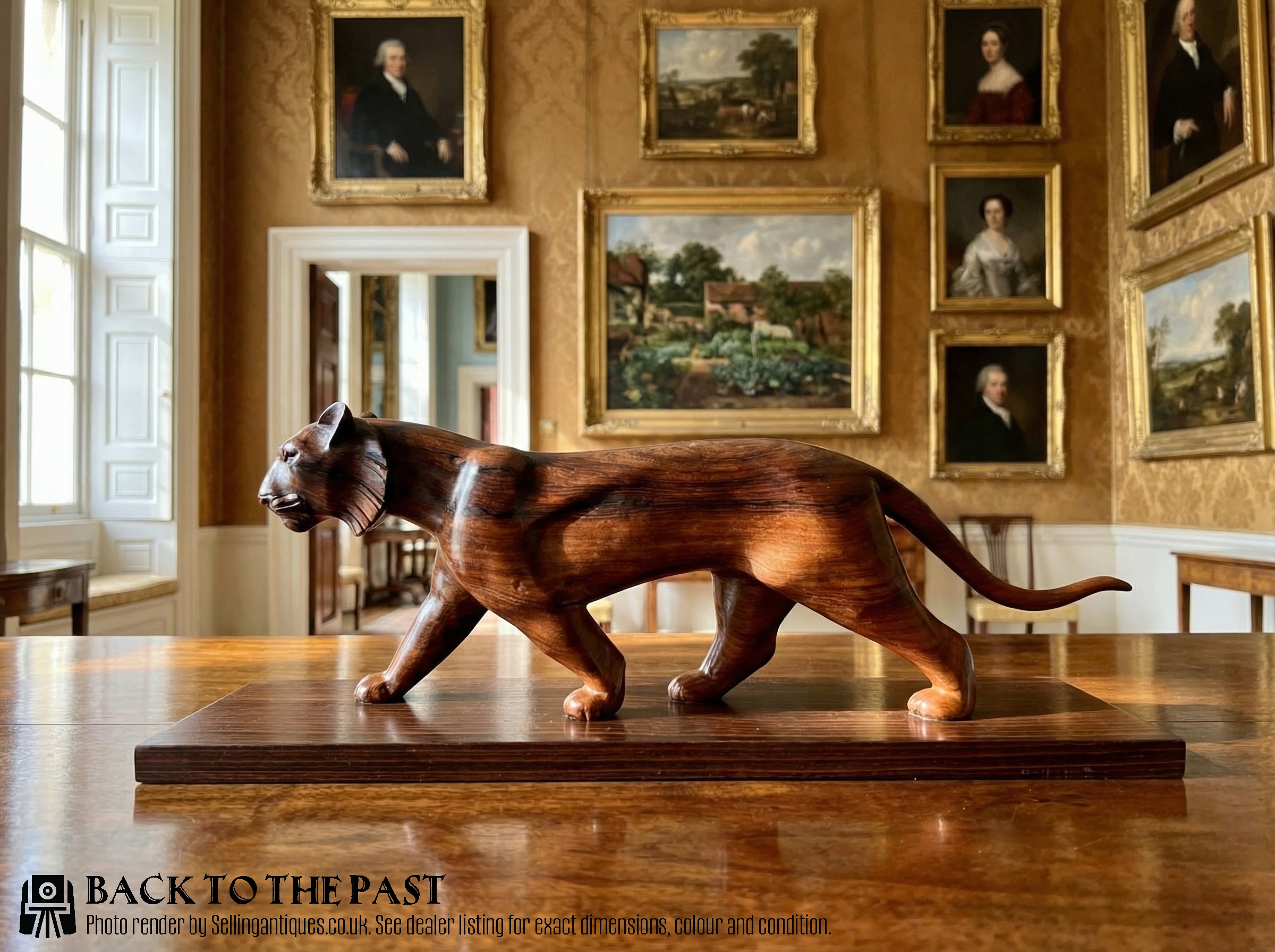
Art Deco Panther Sculpture
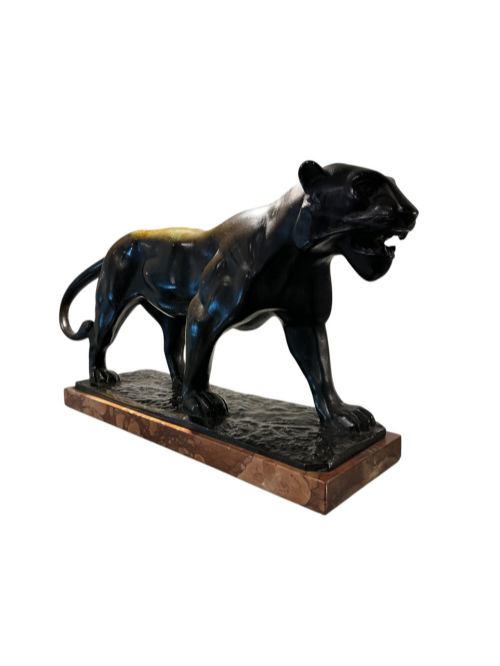
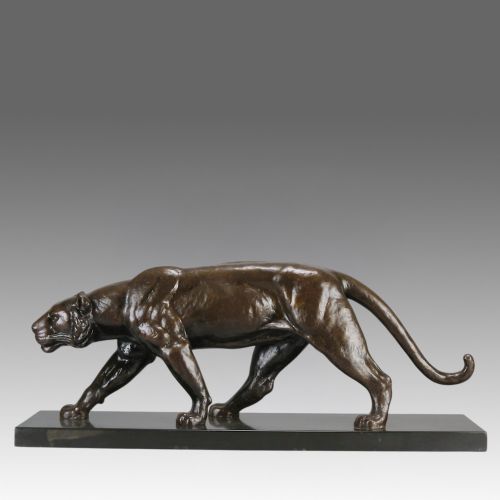
An art deco panther sculpture represents the powerful feline in strides, stalks, or repose, capturing the streamlined modernism of the interwar years. These figures span the 1920s, 1930s, and 1940s, often pairing the predatory animal with geometric bases or human figures. You will frequently encounter prowling poses set atop contrasting plinths of black or veined marble.
Makers produced these decorative objects in various scales, from mantelpiece ornaments to substantial floor figures. The animalier tradition of the nineteenth century evolved during the interwar period into the stylised curves and angular planes characteristic of the movement. Many surviving examples originate from French workshops active during the height of the style.
Materials and Technique
Foundries cast these figures in bronze or spelter, applying patinas ranging from deep black and green to silvered and gilded finishes. Bronze examples represent the upper tier of casting quality, while spelter offered a more affordable alternative for domestic interiors. Founders frequently mounted these metal sculptures onto heavy bases of marble or onyx to anchor the dynamic composition.
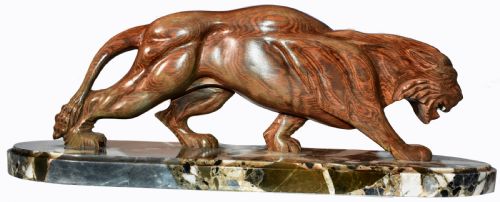
Woodworkers also carved these animals from timber and hardwood, bringing out the natural grain to suggest the sleek musculature of the beast. Terracotta provided another medium for modellers, yielding earthy textures distinct from polished metal or carved stone. Each material required specific finishing techniques to achieve the smooth surfaces demanded by modernist taste.
The archive records frequent pairings of the panther with female figures in the popular animalier style of the interwar decades.
Design and Execution
The precision of the chasing and the crispness of the casting separate superior metal figures from routine production pieces. Stronger examples display muscular tension and anatomical exaggeration that heighten the decorative impact, rather than merely copying nature. The choice of base material and the harmony between cat and plinth also distinguish finer compositions.
Carved wooden and terracotta versions rely entirely on the sculptor's hand to define the clean silhouettes characteristic of the period. Finer patination and original surface treatments preserved over decades indicate better care and higher initial craftsmanship. The presence of a clear signature from an established artist elevates the standing of an individual piece.
Alexandre Ouline·Eugene Emile Borga·Michel Decoux·D H Chiparus·Irénée Rochard·Luc Lucien Alliot
The Art Deco Panther Sculpture Glossary
- Spelter
- An alloy of zinc and other metals used as a cost-effective substitute for bronze. It takes patination well but is softer and lighter than cast bronze.
- Patina
- The surface coloration or sheen developed naturally over time or applied chemically by the maker. Bronze patinas can range from deep black to verdant green.
- Plinth
- The heavy base, often made of marble or onyx, that supports the sculpture. It provides physical stability and frames the dynamic silhouette of the feline.
Art Deco Panther Sculpture: Frequently Asked Questions
What is an art deco panther sculpture?
These decorative figures represent large felines using the streamlined curves and geometric stylisation of the interwar period. They reflect the fascination with speed and power that defined twentieth-century design.
Artists captured the predator in various postures, from low stalks to resting poses, often mounting the figures on contrasting stone bases.
How were these sculptures displayed?
Owners typically placed them on mantelpieces, sideboards, or large desks as prominent decorative accents in domestic interiors. Their strong silhouettes made them focal points in modern living spaces.
Heavier examples served as bookends or anchor pieces on large wooden furniture.
How do I tell bronze from spelter?
Bronze offers greater weight, a resonant ring when tapped gently, and a durable metallic structure that accepts fine chasing. Spelter feels lighter, softer to the touch, and can show a more brittle fracture if damaged.
Inspect the underside or areas of wear where the underlying metal colour becomes visible.
Why are marble bases common?
Marble plinths provided weight to balance the dynamic, outstretched poses of the prowling cats. The cool, polished stone created a striking textural contrast with patinated metal or carved wood.
Black and veined marble selections reinforced the architectural aesthetic of the period.