


Antique French Bronze Panther
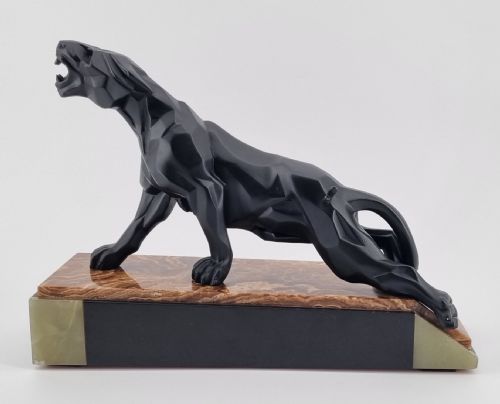
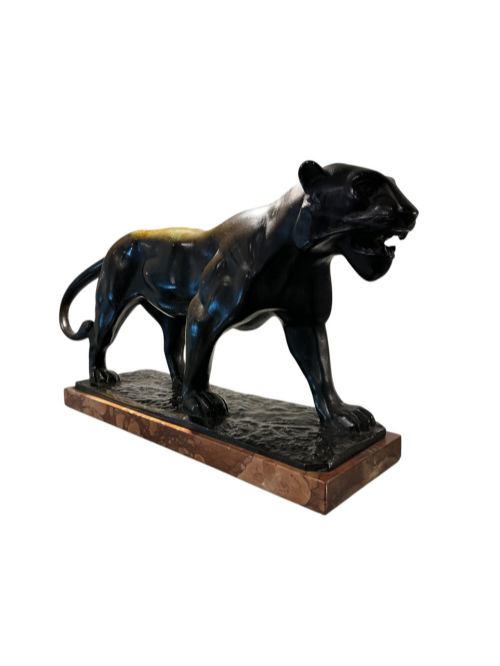
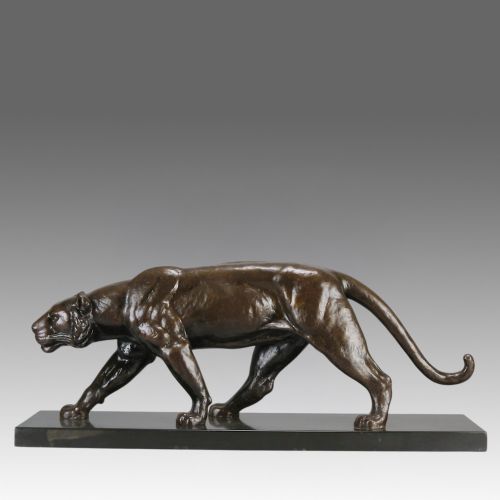
An antique french bronze panther captures raw predatory power in metal, making a striking centrepiece for any room.
Antique French Bronze Panther
An antique french bronze panther brings the ferocious grace of the big cat directly into the interior, rendered through expressive sculptural forms. These sculptures emerge primarily from the nineteenth century and the Art Deco period, capturing the animal in prowling, drinking, or resting postures.
Most examples found here combine patinated or silvered bronze figures with substantial marble or onyx bases. Buyers frequently encounter works set upon polished stone plinths that elevate the feline form and provide a stable foundation.
How they were made
Foundries cast these dynamic figures using traditional bronze methods or alternative metal alloys such as spelter. Artisans applied patination treatments to achieve deep brown and dark surface tones that highlight the musculature of the beast.
Sculptors mounted the finished metal figures onto shaped bases of black or multi-coloured marble and onyx. The heavy stone plinths complement the dark metal surfaces and anchor the weight of the composition.
Some panthers share their plinths with unexpected companions, including pythons and hunters.
What varies in quality
Quality rests heavily upon the crispness of the casting and the sensitivity of the chisel work applied after the metal leaves the mould. Finer pieces display sharply defined fur texture and naturalistic muscle tension rather than soft, blurred contours.
The choice and execution of the base material also dictate the standing of a piece, with select carved marbles and onyx plinths elevating the overall composition. Signature marks and foundry stamps further distinguish workshop output.
Alexandre Ouline·Chiparus·Clovis Masson·Michel Decoux·Georges Gardet·Barbedienne
The Antique French Bronze Panther Glossary
- Animalier
- The nineteenth-century artistic movement dedicated to the realistic portrayal of animals, particularly wild beasts in motion. Sculptors in this tradition studied anatomy closely at menageries.
- Spelter
- A zinc alloy commonly utilised as a more affordable alternative to bronze for sculptural casting. It accepts patination well to simulate heavier metals.
- Patination
- The chemical treatment or natural ageing process applied to the surface of bronze to impart colour and depth. A rich patina enhances the visual texture of the metal.
- Art Deco
- The dominant design style of the 1920s and 1930s characterised by sleek lines, stylised forms, and modern materials. Panther sculptures from this era often feature geometric bases.
Antique French Bronze Panther: Frequently Asked Questions
What is an animalier sculpture?
An animalier sculpture focuses on realistic depictions of animals, capturing natural behaviours and physical power. These works gained immense popularity in nineteenth-century France.
Artists dedicated themselves to studying animal anatomy in zoological gardens to render creatures with striking accuracy and tension.
How do I distinguish bronze from spelter?
Bronze is a heavier, copper-alloy metal that develops a stable, deep patina and rings with a clear tone. Spelter is softer, lighter, and composed primarily of zinc.
Examining the underside or areas of wear often reveals the paler grey metal beneath a spelter finish.
Why are these panthers mounted on stone?
Stone bases made from marble or onyx provide essential weight and stability to counterbalance heavy metal sculptures. They also create a formal framing device that isolates the artwork.
Art Deco examples frequently utilise stepped or polished rectangular plinths to complement the geometric aesthetic of the period.
How do I care for my bronze panther?
Dust the sculpture regularly with a soft, dry cloth to prevent particulate buildup on the patinated surface. Avoid chemical cleaners or abrasive polishes that can strip the historic finish.
Applying a microcrystalline wax very sparingly can help protect the metal from atmospheric moisture over time.