
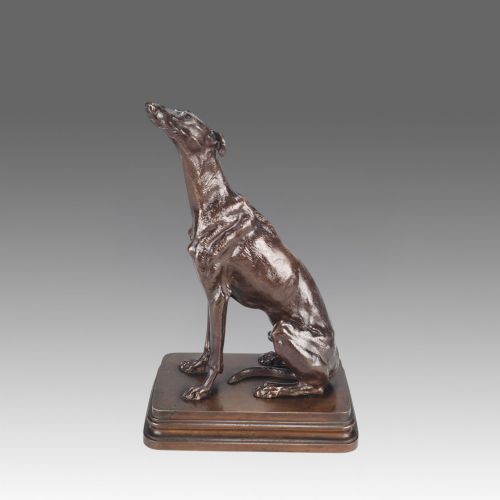
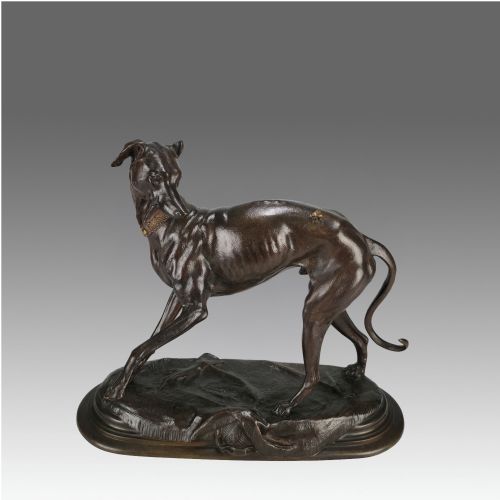


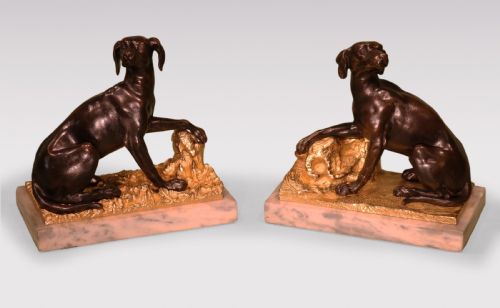


Dark Bronze Hound
A dark bronze hound brings the tension and muscular grace of nineteenth-century animalier sculpture directly into a room.
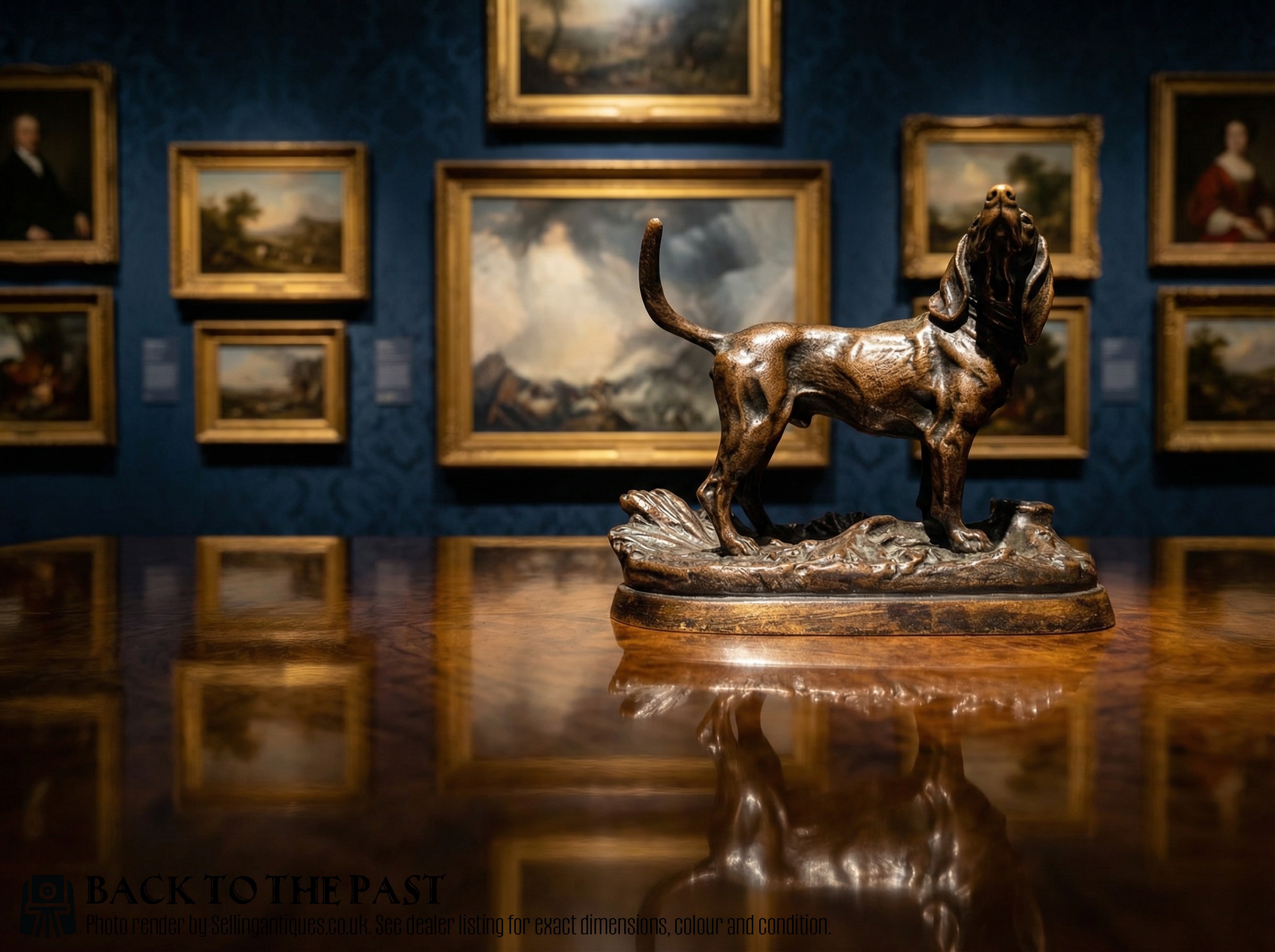
Dark Bronze Hound
A dark bronze hound captures the physical intensity of hunting dogs through nineteenth-century animalier sculpture. These pieces depict subjects such as greyhounds, bassets, sighthounds and setters, often shown resting, sitting, or interacting with prey like birds and pheasants.
The objects take the form of distinct bronze sculptures and statues, frequently mounted on marble bases or paired with materials like ormolu. Most examples originate from French and English workshops of the Victorian era, spanning decades from the mid to late nineteenth century into the early twentieth century.
Buyers encounter single hound figures alongside complex hunting groups involving multiple dogs and quarry. The selection ranges from domestic resting animals to dramatic scenes of the chase.
How they were made
The creation of these sculptures relies on traditional metal casting techniques using bronze, sometimes accented with ormolu details or supported by wooden and marble plinths. Molten metal flows into moulds to capture the sinewy musculature and textural coats of the animals.
Patination follows the casting process, imparting the signature dark surface tones characteristic of these works. Artisans also utilise cast iron in certain iterations, finishing the metal to achieve depth and shadow across the fur and form.
Listings feature pieces from the nineteenth century through the early twentieth century, utilising bronze, marble, wood, cast iron, and ormolu.
What varies in quality
Surface patination and the quality of the founding contribute heavily to the overall presence of the object. Casts produced by established foundries and skilled modellers retain sharper lines and better integration with bases made of marble.
Alfred Dubucand·Alfred Barye·Pierre Jules Mene·Auguste Nicholas Cain·Antoine Louis Barye·Joseph Francois Victor Chemin·Christophe Fratin·John Willis Good·Nikolai Lieberich·Barbedienne
The Dark Bronze Hound Glossary
- Animalier
- A nineteenth-century artistic movement dedicated to the realistic portrayal of animals. Sculptors in this tradition focused closely on the anatomy and behaviour of wildlife and domestic dogs.
- Patinated Bronze
- Bronze metal treated with chemical solutions to produce a specific surface colour. This process creates the deep, dark tones seen on nineteenth-century animal sculptures.
- Ormolu
- Gilt bronze produced by applying a finely ground high-carat gold mercury amalgam to a bronze object. It provides bright golden highlights that contrast against the dark bronze hound.
- Foundry
- A workshop or factory where metal is melted and poured into moulds. Famous foundries executed casts for leading animalier sculptors during the Victorian period.
- Sighthound
- A type of dog that hunts by sight and speed rather than scent. Greyhounds and similar hounds are frequent subjects for bronze sculptors.
Dark Bronze Hound: Frequently Asked Questions
What is an animalier bronze hound?
An animalier bronze hound is a nineteenth-century sculpture depicting a hunting dog, created during a period when artists focused intensely on realistic animal anatomy. These sculptures portray dogs in active poses or resting postures.
Such pieces reflect the Victorian fascination with hunting culture and domestic animals. They capture the texture of fur and the tension of muscle in cast metal.
Where were these bronze sculptures made?
The majority of these bronze hounds originated in France and England during the nineteenth century. Parisian foundries and workshops produced many of the most celebrated animalier sculptures.
English makers also contributed significant hunting groups and individual dog studies. These works were cast locally or imported for Victorian patrons.
How do I display a bronze hound at home?
A bronze hound suits placement on a mantelpiece, desk, or sturdy side table where its dark patination can catch the light. Many pieces feature integrated marble bases that provide stability and elevate the sculpture.
Ensure the surface is level and capable of supporting the weight of the metal and stone. Keep the sculpture away from direct moisture to protect the bronze patina.
How can I tell the age of a bronze hound?
Dating relies on stylistic markers, signatures, and foundry marks inscribed on the bronze base or body. Nineteenth-century pieces typically exhibit specific patination methods and casting techniques characteristic of the period.
Comparing the subject matter and signature style to documented works by known animalier sculptors helps establish the timeframe. Materials like original marble bases also offer clues to the era of production.