






Decorative Ceramic Dog
These decorative ceramic dog pieces bring character to a room through centuries of animal figures and vessels.
Decorative Ceramic Dog
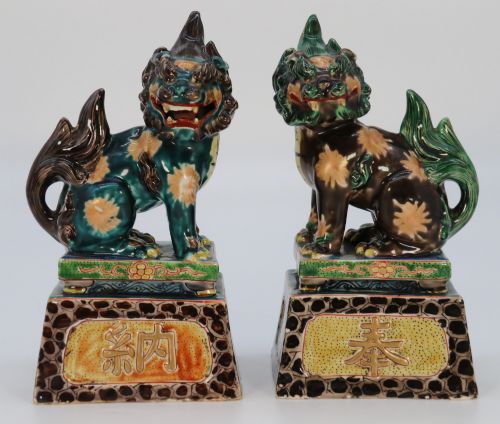
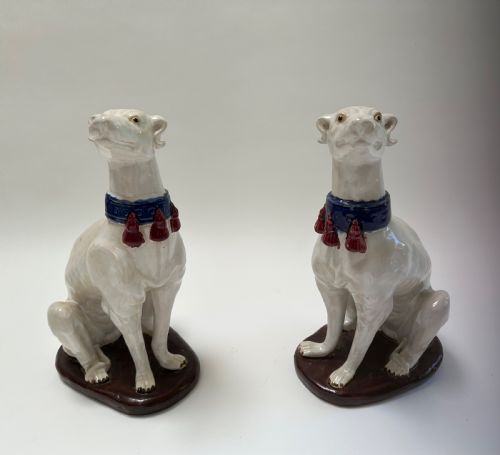
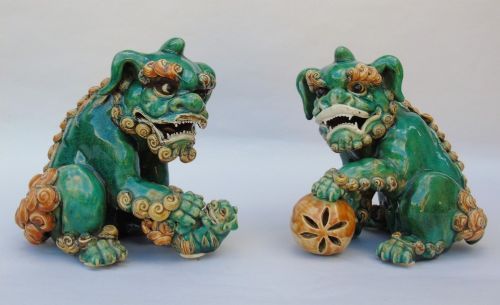
A decorative ceramic dog search brings together animal figurines, statues, and vessels spanning from the Georgian and Victorian eras through to the early twentieth century. Buyers encounter seated spaniels, Buddhist lions, and white bisque poodles alongside related forms like jars and meat dishes.
The pieces on this page originate from diverse traditions, ranging from English earthenware and Staffordshire pottery to Chinese Sancai glazed figures and Italian majolica. Figures take various forms, from domestic pets to mythical guardian beasts modelled as sculptures and lamp bases.
How they were made
Makers utilised earthenware, porcelain, and tin-glazed earthenware, shaping clay into figures and vessels before applying lead glaze, enamel, or gilt surface details. Some pieces employ transfer printing for intricate blue and white patterns, while others feature hand-painted polychrome finishes.
Firing techniques varied across periods, producing both high-gloss lead-glazed surfaces and unglazed white bisque pottery. Artisans combined moulding and hand-modelling to create detailed textures on animal fur and decorative bases.
Decorative Ceramic Dog Retail Price Guide 2026
Typical asking prices for decorative ceramic dog among the pieces listed under this phrase on Sellingantiques today, from the lower quarter to the upper quarter. They describe what is for sale here now, not the wider market.
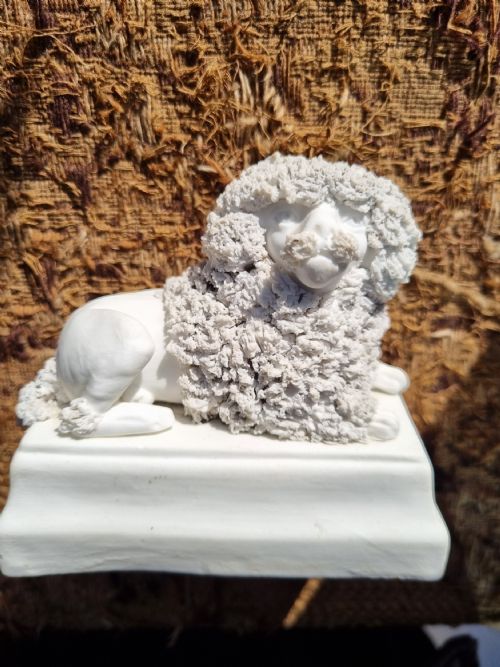
Among the ceramic hounds and lions, a solitary poodle sits patiently in matte white bisque.
What varies in quality
The weight of the material and the stability of the form separate standard production items from more ambitious sculptural groups. Superior pieces maintain proportions that balance the decorative intent with the naturalistic posture of the animal.
Royal Dux
The Decorative Ceramic Dog Glossary
- Bisque
- Unglored ceramic pottery fired once to achieve a matte, porous white surface. This finish highlights fine sculptural detail without the distraction of a shiny glaze.
- Earthenware
- Porous pottery fired at lower temperatures, commonly used for traditional figures and household vessels. It requires a glaze to become impermeable to liquids.
- Sancai
- A traditional Chinese three-colour glaze technique typically combining amber, green, and cream tones. Artisans applied these mineral glazes to earthenware bodies.
- Majolica
- Tin-glazed earthenware decorated with opaque colourful metal oxide glazes. This technique originated in Italy and provides a vibrant surface for figural ceramics.
Decorative Ceramic Dog: Frequently Asked Questions
What periods do these ceramic dogs come from?
The listings span from the early nineteenth century through to the early twentieth century, encompassing Georgian, Victorian, and later periods.
Production dates reflect traditional ceramic styles from both European factories and Asian workshops.
How were these figures used originally?
Many served as mantelpiece ornaments, table decorations, or hearth figures intended to display domestic taste.
Others functioned as practical vessels, lamp bases, or guardian figures placed in interiors for protection and display.
What materials are most common?
Makers relied heavily on earthenware, porcelain, and ceramic bodies finished with lead glazes or enamel decorations.
Surfaces often feature gilt highlights, transfer printing, or specialised finishes like tin-glazing and unglazed bisque.
How do I care for antique ceramic figures?
Keep pieces away from direct sunlight and dust them gently with a soft dry brush to protect delicate surface enamels and gilt.
Avoid using water or chemical cleaners on unglazed bisque or older glazed surfaces to prevent moisture absorption.