



Antique Pug Statue
An antique pug statue brings character and domestic history to a room, capturing the compact charm of the breed in terracotta, pottery and bronze.
Antique Pug Statue
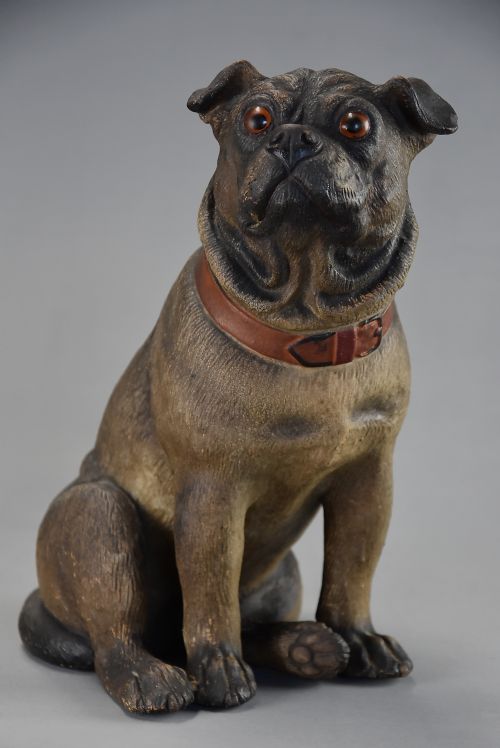
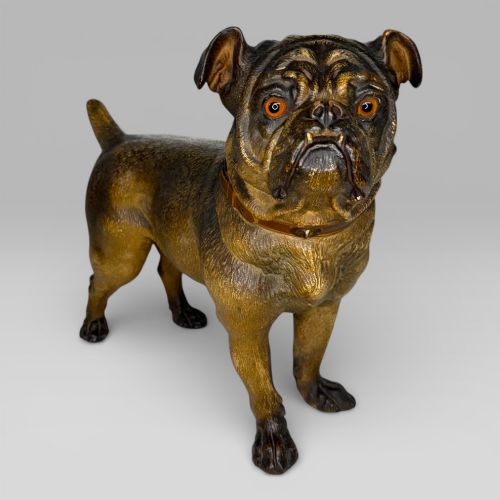
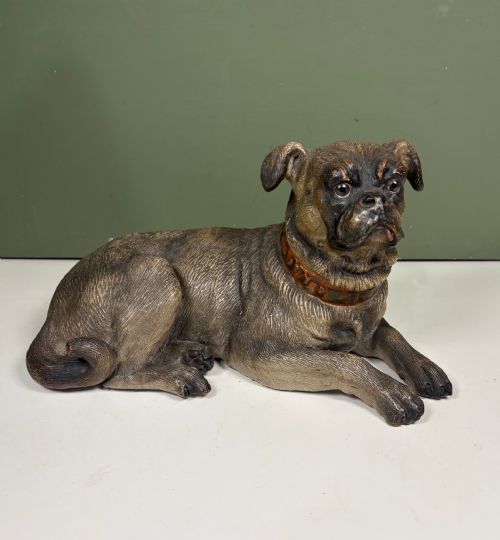
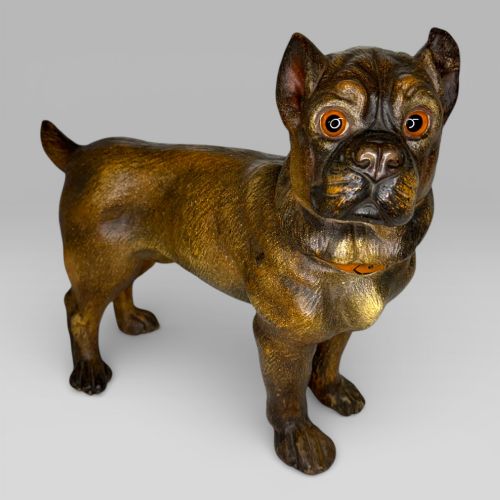
An antique pug statue captures the distinctive squashed face and curled tail of the breed through sculptural forms including seated figures, life-size models and decorative figurines. These pieces span periods from the Georgian era through the Victorian and Edwardian decades, reflecting the enduring popularity of the companion dog in domestic interiors.
The most common versions met on this page are earthenware and terracotta models, often originating from Austrian workshops or Staffordshire potteries. Buyers encounter both single figures and pairs, ranging from small shelf ornaments to substantial life-size sculptures designed to sit directly on the floor.
How they were made
Terracotta and earthenware pieces are shaped from fired clay and finished with painted surfaces, ceramic glaze or cold-painted decoration. Austrian makers frequently utilised terracotta to achieve realistic textures and proportions, particularly in life-size animalier sculptures.
Bronze figures are produced through metal casting and finished with cold-painted pigments to render the fawn coat and dark muzzle characteristic of the breed. Staffordshire pottery versions employ slip-cast or hand-modelled clay finished with hand-painted details and distinctive glazed surfaces.
Antique Pug Statue Retail Price Guide 2026
Typical asking prices for pug statue among the pieces listed under this phrase on Sellingantiques today, from the lower quarter to the upper quarter. They describe what is for sale here now, not the wider market.
Several makers produced life-size pug statues, ensuring these ceramic hounds take up as much room in a modern hallway as a real dog.
What varies in quality
The standard of modelling dictates the success of the piece, separating lifelike anatomical representation from stiff or generic execution. Superior examples capture the alert expression and characteristic folds of the pug's skin with precision and anatomical conviction.
The preservation of original surface finishes, whether cold-painted pigment or glossy ceramic glaze, defines the integrity of the object. Pieces retaining their original hand-painted facial markings and coat coloration without extensive overpainting hold greater appeal for collectors.
Bernard Bloch Austria
The Antique Pug Statue Glossary
- Terracotta
- A porous fired clay used widely for sculptural figures. It often receives a painted or glazed finish to enhance decorative detail.
- Cold-painted
- A method of applying non-fired paint to bronze or terracotta after the casting or firing process. This technique allows for fine polychrome detail on animalier sculptures.
- Animalier
- A nineteenth-century artistic movement focusing on the realistic portrayal of animals. Sculptors in this tradition prioritised accurate anatomy and naturalistic poses.
- Staffordshire pottery
- Earthenware produced in the pottery districts of Staffordshire, England. Figures from these kilns often feature hand-painted underglaze decoration.
Antique Pug Statue: Frequently Asked Questions
Where were these figures placed originally?
Life-size terracotta and pottery models often stood directly on the floor near firesides or in hallways as decorative companions.
Smaller ceramic and bronze figurines occupied mantelpieces, side tables and glass-fronted cabinets alongside other animal ornaments.
What is cold-painted bronze?
Cold-painted bronze refers to metal sculptures finished with oil-based or tempera paints that are not subjected to a high-temperature kiln firing.
This technique was common in Austrian workshops to create vibrant and detailed animal figures during the nineteenth century.
How should I clean my antique pug statue?
Dust terracotta and unglazed pottery gently with a dry, soft brush to avoid driving particles into the porous surface of the material.
Glazed ceramics and bronze figures tolerate a light wipe with a damp cloth, provided moisture is kept away from areas with flaking cold-painted pigment.