



Decorative Dog Statue
These decorative dog statue pieces bring centuries of sculptural animal presence into a room, offering everything from cast bronze terriers to ceramic Foo dogs.
Decorative Dog Statue
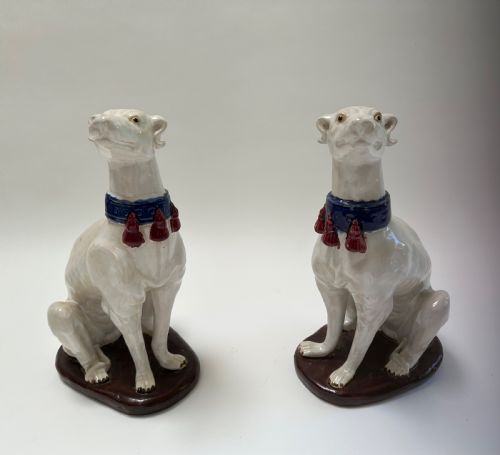
A decorative dog statue covers a wide sweep of sculptural forms, ranging from traditional ceramic and pottery temple lions to realistic depictions of pugs, terriers, and great danes. When searching for a decorative dog statue, buyers encounter everything from Victorian porcelain and parian figures to early twentieth-century bronze animalier studies and cast iron pairs.
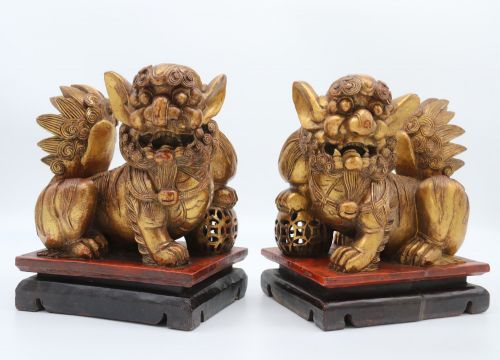
The materials span centuries of craftsmanship, including carved gilt wood, majolica, sancai earthenware, papier-mâché, and bronzed plaster. Many of the most striking examples originate from Chinese traditions as Buddhist lions or dogs of Fo, alongside European interpretations spanning the Victorian era through the Art Deco period of the 1930s.
How they were made
Makers shaped these sculptures through diverse methods suited to their medium, utilising lost-wax casting for bronzes and hand-carving for woods and lacquers. Ceramic and earthenware versions required careful moulding, glazing, and firing, often seen in the rich sancai coloration or glossy majolica finishes.
Cast iron and brass provided durable alternatives for heavier door-guard figures, while papier-mâché and bronzed plaster offered lighter yet detailed structural bases for domestic interior display.
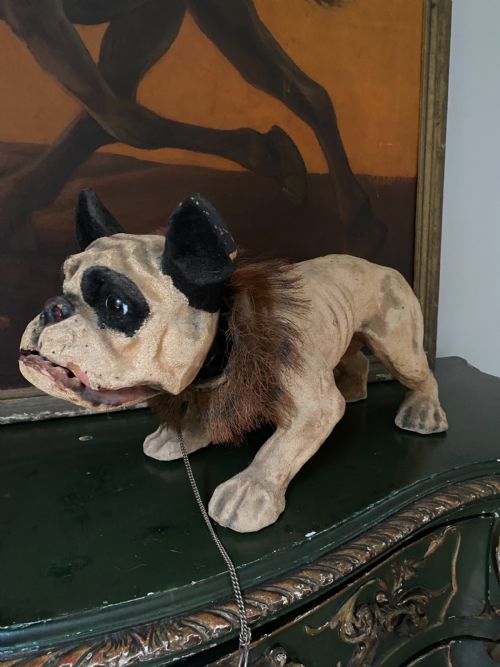
Among the bronze terriers and stately pugs, a papier-mâché French bulldog stands ready to guard the room without ever chasing a cat.
What varies in quality
The distinction between tiers rests upon the sharpness of the casting, the fidelity of the animal's anatomical proportions, and the preservation of original hand-applied polychrome or gilt surfaces. Finer works demonstrate confident chisel marks in wood or precise detail in the fur and musculature of bronze animalier pieces.
Subtleties in glaze depth, pigment richness on earthenware, and the integrity of foundational materials such as solid wood versus plaster composites dictate the lasting character of each sculpture.
Edith Parsons·Alexandre Kelety·Royal Dux
The Decorative Dog Statue Glossary
- Animalier
- A nineteenth-century artistic focus on the realistic depiction of animals, particularly in bronze sculpture. This movement captured creatures in dynamic motion or natural repose.
- Foo Dog
- A traditional guardian lion figure originating in Asian art, often rendered in pairs of carved wood, pottery, or stone. They traditionally served to protect sacred spaces and homes.
- Majolica
- A type of earthenware decorated with opaque coloured glazes, frequently utilised for vibrant nineteenth and early twentieth-century animal figures. The technique allows for rich, glossy surface colours.
- Sancai
- A traditional Chinese three-colour glaze technique used on pottery and earthenware figures. These overlapping lead-glazed tones typically include amber, green, and creamy white.
- Parian
- A fine-grained, unglazed porcelain resembling white marble, developed during the nineteenth century. It found common use for smooth sculptural busts and decorative figures.
Decorative Dog Statue: Frequently Asked Questions
What materials are common?
These sculptures appear in bronze, wood, porcelain, earthenware, cast iron, and papier-mâché.
Craftsmen utilised whichever medium suited the period style, from heavy cast metal guards to delicate ceramic table figures.
How do I date them?
Dating relies on material composition, glaze characteristics, and stylistic movements like Art Deco or Victorian revival.
Markings, stamps, and the specific casting or carving technique provide further clues to the decade of origin.
Where were they displayed?
Historical examples served as protective temple guardians, mantelpiece ornaments, or grand decorative focal points in domestic interiors.
Smaller ceramic and bronze pieces suited tabletop placement in Victorian and early twentieth-century drawing rooms.