
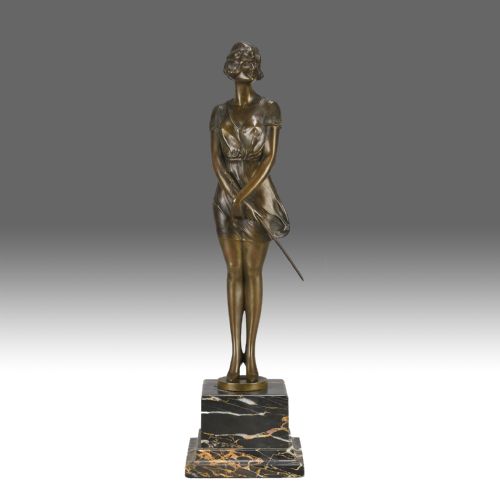


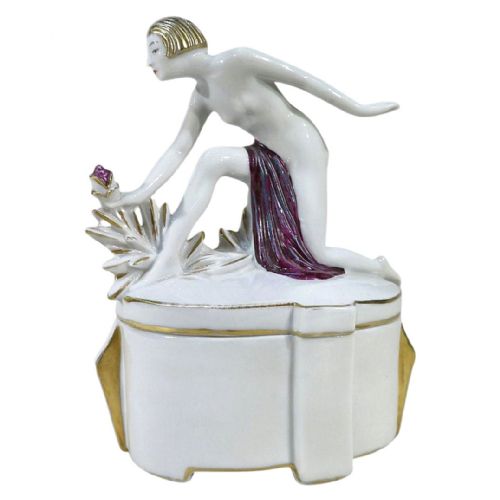


Flapper Girl Figurine
These flapper girl figurine pieces capture the unmistakable energy of the Jazz Age in porcelain, bronze, and spelter.
Flapper Girl Figurine
When you search for a flapper girl figurine, you are looking at items designed during the 1920 and 1930 periods. The Art Deco style dominates these objects, translating the modern fashions and liberated spirit of the era into domestic decorative arts.
You are most likely to meet half dolls and functional powder boxes on this page rather than standalone statues. Many pieces serve a dual purpose as dresser boxes, trinket jars, pin cushion dolls, or cigarette strikers.
The origins span French workshops, Austrian makers, and German porcelain factories. Figures frequently appear mounted on marble or onyx bases, or paired with ceramic bowls to form elaborate vanity items.
How they were made
Metalworkers cast figures in bronze and spelter, often finishing the surfaces with cold painting or gold leaf highlights. These metal casts were frequently secured directly onto heavy stone plinths made of marble or onyx to create stable sculptural studies.
Some ladies of the 1930s held cigarettes rather than fans, puffing stylishly away while guarding your dusting powder.
What varies in quality
Material combination also determines the character of the object, as seen in substantial works mounted on genuine onyx or marble bases compared to simpler ceramic vessels. The inclusion of functional elements like fitted powder boxes or movable limbs elevates the complexity of the manufacture.
Bruno Zach·D.H. Chiparus·Fasold & Stauch·Royal Dux·Wagner & Apel
The Flapper Girl Figurine Glossary
- Half doll
- A ceramic or porcelain figure modelled from the waist up, originally designed to sit atop a powder box, pin cushion, or tea cosy. They became immensely popular during the Art Deco period.
- Spelter
- A zinc alloy commonly used as a cheaper alternative to bronze for casting decorative sculptures during the early twentieth century. It was frequently painted to imitate the appearance of bronze or other metals.
- Onyx
- A banded variety of chalcedon often utilised for the heavy bases of Art Deco sculptural figures. Its dense weight and polished surface provided stability and a luxurious contrast to metal casts.
- Cigarette striker
- A novelty table accessory designed to hold matches and strike them on a prepared abrasive surface. These often incorporated figural ceramics or metals into their utilitarian design.
Flapper Girl Figurine: Frequently Asked Questions
What is a half doll used for?
A half doll served as a decorative topper for functional household items such as powder boxes, pincushions, and dresser jars during the early twentieth century. The porcelain upper torso allowed the maker to combine vanity storage with sculptural ornament.
Collectors often find these figures mounted on ceramic bowls or fabric skirts. They represent a distinct type of domestic art from the 1920 and 1930 periods.
How do I identify Art Deco style?
Art Deco style appears through streamlined geometric forms, stylised human figures, and symmetrical designs. The aesthetic embraces modernism, sharp angles, and representations of contemporary fashion.
In these figures, you will see it in the short bobs, cloche hats, and dynamic poses of the subjects. The materials themselves, particularly onyx bases and metallic patination, reinforce this visual language.
Where were these pieces manufactured?
Manufacturing centres for these ceramics and sculptures were primarily located in France, Germany, and Austria. Prominent porcelain factories and independent foundries produced everything from powder jars to large statuary.
Geographic origin often shows in the specific glaze colours and ceramic marks found on the base of porcelain pieces. French workshops frequently specialised in metal figural groups on stone bases.