


Antique Chimney Dogs
These antique chimney dogs bring the character of the Victorian hearth straight into your room.
Antique Chimney Dogs
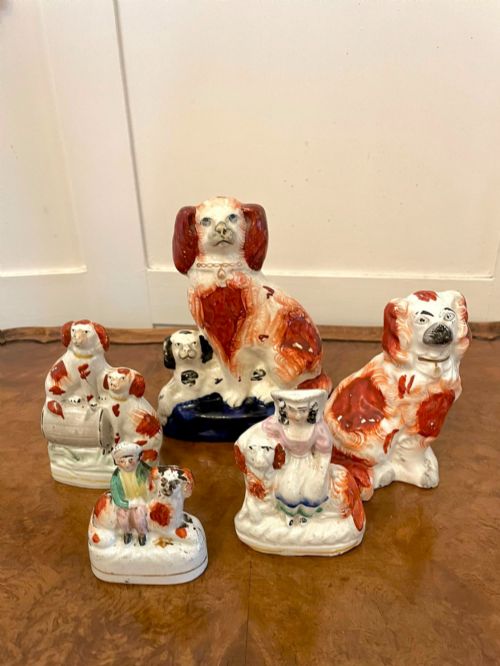
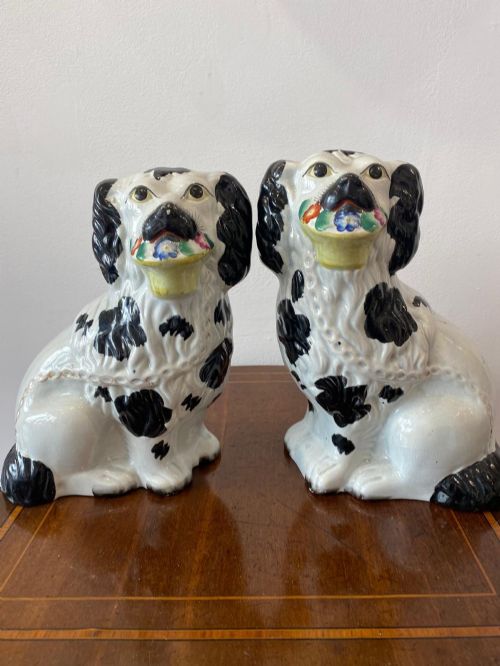
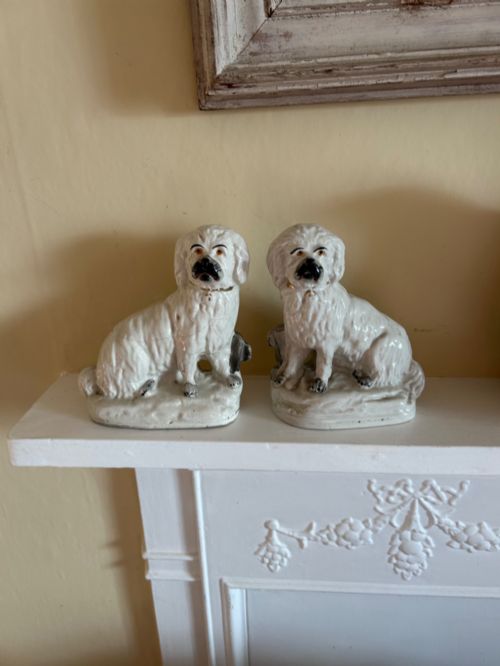
When you search for antique chimney dogs, you are looking at decorative pottery figures and metal hearth supports that populated nineteenth-century rooms. The ceramic versions you meet most often on this page are Staffordshire figures shaped as spaniels, pugs, poodles, and terriers.
These pieces date predominantly from the Victorian era, spanning the mid to late nineteenth century around eighteen-sixty to nineteen-hundred. They appear in pairs and collections, taking the form of decorative figurines intended to sit upon the mantelpiece or flank the fireplace opening.
The archive also records metal variants such as brass and iron fire dogs and andirons used for hearth grate rests. However, the current selection focuses squarely on ceramic and earthenware animal figurines rather than functional ironwork.
How they were made
A proud ceramic spaniel keeps eternal watch from the mantelpiece without ever needing a walk in the rain.
What varies in quality
The distinction between pieces rests in the crispness of the moulding and the execution of the hand-painted enamel. Finer examples display clean separation in the ceramic forms and careful application of glaze without heavy pooling.
Scale and presence also define the range, with larger figures offering a stronger visual impact on the mantelpiece. The preservation of original gilt and surface enamel largely determines how brightly the decorative details survive.
The Antique Chimney Dogs Glossary
- Staffordshire figures
- Ceramic figurines produced in the pottery towns of Staffordshire during the nineteenth century. They include popular animal subjects such as spaniels and pugs.
- Earthenware
- A porous pottery body fired at lower temperatures, commonly used for nineteenth-century decorative figurines before being glazed.
- Gilt
- A thin application of gold leaf or gold-coloured finish used to accent collars and markings on ceramic figures.
- Andirons
- Metal supports used in a hearth to raise logs off the floor, sometimes referred to historically as fire dogs.
Antique Chimney Dogs: Frequently Asked Questions
Where did people place chimney dogs?
These decorative ceramic figures traditionally sat on the mantelpiece above the fireplace or on either side of the hearth. Victorian households arranged them in pairs to watch over the room.
Today, they suit similar display spaces on shelves, sideboards, or window ledges where their pottery forms can be appreciated up close.
What animals are represented?
The ceramic figurines primarily depict popular dogs of the nineteenth century, including spaniels, pugs, poodles, and Maltese terriers. Some configurations include poodles with pups or larger groups of dogs.
These breeds reflect Victorian tastes for domestic animal companions rendered in glazed ceramic and earthenware.
How do I date these figures?
Dating relies on stylistic clues, the type of ceramic body, and the characteristics of the glaze and enamel colours. Most examples on this page date from the mid to late nineteenth century.
Changes in moulding techniques and decorative pigments help distinguish pieces made around eighteen-sixty from later Victorian production.
Are they ceramic or metal?
The pieces available in this selection are predominantly ceramic, earthenware, and glazed pottery figures. They are decorative objects intended for display rather than functional hearth use.
Earlier archive records show functional metal fire dogs and iron andirons, but the current listings consist of Staffordshire animal figures.