


Antique Ceramic Chimney Ornaments
These antique ceramic chimney ornaments are the cheerful earthenware figures and spill vases that once stood on Victorian mantelpieces, bringing rustic charm to any room.

Antique Ceramic Chimney Ornaments
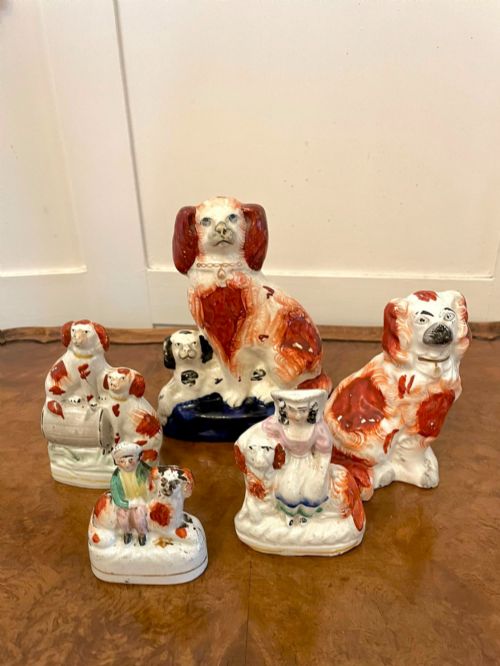
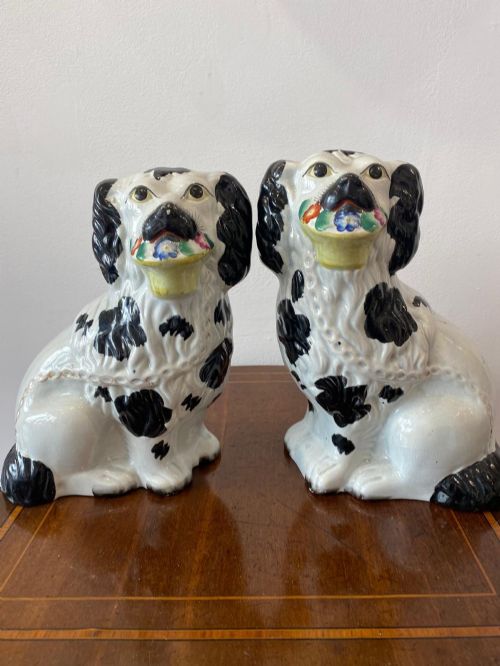
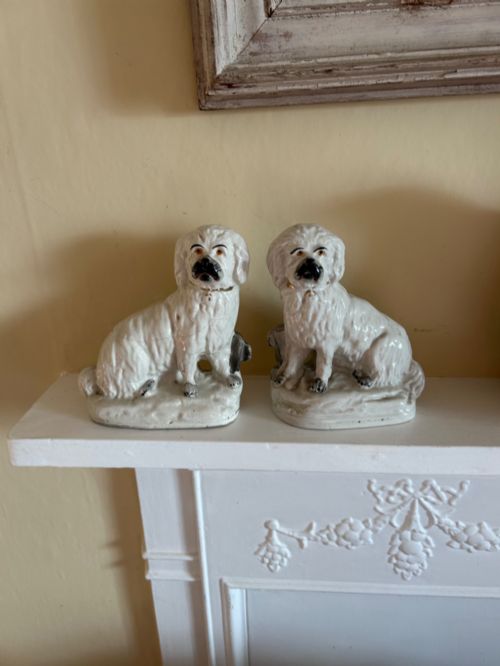
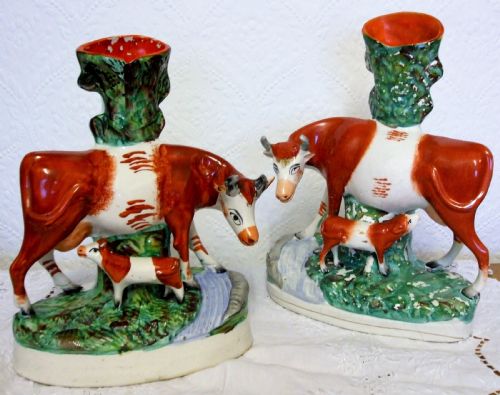
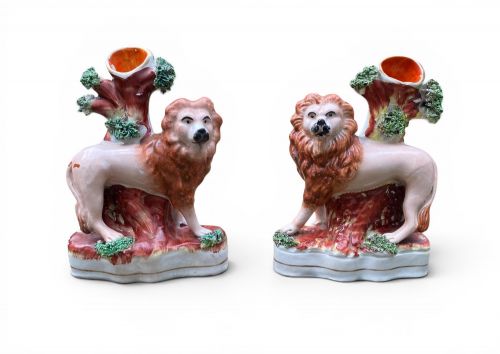
When searching for antique ceramic chimney ornaments, buyers encounter earthenware figures and spill vases made during the nineteenth century. These objects include pairs of spaniels, pugs, lions, and poodles, alongside flatback figures of cottages, castles, and historical personages.
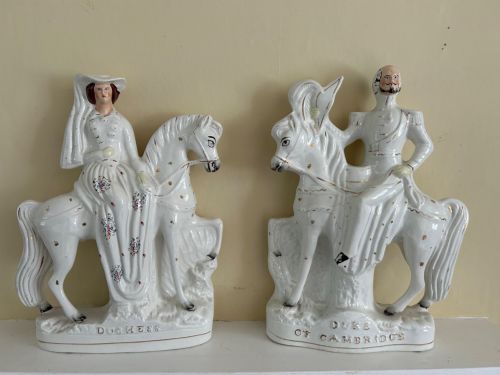
Most pieces on this page stem from the Victorian period, often modelled as mantel ornaments rather than utilitarian chimney pots. The selection ranges from small decorative dogs to larger flatback figures of smugglers and royalty.
Makers produced these pottery figures primarily to decorate the hearth, where they sat in pairs facing inward toward the grate. Collectors find them in styles spanning the Regency era through to the late nineteenth century.
What varies in quality
Scale and ambition also separate standard production from finer work, as larger flatbacks and complex spill vases involving animals or architectural elements demand greater technical skill from the potter.
Listings span the nineteenth century, encompassing Victorian and Regency styles executed in earthenware and lead glaze.
The Antique Ceramic Chimney Ornaments Glossary
- Flatback
- A figure moulded with a flat, unglazed or minimally finished back designed to stand flush against a mantelpiece. This method saved clay and simplified production for mantel ornaments.
- Spill Vase
- A hollow ceramic vessel incorporating a small holder for taper lights alongside a figural subject. These combined decorative appeal with the practical purpose of holding matches or spills.
- Earthenware
- A porous, non-vitreous pottery body fired at lower temperatures than stoneware or porcelain. It formed the standard base material for nineteenth-century Staffordshire figures.
- Lead Glaze
- A glossy coating containing lead oxide applied to pottery before firing to waterproof the surface and enrich the colours. It gives these ornaments their characteristic reflective sheen.
Antique Ceramic Chimney Ornaments: Frequently Asked Questions
Where did these ornaments sit?
These figures traditionally stood on the mantelpiece above the fireplace, facing inward toward each other in matching pairs.
Their flat backs allowed them to sit flush against the wall or mirror glass in nineteenth-century parlours.
How do I spot a pair?
Staffordshire animals and figures were commonly modelled as left-and-right facing pairs to sit symmetrically on either end of a shelf.
Matching heights, glazes, and facial markings confirm they belong together as a matched set.
What is a spill vase?
A spill vase combines a figural ceramic sculpture with an integrated cylindrical holder designed to store wooden tapers.
Victorian households used these tapers to transfer fire from the hearth to lamps and candles.
Are these pieces dated?
Most nineteenth-century figures lack makers marks or precise dates, relying instead on stylistic evidence and potting characteristics.
Costume details, moulding style, and glaze types help place them within the Victorian era.