


Victorian Ceramic Dog Pair
A victorian ceramic dog pair brings quintessential domestic character to a room, offering the charming presence of nineteenth-century mantel ornaments.

Victorian Ceramic Dog Pair
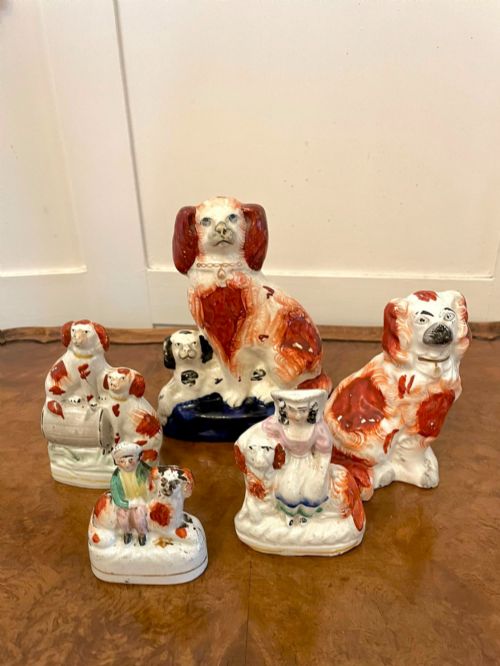
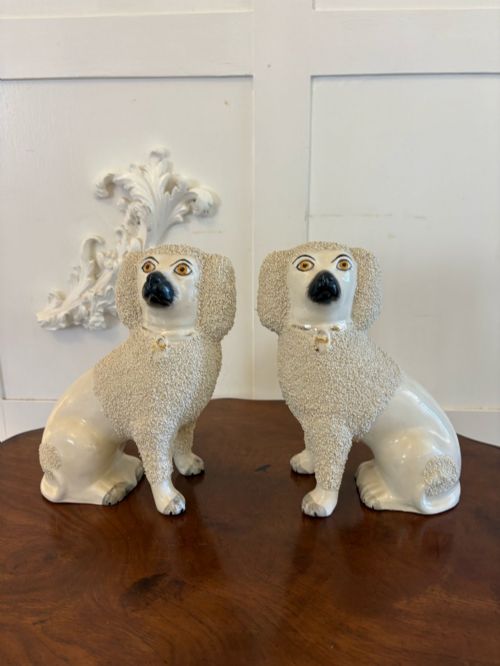
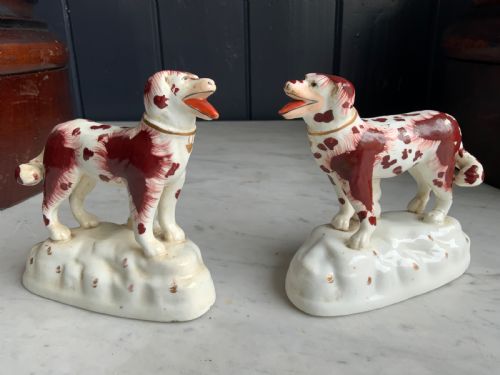
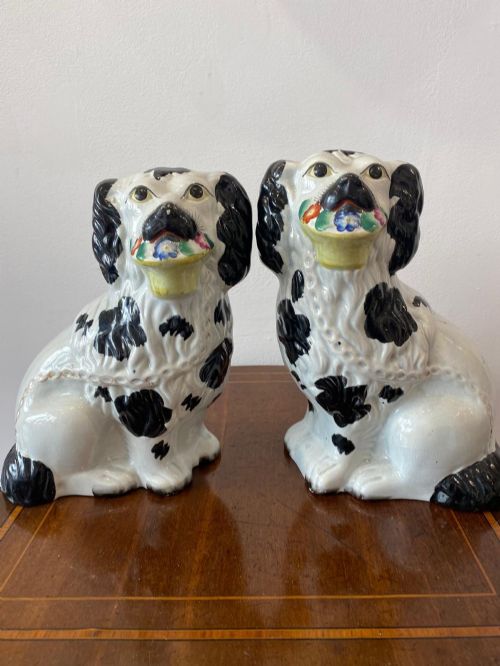
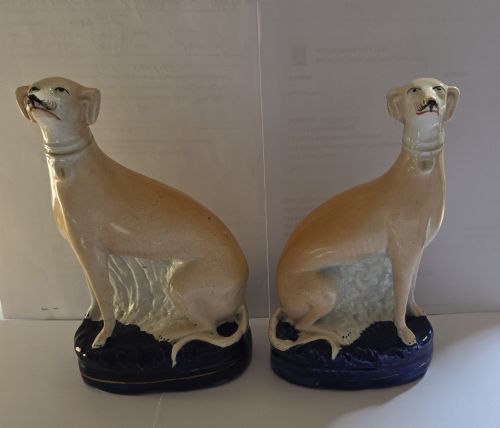
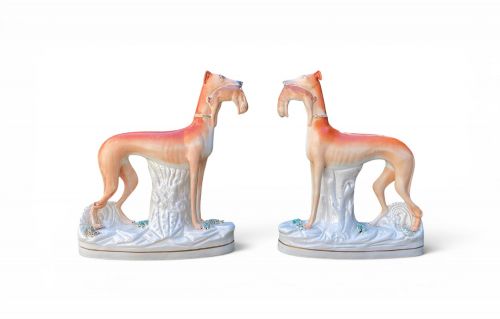
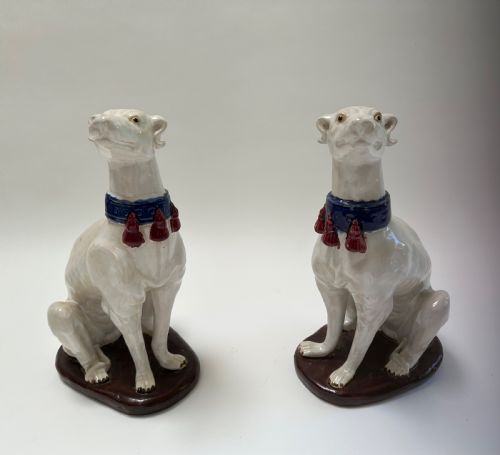
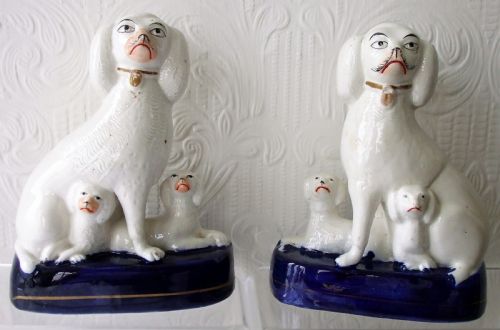
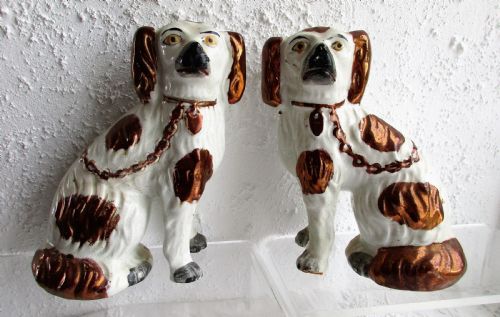
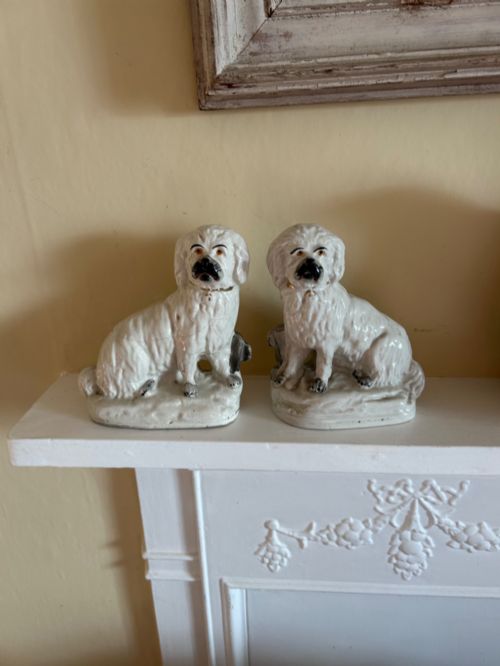
A victorian ceramic dog pair typically takes the form of seated spaniels, poodles, greyhounds, or whippets manufactured across the nineteenth century. These ornamental figures served as symmetrical mantelpiece decorations in homes of the period.
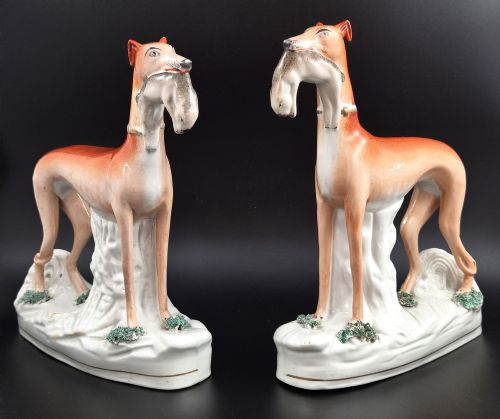
The selections here span Staffordshire pottery traditions, Italian majolica, and continental porcelain, featuring decorative variations such as inkwells, quill holders, and dogs with hares.
Most examples date from the middle to late nineteenth century, encompassing Victorian country pottery alongside refined porcelain and earthenware figures.
Materials and Techniques
Potters shaped these figures from earthenware and ceramic bodies, frequently applying lead glaze to seal the surface and provide a smooth sheen.
Certain poodles received specialised textures mimicking fur, whilst others were cast as hollow figures with distinct painted markings.
Listings incorporate earthenware, porcelain, and majolica materials spanning the nineteenth and early twentieth centuries.
Judging Quality
The crispness of the moulding and the delicacy of the hand-painted enamel work dictate the visual strength of a victorian ceramic dog pair.
Proportion, expression, and the retention of original gilt highlights differentiate standard decorative output from finer studio pieces.
Matched pairs exhibiting consistent glaze pooling, clear facial detailing, and well-preserved secondary elements like hares or pups command greater attention.
Thomas Parr·Wooley
The Victorian Ceramic Dog Pair Glossary
- Staffordshire
- A major pottery manufacturing region in England known for producing earthenware figures, animals, and mantel ornaments during the nineteenth century. Pieces from this area form the core of traditional dog pairs.
- Earthenware
- A porous pottery body fired at lower temperatures, requiring a glaze to become impermeable. It serves as the primary material for the majority of Staffordshire figures.
- Lead Glaze
- A glossy coating containing lead oxide applied to pottery before firing. It creates a smooth, reflective surface across the ceramic body.
- Copper Lustre
- A metallic glaze finish imparting a coppery, reflective sheen to the ceramic surface. This technique produces a distinctive warm metallic appearance on select nineteenth-century figures.
- Gilt
- A thin layer of gold or metallic gold-coloured paint applied to surface details such as collars and chains. It highlights specific decorative elements on the pottery.
Victorian Ceramic Dog Pair: Frequently Asked Questions
What breeds appear most often?
Spaniels, poodles, greyhounds, and whippets dominate the recorded selection. Spaniels often wear distinctive lockets and chains.
Greyhounds and whippets frequently appear alongside hares or function as quill holders and inkwells.
Where were they displayed?
Owners traditionally placed matching pairs on either side of a fireplace mantelpiece. They served as prominent decorative ornaments in Victorian living spaces.
Smaller miniature versions occupied cabinets, desks, and smaller tables around the home.
How do I care for glazed pottery?
Dust the surface gently with a soft, dry cloth to prevent the accumulation of dirt. Avoid harsh cleaning agents that might damage delicate enamel and gilt.
Keep figures away from direct sunlight to preserve the vibrancy of the painted colours.
Are all pairs identical?
Hand-modelled and hand-painted figures often exhibit subtle differences between individual animals in a pair. Potters produced them as matching sets rather than exact mechanical duplicates.
Variations in stance, facial expression, and enamel brushwork are typical of nineteenth-century production methods.