




Earthenware Spaniel Dogs
These earthenware spaniel dogs are cheerful ceramic companions that bring nineteenth-century mantelpiece charm to any room.
Earthenware Spaniel Dogs
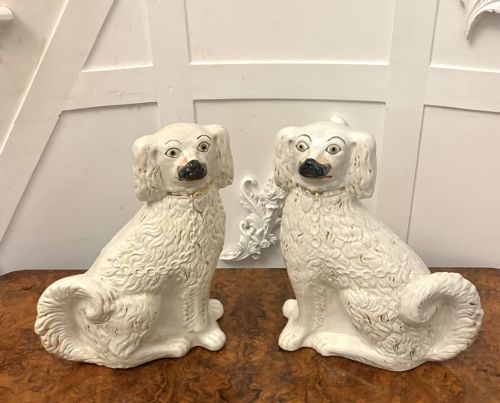
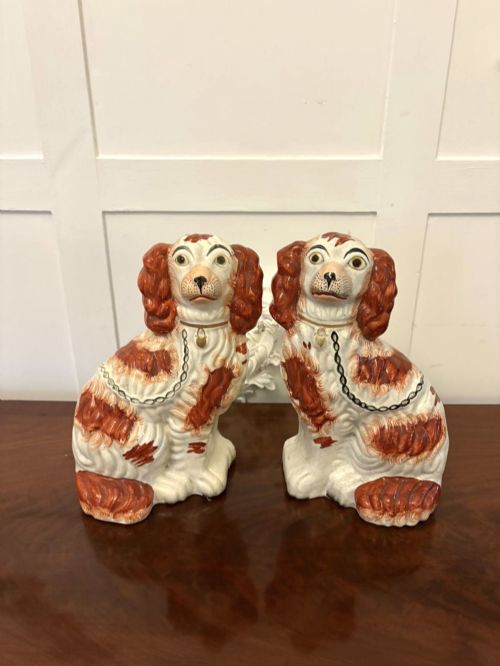
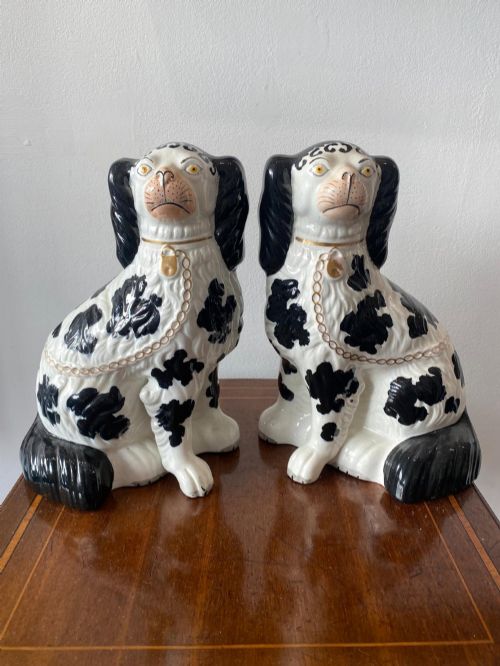
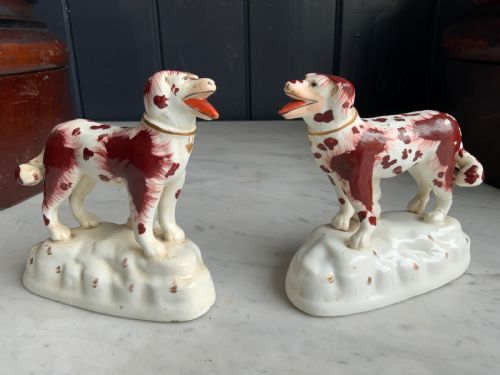
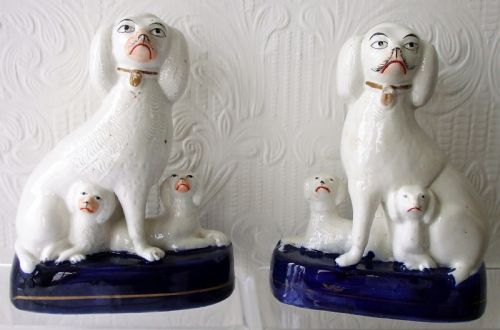
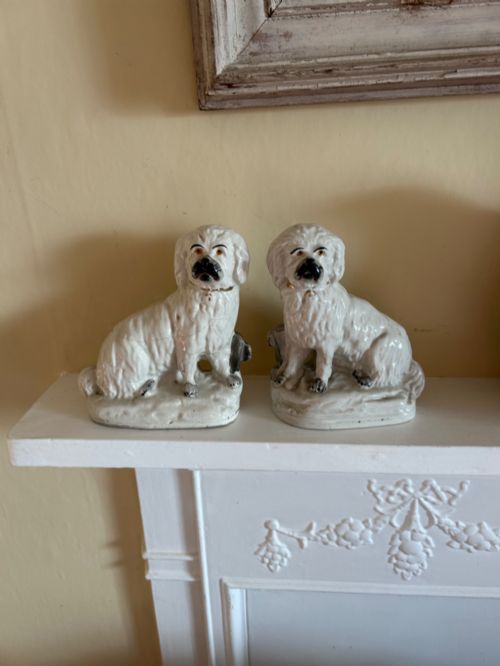
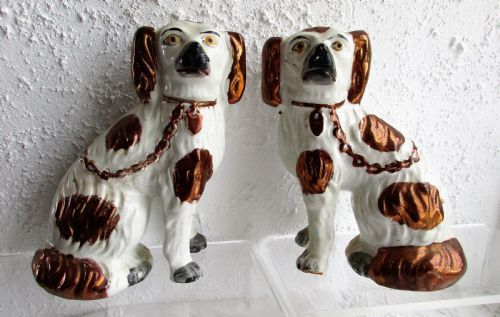
When you search for earthenware spaniel dogs, you encounter a distinct group of nineteenth-century ceramic figures shaped in the likeness of seated hounds. These pieces span periods from the Regency era through to the late nineteenth century, predominantly originating from the Victorian era. Most examples emerge as symmetrical pairs intended to sit facing each other upon a fireplace mantel.
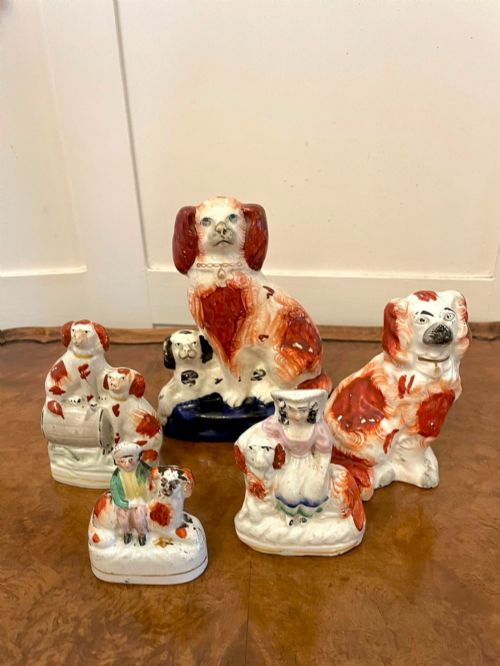
The assortment includes not only standard seated models but also variations such as money boxes, spill vases, and Toby jugs shaped like spaniels. Alongside traditional spaniels, the listings encompass related forms including poodles with pups, Maltese terriers, and dogs accompanied by musicians. These ceramic figures appear in various colour schemes, including classic black and white, white with gilt highlights, and deep red and white.
Makers and designers produced these decorative objects using traditional pottery methods across the nineteenth century, resulting in collections of varying sizes. The pieces frequently incorporate functional elements, operating as quill holders or clock groups alongside their primary decorative purpose. Buyers most commonly meet pairs finished with hand-painted details and glazed ceramic surfaces dating from the eighteen-sixties onward.
Determinants of Quality
The standard of painting distinguishes finer examples from simpler production pieces, particularly in the precision of the facial expressions and markings. Superior figures display careful hand-painted brushwork rather than hasty application, bringing character to the spaniels' faces. The crispness of the moulding also dictates quality, with sharper details surviving clearly through the glaze.
Material additions such as glass eyes or delicate gilt and gold leaf embellishments elevate the status of individual pieces. Furthermore, the presence of matching pairs with consistent proportions and uniform glaze coloration commands greater attention from collectors. The complexity of the form, such as incorporated spill vases or clock groups, likewise influences the standing of the piece.
Earthenware Spaniel Dogs Retail Price Guide 2026
Typical asking prices for earthenware spaniel dogs among the pieces listed under this phrase on Sellingantiques today, from the lower quarter to the upper quarter. They describe what is for sale here now, not the wider market.
Listings feature earthenware spaniel dogs spanning from the Regency period through the nineteenth century, including Victorian examples.
Beswick
The Earthenware Spaniel Dogs Glossary
- Earthenware
- A porous pottery body fired at lower temperatures than stoneware or porcelain. It requires a vitreous glaze to become watertight and serves as the primary material for these figures.
- Glaze
- A glassy coating fused to the ceramic surface during firing. This finish seals the earthenware body and gives the spaniels their characteristic glossy appearance.
- Spill Vases
- Hollow cylindrical holders attached to the figure designed to store wooden spills for lighting fires. These functional vessels are frequently integrated into the ceramic design behind the dog.
- Encrusting
- Small applied ceramic fragments or clay details stuck onto the surface to simulate texture or foliage. This technique appears on cushions and bases beneath the figures.
Earthenware Spaniel Dogs: Frequently Asked Questions
What are comforter spaniels?
Comforter spaniels refer to the specific type of seated earthenware dog that Victorians placed on mantelpieces to guard the home. These figures represent the beloved pets kept by royalty and nobility during the nineteenth century.
Potters designed them in facing pairs so they could sit at either end of a fireplace hearth. They earned their name from the comfort and companionship their presence offered to Victorian households.
How were these dogs displayed?
Owners traditionally placed these ceramic figures in matching pairs on the mantelpiece above a fireplace. They were arranged to face inwards toward the centre of the mantel.
Beyond the fireplace, collectors also positioned them on side tables, chests of drawers, and windowsills. Their flat-backed construction allowed them to sit flush against walls and vertical surfaces.
Were these figures used for anything?
While primarily decorative, certain examples incorporated functional elements into their design. Some models served as money boxes with slots cut into the ceramic bodies.
Others functioned as quill holders for writing desks or acted as spill vases to hold wooden matches. A select few were even incorporated into clock groups as ornamental supports.