
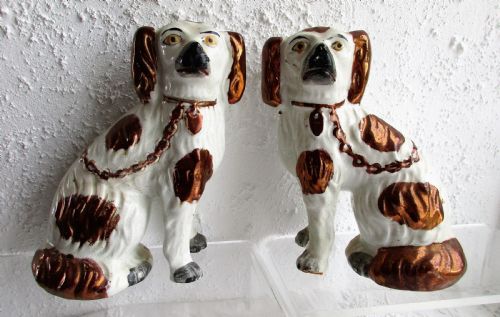


Victorian Fireplace Spaniels
Victorian fireplace spaniels are earthenware ceramic figures that bring character and period charm to a hearth.
Victorian Fireplace Spaniels
Victorian fireplace spaniels are ceramic figurines depicting seated dogs, most often found in pairs meant to sit either side of a hearth. These decorative objects date from the nineteenth century, including specific decades such as eighteen sixty, eighteen seventy, eighteen eighty, and eighteen ninety.
The version a buyer is most likely to meet on this page is a matching pair of earthenware spaniels. They appear in forms finished with glaze, enamel, paint, gilt, gold leaf, or copper lustre, sometimes featuring glass eyes.
How they were made
These figurines are shaped from earthenware ceramic, a porous clay body that forms the sturdy structure of each dog. Makers then apply glazes and paint to surface details, creating the distinct coat markings and facial expressions seen across the period.
Listings feature nineteenth century earthenware ceramics decorated with copper lustre, gilt, gold leaf, paint, and enamel.
What varies in quality
The refinement of the hand painting and the crispness of the earthenware moulding define the upper tier of these figurines. Softer brushwork or simpler glazes distinguish more modest examples from finely detailed pairs.
The presence of supplementary decorative elements, such as copper lustre accents, gold leaf, or applied glass eyes, often indicates a higher grade of manufacture. Scale also plays a role, with larger figures demanding greater technical skill from the potter.
The Victorian Fireplace Spaniels Glossary
- Earthenware
- A porous type of pottery fired at lower temperatures, commonly used for nineteenth century figures. It forms the solid base body for nearly all the spaniels listed here.
- Copper Lustre
- A metallic glaze technique that produces a reflective, coppery sheen on the surface of ceramic objects. This finish catches the light from a fireplace brilliantly.
- Comforter Spaniels
- A traditional term for Staffordshire pottery dogs made to sit on mantelpieces or hearths. They take their name from the notion that they provided comfort to their owners.
- Gilt
- A thin layer of gold or gold-like material applied to decorate specific details such as chains and lockets. It adds a warm metallic contrast to the painted ceramic body.
Victorian Fireplace Spaniels: Frequently Asked Questions
What are victorian fireplace spaniels?
Victorian fireplace spaniels are ceramic dog figurines produced during the nineteenth century in England. They were designed specifically to sit in pairs upon mantelpieces or hearths.
These decorative figures draw inspiration from the pet spaniels of the era. They display various coat colours and ornamental collars typical of Victorian Staffordshire pottery.
How were they displayed?
These dogs were traditionally arranged in matching pairs facing one another on either side of a fireplace. They served as domestic ornaments to brighten up the hearth.
Collectors today still place them on mantelpieces, sideboards, or bookshelves in pairs. Their symmetrical nature makes them ideal for balancing a room's decor.
What materials make up these dogs?
The core material is earthenware ceramic, shaped into the form of a seated spaniel. Potters then finished these figures using paint, enamel, and glaze.
Additional decorative elements include gilt, gold leaf, or copper lustre highlights. Some examples incorporate glass eyes for added realism.
How do I spot different periods?
Dating relies on stylistic shifts and manufacturing methods recorded across the nineteenth century. Pieces range from eighteen sixty styles with copper lustre to later eighteen ninety examples with hand painted details.
Examining the glaze, the depth of the earthenware body, and decorative flourishes helps distinguish between decades. Subtle changes in facial moulding also indicate different eras of production.