
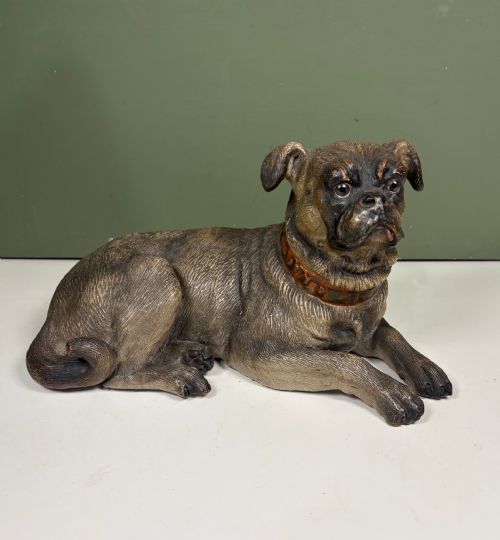


Vintage Pottery Dogs
These vintage pottery dogs bring nineteenth-century mantelpieces to life, offering character and history through glazed ceramic figures.
Vintage Pottery Dogs
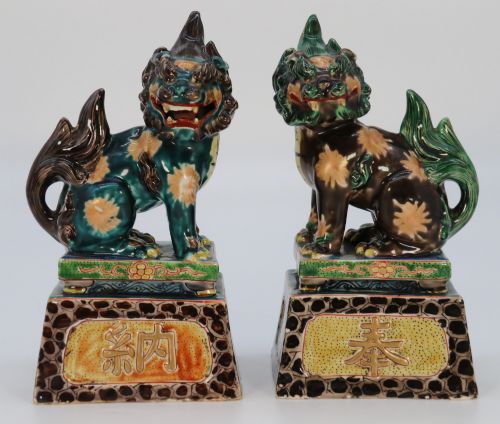
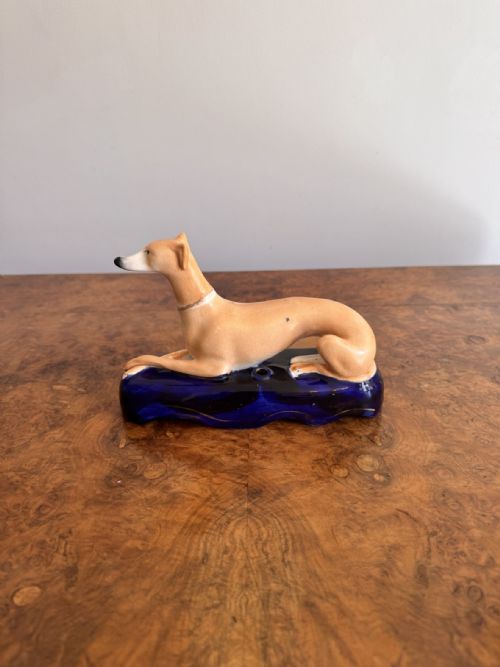
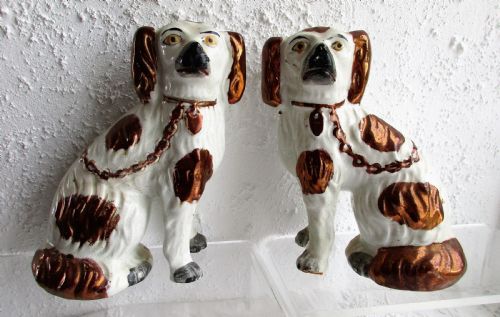
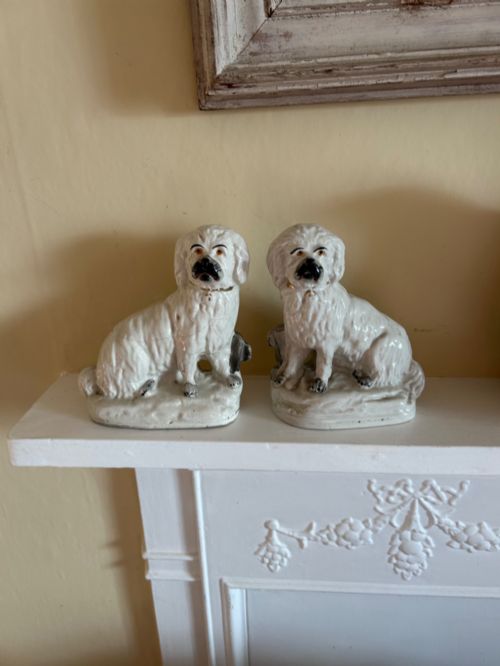
Vintage pottery dogs represent decorative figures shaped primarily during the nineteenth century, with Staffordshire spaniels, pugs, greyhounds and poodles forming the core of the selection on this page. Makers produced these earthenware animals in pairs to sit on mantelpieces, alongside occasional money boxes and desk accessories.
Most pieces date from the Victorian era, spanning periods from eighteen-sixty to nineteen-ten, with English traditional styles dominating alongside Chinese porcelain foo dogs from the Qing period. Buyers encounter everything from miniature poodles to grand pairs of black and white or copper lustre spaniels.
How they were made
Certain examples incorporate copper lustre finishes or pale green glazes, particularly on Chinese porcelain pieces from the nineteenth century. Workshops produced these objects using durable ceramic bodies suited for domestic display.
Listings span periods from eighteen-fifties Victorian production to Edwardian pieces, utilising earthenware, porcelain, copper lustre and gold leaf.
What varies in quality
Quality rests in the crispness of the moulding and the execution of the hand painting, where finer examples display clear facial expressions and carefully delineated coats. Pieces with well-preserved gold leaf, gilt or copper lustre accents show superior initial craftsmanship.
Scale and format also distinguish the range, from miniature poodles to grand pairs of dogs. Matching pairs and complete sets with pups demonstrate greater decorative presence than single figures.
Wedgwood and Co Ltd·Beswick
The Vintage Pottery Dogs Glossary
- Earthenware
- A porous type of pottery fired at lower temperatures, commonly used for nineteenth-century Staffordshire figures. It forms the base body beneath the glaze.
- Copper Lustre
- A metallic glaze finish that creates a reflective, copper-like sheen on the ceramic surface. Potters used this technique to add decorative borders and highlights to dogs.
- Foo Dog
- A traditional Chinese guardian lion figure rendered in porcelain or ceramic. These pieces often feature coloured enamels or pale green glazes from the Qing period.
- Comforter Spaniel
- A popular Victorian Staffordshire mantelpiece dog modelled on King Charles spaniels. These figures usually appear in symmetrical pairs facing each other.
- Money Box
- A functional ceramic vessel with a narrow slot for coins, produced in the shape of a dog during the Victorian period. They combine utility with decorative figural modelling.
Vintage Pottery Dogs: Frequently Asked Questions
What are vintage pottery dogs?
Vintage pottery dogs are decorative ceramic and earthenware figures produced during the nineteenth and early twentieth centuries, primarily in Staffordshire. They depict various breeds including spaniels, pugs, greyhounds and poodles.
Potters designed these figures as mantelpiece ornaments, often making them in symmetrical pairs. Some pieces also served practical functions such as money boxes or quill holders.
How were Staffordshire dogs displayed?
Victorian households traditionally placed pairs of Staffordshire dogs on mantelpieces on either side of a fireplace. They faced inward toward each other to create a balanced display.
Owners also placed smaller pairs and miniature poodles on chests of drawers, side tables or desk accessories. Larger grand pairs anchored the centre of the mantel.
How do I identify Victorian pottery dogs?
Victorian pottery dogs typically feature earthenware bodies with hand-painted enamel details, gold leaf accents or copper lustre glazes. Dating relies on stylistic markers such as baseline colours, collar designs and manufacturing techniques from eighteen-sixty to nineteen-ten.
Earlier nineteenth-century examples often display simpler casting marks and rich glaze variations. Chinese porcelain foo dogs from the Qing period feature distinct pale green glazes or enamel palettes.
Are all pottery dogs from Staffordshire?
While Staffordshire potteries produced the vast majority of English figural dogs on this page, other traditions exist. The selection also includes Chinese porcelain foo dogs from the Qing period.
British makers such as Wedgwood and Beswick also contributed to later nineteenth and early twentieth-century production. Each region employed distinct clay bodies, glazes and stylistic conventions.