
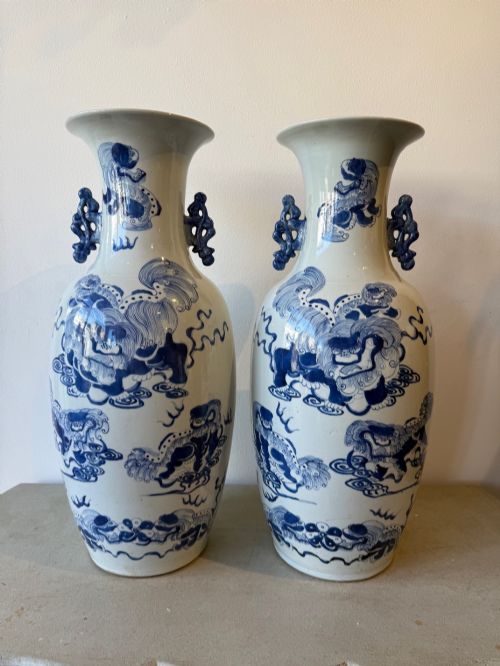


Hand Painted Pottery Dogs
Hand painted pottery dogs bring enduring character to a room, offering the charm of Victorian Staffordshire pairs and Chinese jars.
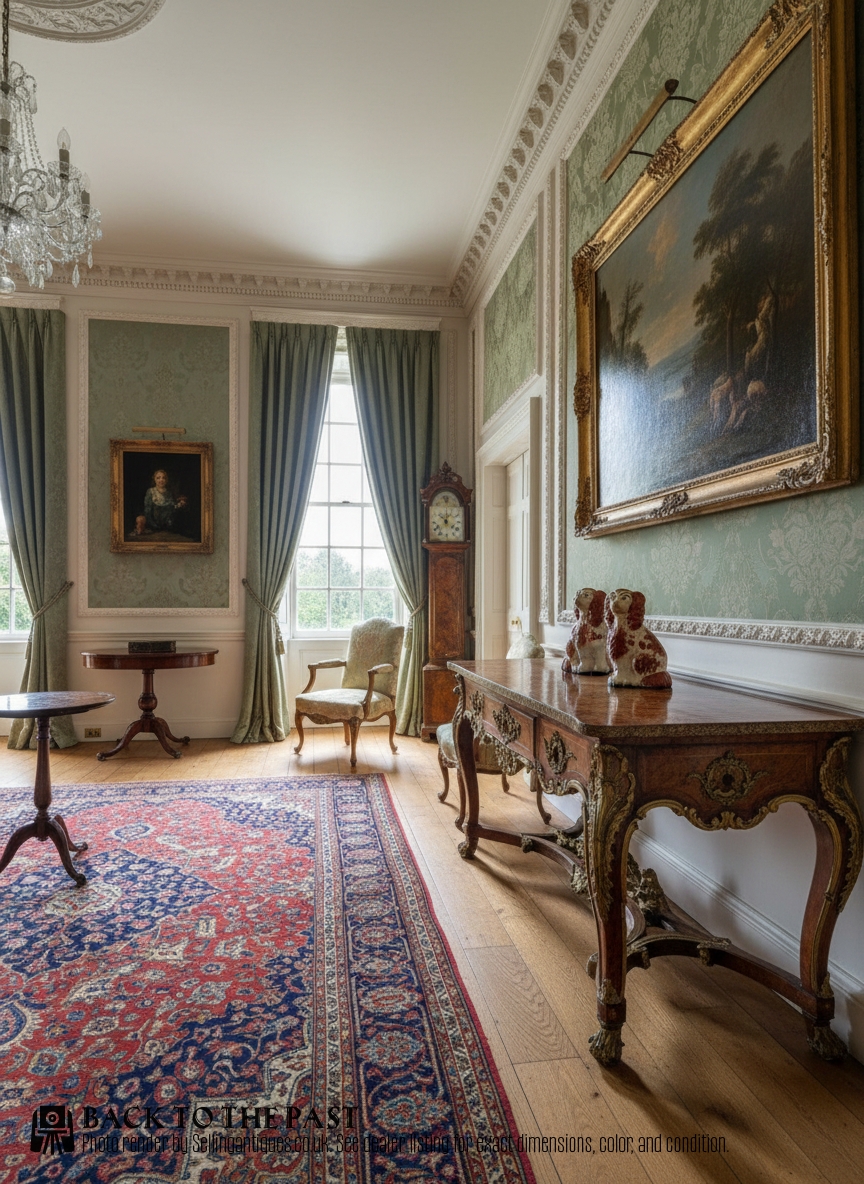
Hand Painted Pottery Dogs
When you search for hand painted pottery dogs, you encounter nineteenth-century figures alongside Chinese vessels bearing painted animal motifs. The Staffordshire spaniels and dalmatians dominate these listings, appearing as single figures or matched pairs.
The material record spans earthenware and porcelain, shaped into decorative figurines and jars. These pieces range from Victorian mantel ornaments to mid-seventeenth-century Chinese jars adorned with Buddhistic lions and dragons.
The selection reflects both British domestic mantelpiece traditions and Chinese export ceramics. Each form represents a specific decorative approach from the nineteenth century back to the seventeenth century.
How they were made
Potters shaped these earthenware and porcelain bodies using traditional forming techniques before applying detailed brushwork. Enamel colours, cobalt glaze, and gold leaf or gilt accents were then fired onto the ceramic surfaces.
Staffordshire spaniels were traditionally placed facing inwards on mantelpieces to gaze lovingly at each other across the hearth.
What varies in quality
In Chinese ceramics, the depth of the cobalt glaze and the control of the contrasting enamel colours determine the standard. Pieces that retain vibrant gilding and clear detail distinguish themselves from more muted or heavily worn examples.
The Hand Painted Pottery Dogs Glossary
- Earthenware
- Porous pottery fired at lower temperatures, commonly used for nineteenth-century Staffordshire figures. It requires a glaze to hold liquids.
- Staffordshire
- Pottery produced in the English county of Staffordshire, famous for the seated spaniels and dalmatians made for domestic mantelpieces. These figures date primarily through the nineteenth century.
- Cobalt Glaze
- A blue ceramic colouring oxide applied under the glaze, providing the deep blue tones seen on Chinese transitional and Qing dynasty pieces. It withstands high firing temperatures without losing hue.
- Enamel
- Opaque vitreous composition applied over a fired glaze and fixed with a secondary low-temperature firing. This technique permits vibrant reds, greens, and yellows on ceramic surfaces.
- Doucai
- A Chinese porcelain decorating technique combining underglaze blue outlines with overglaze enamel infills. The method creates a distinct layered appearance on jars and vessels.
Hand Painted Pottery Dogs: Frequently Asked Questions
How old are these pottery dogs?
The pieces listed date mainly from the nineteenth century, with Victorian examples spanning the decades between 1860 and 1900. Some related Chinese ceramic pieces date back to the seventeenth century.
Dating relies on stylistic conventions, manufacturing materials, and recorded production periods.
How do I display them?
These figures suit traditional settings like mantelpieces, sideboards, and bookshelves where pairs can be displayed together. Their hand-painted details stand out best against neutral backgrounds.
Keeping them out of direct sunlight helps preserve the enamel colours and gold leaf accents over time.
Are all Staffordshire dogs painted by hand?
The examples on this page feature hand-painted details applied over the glazed earthenware body. Artisans painted the facial expressions, fur markings, and collars individually.
This hand application means minor variations exist between matched pairs and individual figures.