


White Glaze Spaniel
White glaze spaniel figures are classic Victorian mantelpiece ornaments that bring traditional charm to any room.
White Glaze Spaniel
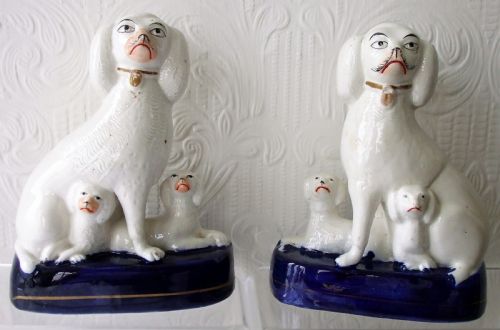
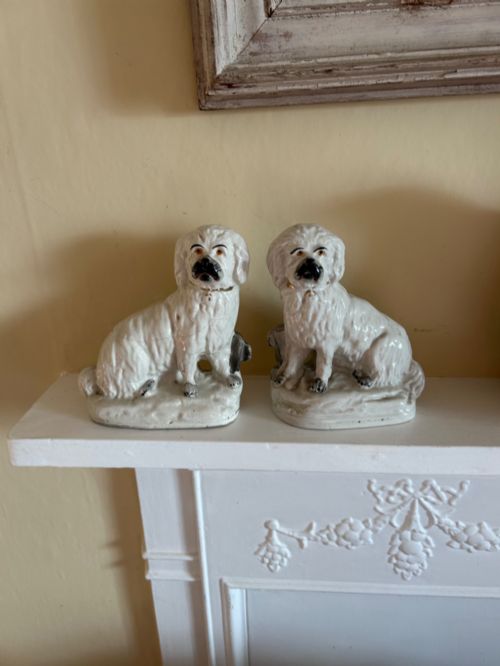
White glaze spaniel pieces are traditional decorative figurines modelled as seated dogs, often offered in pairs. These ceramic sculptures originate from the Victorian period, dating across the nineteenth century and into nineteen hundred.
Buyers encounter various forms on this page, including standard seated spaniels, dogs with pups, quill holders, and complex clock groups. Makers also produced alternative canine subjects like poodles, Maltese terriers, and general Staffordshire dogs.
The objects serve primarily as decorative figures, designed to sit symmetrically on mantelpieces or shelves. English traditional styling dominates these ceramic figurines, reflecting nineteenth century domestic tastes.
Materials and construction methods
Potters utilised earthenware and ceramic bodies to form these figurines, applying a smooth glaze over the shaped clay. Lead glaze finishes provide the characteristic glossy surface seen on nineteenth century examples.
Some spaniels wear gilded chains with padlocks, guarding the mantelpiece with unexpected security.
Factors distinguishing quality levels
Model size and complexity also set pieces apart, moving from standard pairs to large seated spaniels or multi figure clock groups. The condition of the original lead glaze and the crispness of the earthenware moulding determine the overall standard.
Beswick
The White Glaze Spaniel Glossary
- Earthenware
- A porous pottery body fired at lower temperatures, commonly used for nineteenth century Staffordshire figures before being coated in glaze.
- Lead glaze
- A glossy liquid coating applied to ceramics before firing, creating a shiny protective surface that catches the light on Victorian dogs.
- Quill holder
- A functional ceramic desk accessory featuring a modelled dog figure alongside a trough or receptacle for writing feathers.
- Copper lustre
- A metallic glaze technique that produces a reflective, coppery sheen on the surface of pottery figures and decorative items.
- Enamel
- Coloured vitreous paint applied over the fired glaze to add eyes, spots, and collars to ceramic animals.
White Glaze Spaniel: Frequently Asked Questions
Where should I display my white glaze spaniels?
These ceramic dogs traditionally sit in pairs on either end of a mantelpiece, framing a fireplace or central clock. They also suit placement on bookshelf tops or sideboard surfaces where their symmetrical arrangement creates visual balance.
Keep them away from areas of direct moisture or heavy foot traffic to protect the historical glaze and hand painted enamel surfaces from accidental knocks.
Were these dogs used for anything besides decoration?
While most pieces served purely as decorative figurines for the home, some specialised examples included functional elements. Certain pottery pieces incorporate small inkwells or act as quill holders designed for nineteenth century writing desks.
Clock groups combined the traditional seated dog figures with a working timepiece compartment, merging domestic ornamentation with practical timekeeping.
What variations exist among Staffordshire dog figures?
Makers produced various canine subjects beyond spaniels, including poodles with pups and Maltese terriers. Colour variations also occur, ranging from plain white glaze to black and white markings, hand painted highlights, and copper lustre finishes.
Sizes vary from compact single figures to large pairs intended as substantial mantelpiece ornaments, sometimes accompanied by additional decorative elements like baskets or birds.