


Pair Ceramic Spaniel Dogs
Pair ceramic spaniel dogs sit on mantelpieces as traditional hearth ornaments, bringing nineteenth-century English pottery into modern rooms.
Pair Ceramic Spaniel Dogs
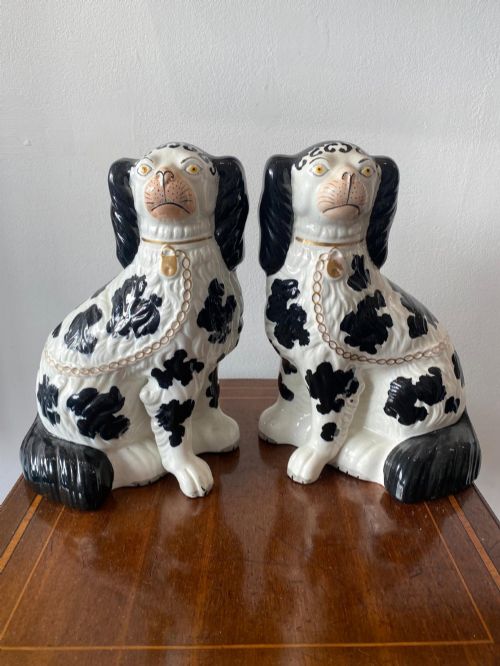
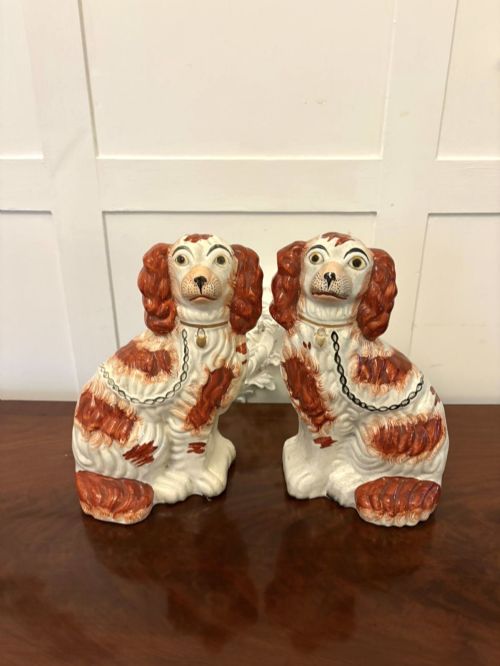
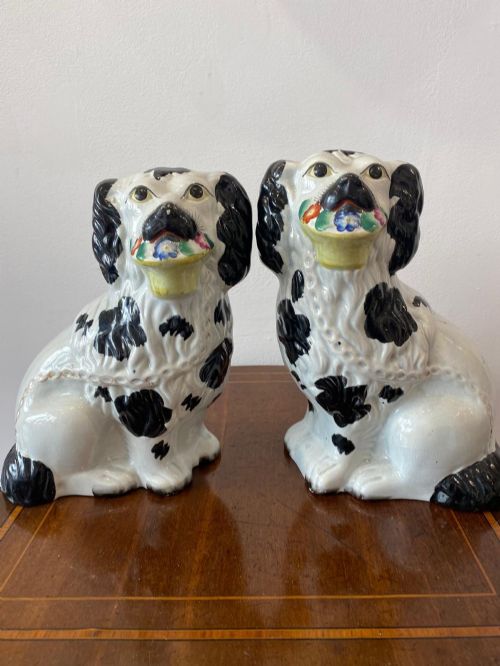
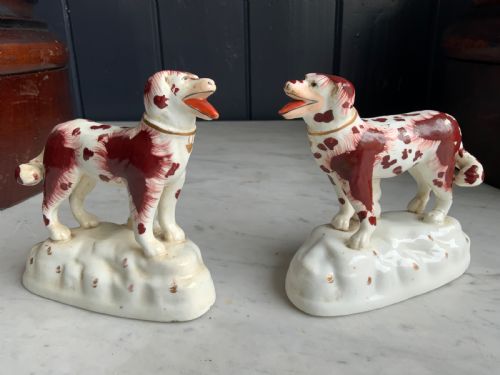
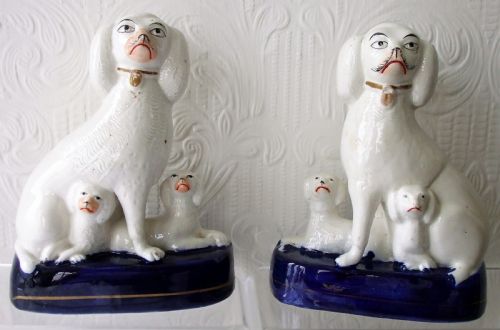
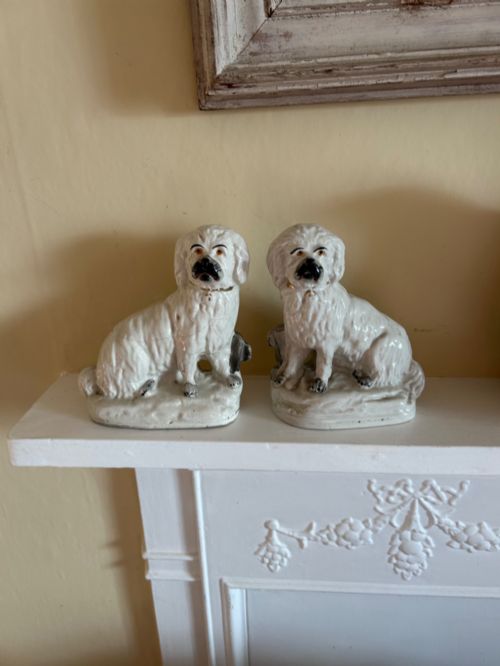
When you search for pair ceramic spaniel dogs, you encounter mantelpiece figures modelled as seated spaniels and poodles. These pottery dogs originate primarily in the nineteenth century, spanning the Victorian era and periods around eighteen-sixty and eighteen-eighty.
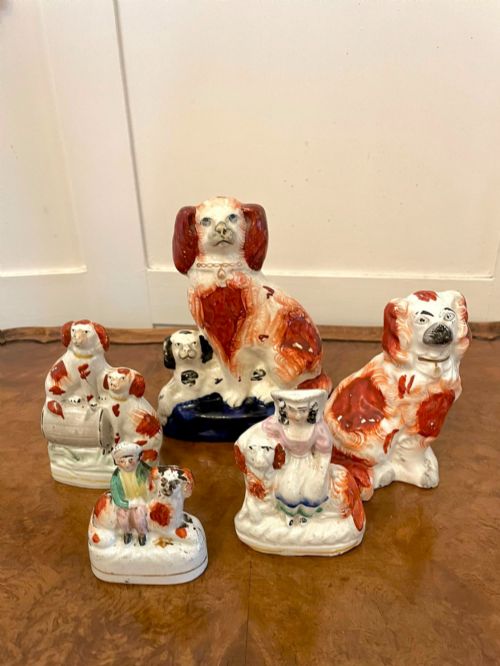
The inventory on this page includes decorative figures, quill holders, and spill vases. Alongside spaniels, the listings encompass related forms such as poodles, maltese terriers, and dogs with pups.
Most examples hail from English traditions, including Staffordshire pottery. Makers represented in the later entries extend to Royal Doulton and Beswick from the twentieth century.
How they were made
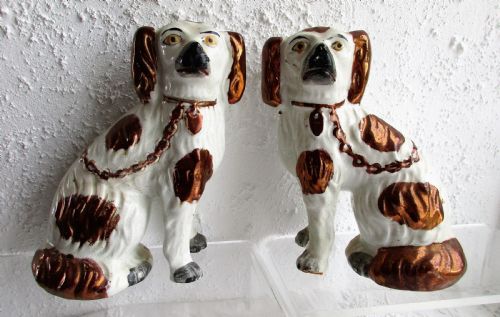
Gilt highlights and copper lustre finishes appear across several nineteenth-century pairs, adding metallic sheen to collars, lockets, and chains. Some variants incorporate blue cushions and surface encrusting.
Spill vases and quill holders combine sculptural dog figures with functional apertures for holding quills or matches.
Listings span the Victorian era, with dates concentrating around eighteen-sixty and eighteen-eighty alongside twentieth-century examples.
What varies in quality
Painting execution dictates the visual appeal of each pair, separating finely rendered facial expressions from hastily applied enamel. Hand-painted details on nineteenth-century specimens display varying degrees of precision in the eyes and muzzles.
The crispness of the modelling in the clay and the uniformity of the glaze determine the structural merit of the figures. Early Victorian pieces show distinct differences in potting weight and surface finish compared to later twentieth-century productions.
Royal Doulton·Beswick
The Pair Ceramic Spaniel Dogs Glossary
- Comforter spaniel
- A nineteenth-century Staffordshire figure type modelled after Queen Victoria's pet spaniel Dash, traditionally displayed on parlour mantelpieces facing inward.
- Spill vase
- A hollow pottery cylinder integrated behind the dog figure, designed to hold wooden spills used for lighting fires and candles.
- Quill holder
- A ceramic base incorporating a dog figure alongside fitted sockets intended for resting writing quills upon a desk.
- Copper lustre
- A metallic glaze technique producing an iridescent, reflective copper sheen across the ceramic surface.
- Enamel
- Opaque vitreous pigments applied over the fired glaze to add colour to the coats, eyes, and collars of the dogs.
Pair Ceramic Spaniel Dogs: Frequently Asked Questions
How were pair ceramic spaniel dogs displayed?
These figures traditionally sat on either end of a mantelpiece in pairs, facing towards the centre of the hearth.
Victorian households placed them on parlour shelves to watch over the room, often pairing them with matching Staffordshire models.
What is a comforter spaniel?
A comforter spaniel represents the typical Staffordshire hearth dog modelled on small King Charles spaniels popular during the nineteenth century.
These pottery figures gained the name comforter because they replicated the lapdogs kept by Victorian owners for companionship.
How do spill vases differ from standard figurines?
Spill vases incorporate an upright cylindrical holder attached to the back or side of the ceramic dog figure.
This hollow tube served a practical purpose in the nineteenth century by holding thin wooden spills used to transfer flames from the hearth to candles and pipes.
What materials make up these ceramic dogs?
The pieces consist primarily of earthenware and porcelain bodies covered with lead glaze or enamel paints.
Makers frequently added gilt accents, copper lustre finishes, and surface encrusting to enhance the decorative appearance of the pottery.