

Victorian Earthenware Figure
These figures bring the parlour shelf of the nineteenth century into the present day with their bold glazes and sturdy clay forms.
Victorian Earthenware Figure
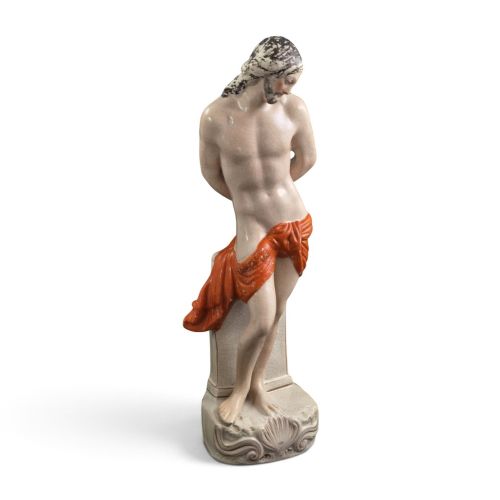
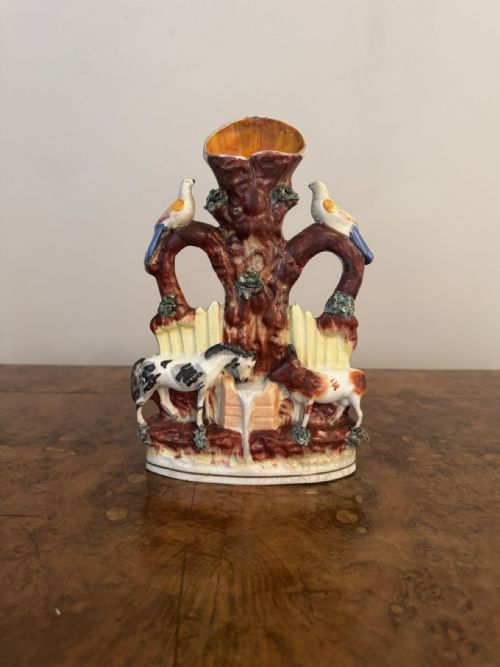
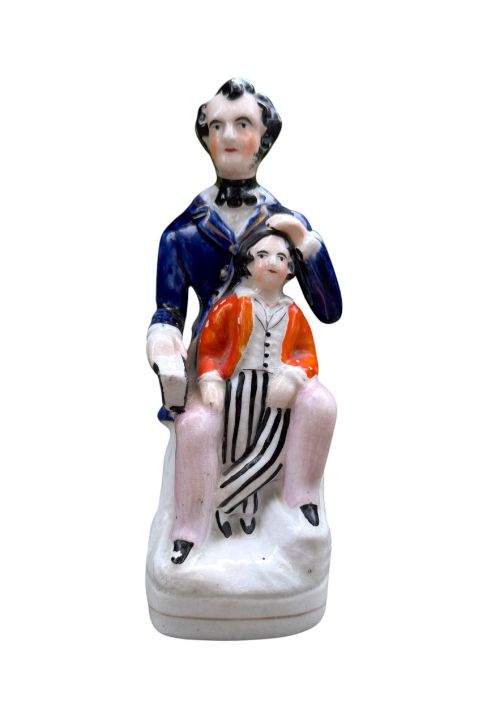
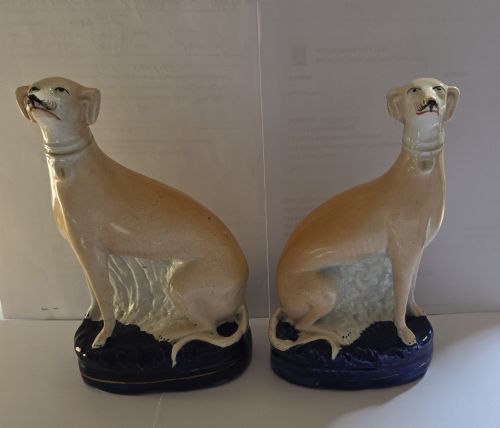
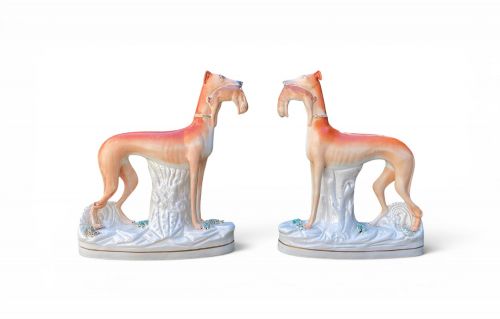
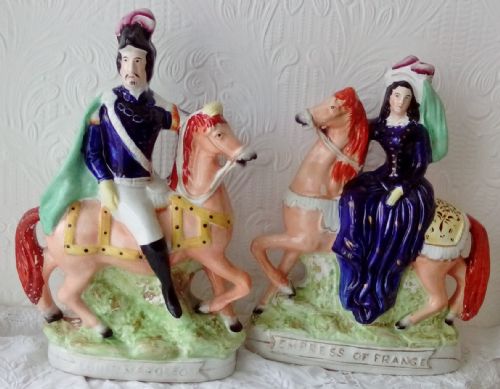
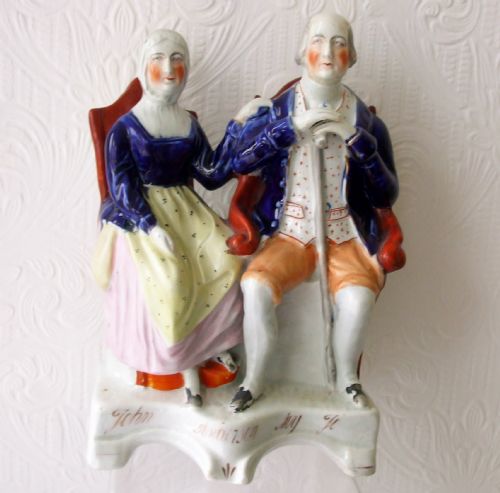
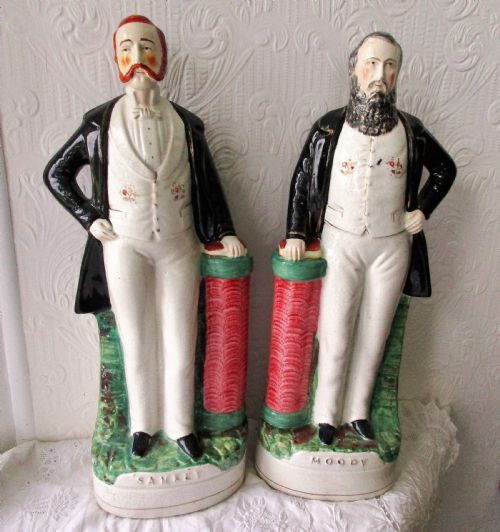
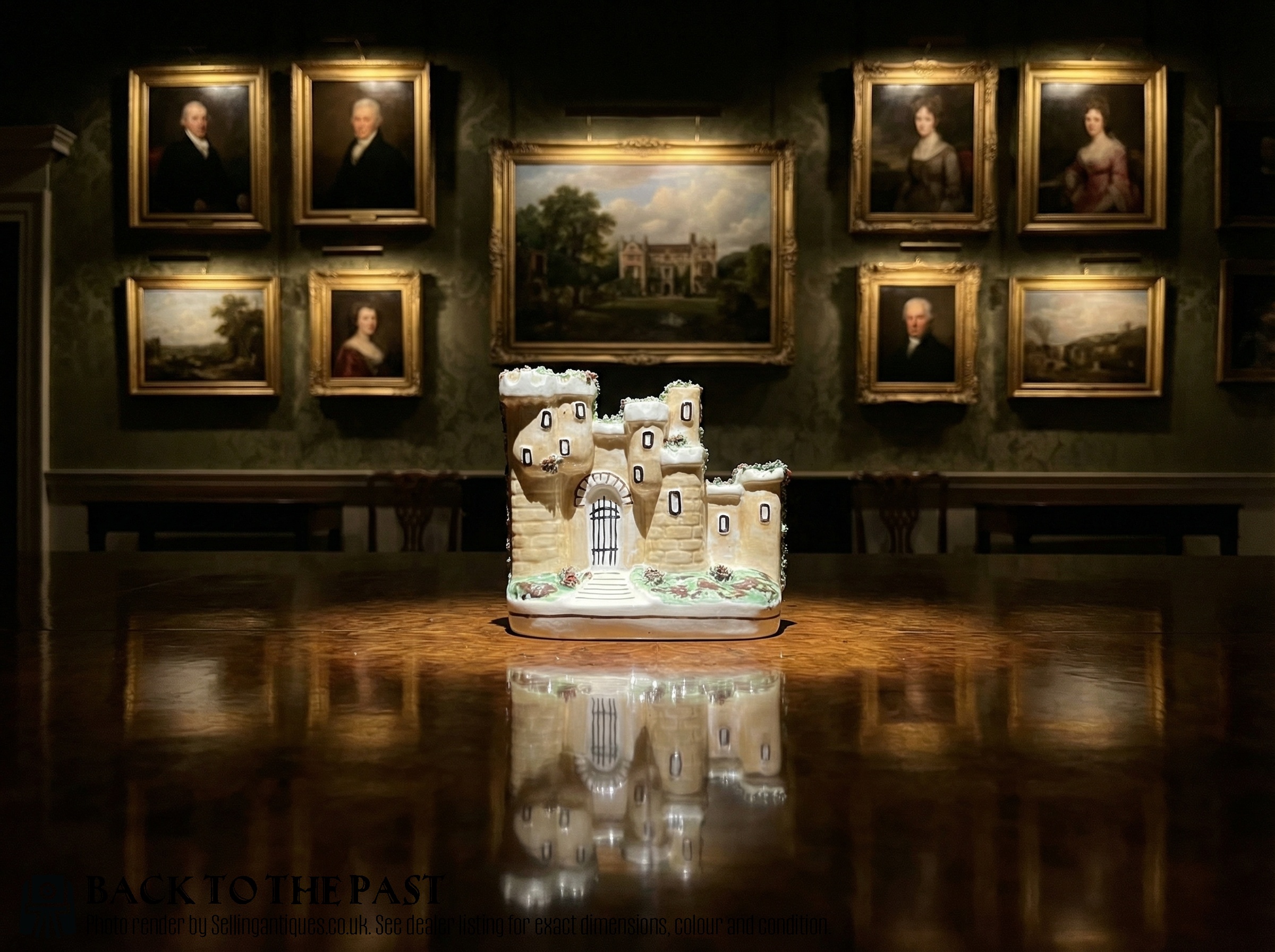
A victorian earthenware figure is a ceramic object shaped as a person, animal or architectural group, most commonly originating from the Staffordshire potteries. You will frequently encounter pairs of dogs, portrait subjects and theatrical characters modelled as flatbacks meant to stand against a wall.
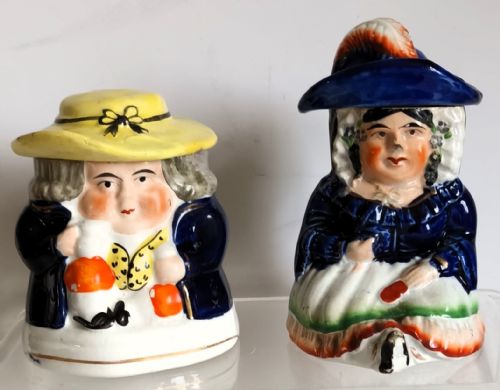
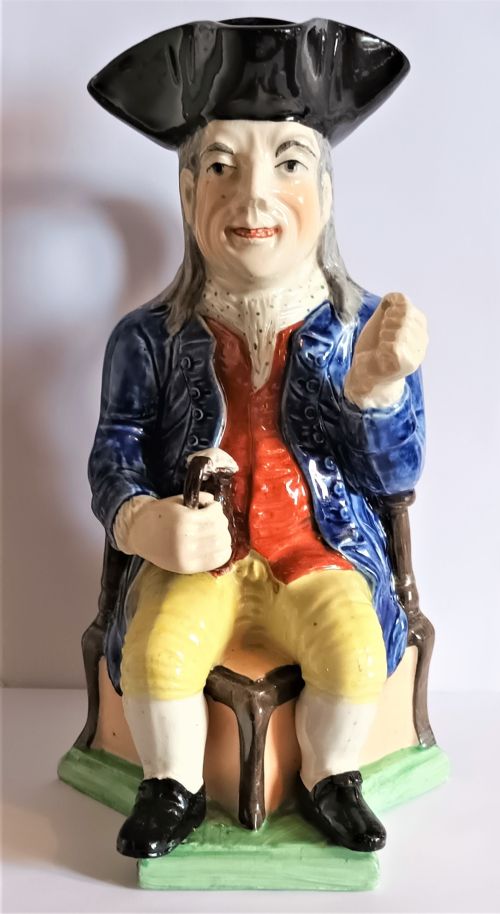
The range encompasses spill vases, tobacco jars and toby jugs alongside standard decorative figurines. Makers drew inspiration from contemporary politics, royalty, literature and everyday domestic life.
Most surviving pieces date from the middle decades of the nineteenth century. They represent the mass-produced domestic ornamentation that filled middle-class homes during the period.
How they were made
Potters shaped these objects using clay bodies covered with lead glaze, ceramic finishes and enamel paint. Many examples also incorporate touch details in gold leaf.
Moulds formed the hollow bodies and flat backs of the figures before workers applied hand-painted enamels over the fired glaze. This combination of cast foundation and individual brushwork gives each piece its distinct character.
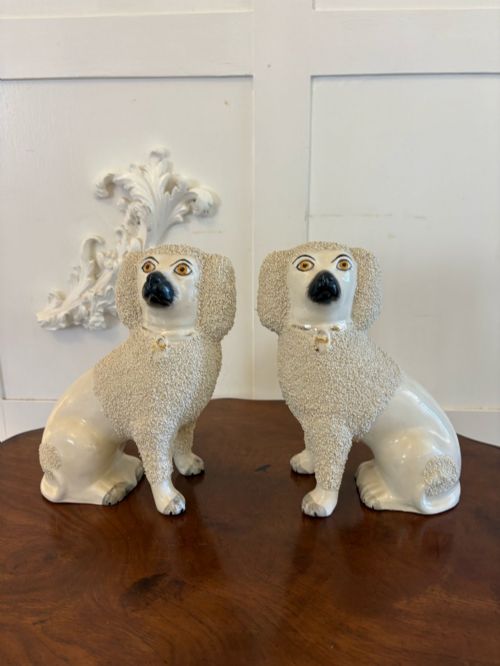
Poodles dominate the ceramic pack, sporting tiny painted clay curls that mimic Victorian grooming fashions.
What varies in quality
The application of glaze and the richness of the palette also affect the overall presence of the object. Uniform surfaces and clean colour separation distinguish better examples.
The Victorian Earthenware Figure Glossary
- Flatback
- A figure modelled with a finished front and a plain, unglazed or minimally decorated back designed to sit flat against a wall.
- Spill vase
- A hollow pottery cylinder attached to a figure, intended to hold wooden matches for lighting fires or candles.
- Lead glaze
- A glossy transparent coating applied to earthenware before firing to seal the porous clay and brighten the colours.
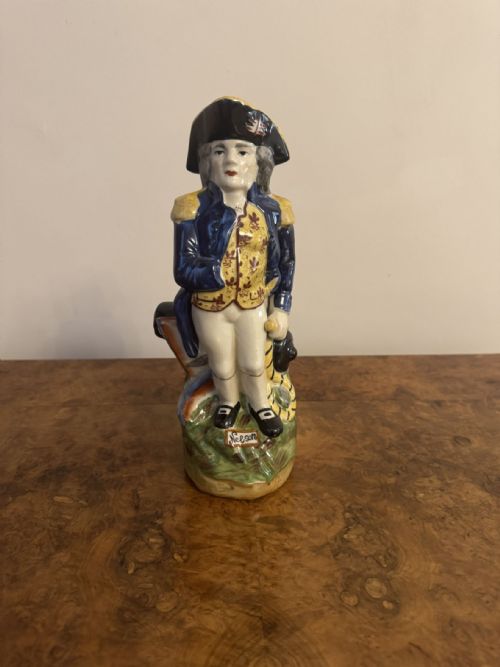
- Toby jug
- A pottery jug shaped as a stout, jovial man wearing a tricorn hat, frequently depicting historical figures or fictional characters.
Victorian Earthenware Figure: Frequently Asked Questions
Were these figures meant for display?
Potters designed these earthenware pieces specifically for mantelpieces and parlour shelves in nineteenth-century homes.
They served as inexpensive decoration that brought colour and narrative interest into domestic spaces.
Why do many dogs come in pairs?
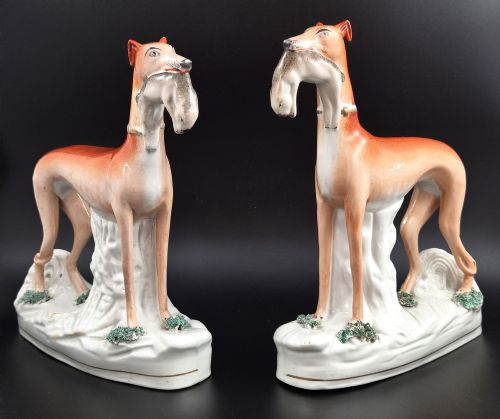
Pair production was standard practice for mantelpiece ornaments intended to flank a clock or other centrepiece.
Greyhounds, spaniels and poodles were especially popular as matched sets facing one another.
What is a flatback figure?
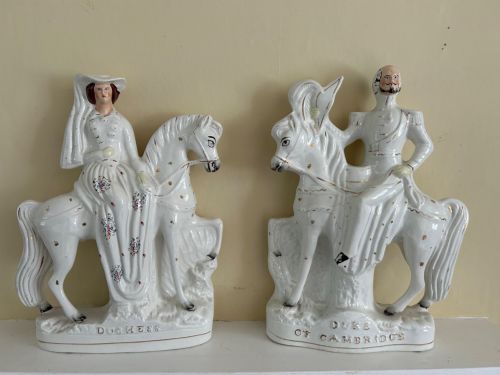
A flatback has a fully modelled front and a flat, unpainted reverse side.
This construction saved material and allowed the ornament to rest securely against a wall.
How do I identify the subjects?
Many figures represent contemporary royalty, military heroes, theatrical performers and literary characters identified by impressed titles on the base.
Others depict common archetypes and animals from everyday Victorian life.