


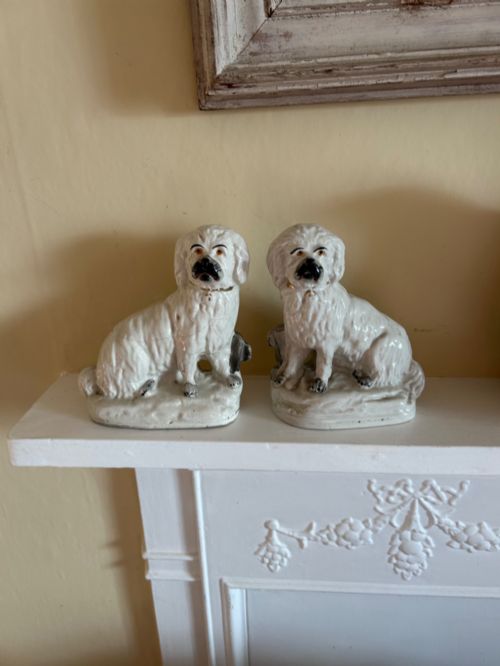


White Glazed Pottery Ornament
These white glazed pottery ornament selections bring character and history into a room through figures, animals and spill vases.
White Glazed Pottery Ornament
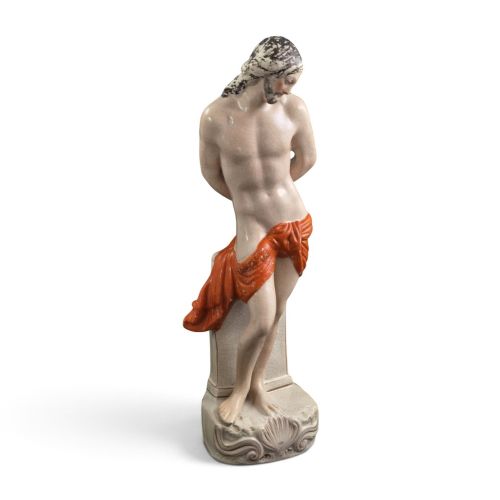
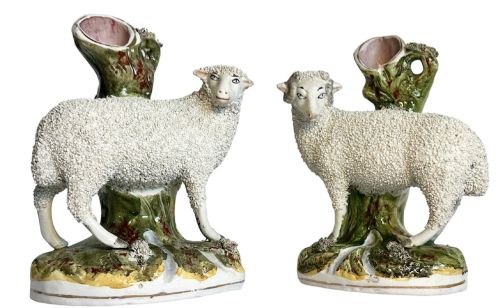
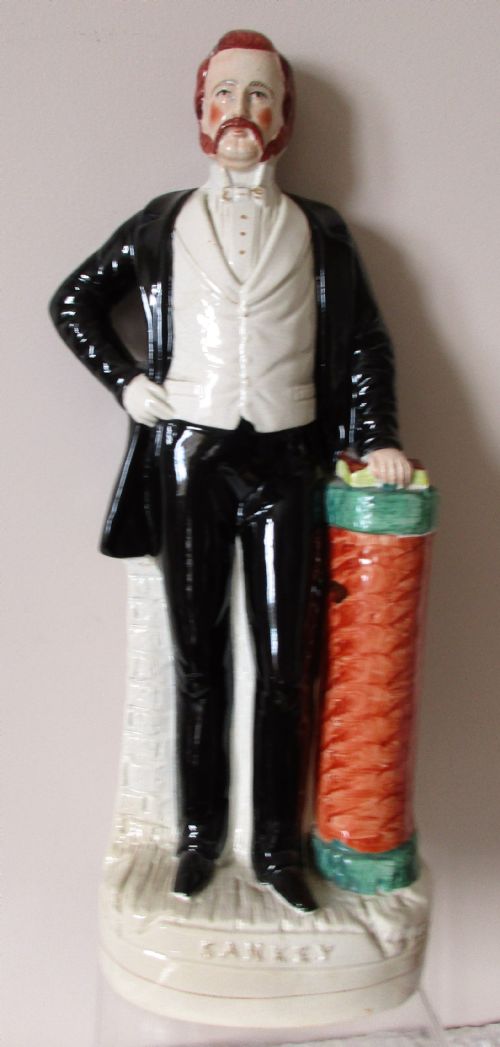
A white glazed pottery ornament spans decorative figures, spill vases, inkwells and portrait groups rooted largely in the Victorian era. Buyers searching this phrase meet earthenware animals like spaniels, poodles, sheep and greyhounds alongside historical portrait figures and Dutch Delftware pieces. The form ranges from small mantelpiece dogs to large flatback figures depicting royalty, military commanders and literary subjects.
Most examples originate from nineteenth-century Staffordshire potteries, though continental European pieces including Dutch Delftware and French faience appear across the selection. Pairs of animals and symmetrical groupings dominate the offerings, designed specifically for display on mantelpieces or shelf edges. These objects reflect both popular culture and domestic sentiment of the Georgian and Victorian periods through modelled clay.
How They Were Made
Makers shaped these earthenware bodies using press moulds, joining front and back sections together before applying lead glazes and enamel paint. Artisans frequently added gilt highlights and copper lustre details by hand over the fired glaze surface, creating rich surface variation. Certain continental pieces utilised tin glaze applied over terracotta or ceramic bases.
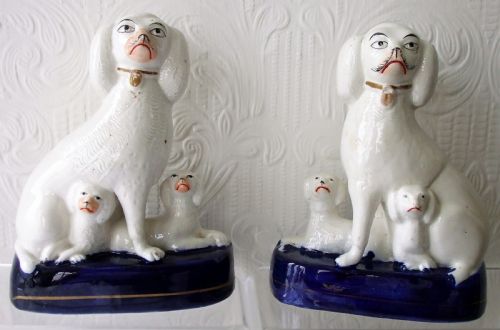
Even ceramic poodles needed companions, as proved by the miniature dogs sculpted with their own tiny puppies.
What Varies in Quality
Scale and ambition also divide the range, separating modest miniature animals from large, complex portrait groups involving multiple figures or architectural elements like clock housings and watch-holders. The preservation of original gilt highlights and crisp lead glazes maintains the visual impact expected from better workshops.
Thomas Parr
The White Glazed Pottery Ornament Glossary
- Earthenware
- Porous pottery fired at lower temperatures, requiring a glaze to render it waterproof. This body forms the structural foundation for the majority of nineteenth-century Staffordshire figures.
- Flatback
- A figure modelled with a finished front and sides while the reverse remains flat and unglazed. This construction allowed the object to sit flush against a wall or mantelpiece.
- Spill Vase
- A hollow cylindrical holder designed to store wooden spills used for lighting candles and fires. These vessels are frequently incorporated into animal groupings.
- Tin Glaze
- An opaque white glaze containing tin oxide, providing a smooth surface for painted decoration. It is characteristic of Delftware and faience production.
- Lead Glaze
- A glossy transparent coating applied to earthenware before a secondary firing. It gives the pottery surface its characteristic shine and protects the underlying paint.
White Glazed Pottery Ornament: Frequently Asked Questions
What are Staffordshire flatback figures?
Staffordshire flatback figures are earthenware ornaments modelled with detailed fronts and flat, unglazed rears designed to sit flush against mantelpieces. Potters produced them in large numbers during the nineteenth century to decorate British homes.
Subjects ranged from royal portraits and military heroes to domestic animals and theatrical scenes. They served as affordable decorative art for the growing middle class.
What is a spill vase?
A spill vase is a hollow vertical cylinder attached to a figure, designed to hold thin wooden tapers used for transferring fire from hearth to candle. Before matches became common, these spill holders sat ready in everyday rooms.
Potters often combined them with figures of sheep, dogs or birds. They function today as small decorative flower vases or desk tidies.
How do I date a ceramic figure?
Dating ceramic figures involves examining the potting style, glaze characteristics, and historical subject matter depicted. Nineteenth-century pieces often feature earthenware bodies with hand-painted enamel details under clear lead glazes.
Costume details and commemorated events, such as the Crimean War or royal weddings, provide reliable chronological clues. Unmarked pieces rely entirely on stylistic comparison with documented workshop output.