
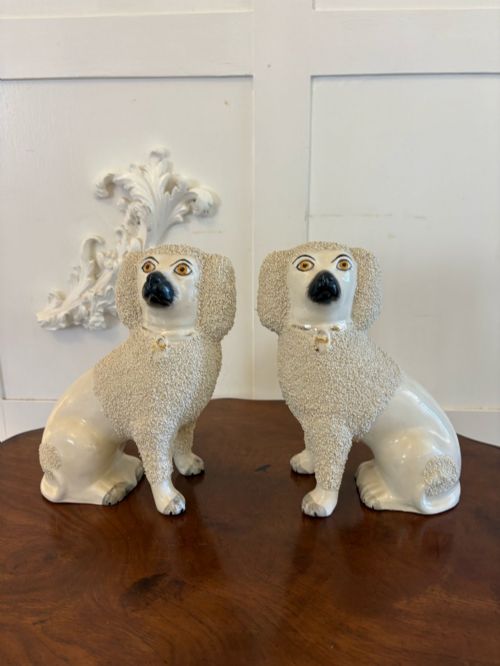
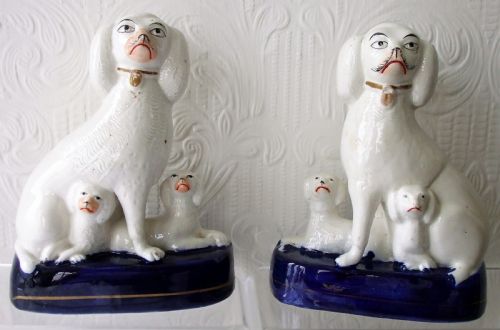


Victorian Ceramic Poodle Pair
These charming victorian ceramic poodle pair figures bring nineteenth-century Staffordshire character directly to the mantelpiece.
Victorian Ceramic Poodle Pair
A victorian ceramic poodle pair consists of matching decorative figurines modelled as seated or standing dogs, frequently accompanied by small pups. These ornaments belong to the rich tradition of nineteenth-century Staffordshire pottery production.
Buyers will most frequently encounter pairs dating from the nineteenth century, including examples from around 1845 and 1860, alongside smaller miniature models. Some variations depict dogs resting on cushions with detailed surface encrusting.
Originating in England, these decorative objects served as quintessential parlour ornaments during the Victorian era. The listings demonstrate a clear preference for symmetrical pairs designed to flank a fireplace or centrepiece.
Ceramic and glaze methods
Potters shaped these earthenware figures using traditional ceramic techniques before applying lead glaze and enamel colours. Surface decoration often includes painted details and gilt highlights.
Certain examples incorporate distinctive textured elements, such as woolly or encrusted surfaces, to simulate the curly coats of the poodles. Gold leaf and enamel additions provide the finishing touches to the glazed pottery bodies.
Listings feature earthenware materials finished with lead glaze, enamel, and gold leaf.
Judging the figures
The distinction between standard domestic ornaments and finer collector pieces lies in the crispness of the modelling and the application of surface detail. Miniature versions and those featuring pups or cushions often show greater artistic ambition.
The vibrancy of the enamel colours and the preservation of the original glaze and gilding dictate the overall visual impact. Stronger examples maintain clean separation in the textured coat work rather than losing definition beneath heavy layers of glaze.
James Dudson
The Victorian Ceramic Poodle Pair Glossary
- Earthenware
- A porous type of pottery fired at relatively low temperatures, which forms the ceramic body of these figures before glazing. It requires an impermeable glaze to hold liquids and protect the surface.
- Lead glaze
- A glossy coating containing lead oxide applied to pottery to give a smooth, shiny finish and seal the earthenware body. This technique creates the characteristic sheen seen on Victorian Staffordshire ceramics.
- Gilt
- A thin layer of gold applied to the ceramic surface for decorative accentuation, often highlighting collars or bases. This finish adds a touch of brightness to the Victorian ornaments.
- Encrusting
- Applied ceramic clay particles or decorative elements pressed onto the surface to simulate texture, such as fur or foliage. This labour-intensive method creates the distinctive woolly appearance on specific poodle models.
Victorian Ceramic Poodle Pair: Frequently Asked Questions
What are Staffordshire poodles?
Staffordshire poodles are nineteenth-century ceramic mantelpiece ornaments modelled as pairs of seated or standing dogs. They reflect the Victorian taste for domestic animal figures.
Potters in England produced these decorative objects using earthenware and lead glaze, often adding enamel colours and gilt highlights to complete the designs.
How old are these ceramic poodles?
The pieces available date from the nineteenth century, with specific examples originating around 1845 and 1860. The Victorian period spans these manufacturing dates.
Miniature versions and standard figurines share this nineteenth-century provenance, representing the primary era of Staffordshire animal figure production.
Where were these dog figures made?
These ceramic pieces originate from Staffordshire in England, a historic heartland for British pottery manufacturing. Local potteries produced vast quantities of domestic ornaments.
Individual makers, such as James Dudson, contributed to this regional output, creating the distinctive glazed earthenware figures found by collectors today.
How do I style poodle pairs?
Display the two matching figures symmetrically on a mantelpiece, shelf, or sideboard, following the traditional Victorian manner. They work well as a focal point.
Consider pairing them with other nineteenth-century Staffordshire ceramics or placing them where their enamel colours and gilt details catch the room's light.