




Victorian Staffordshire Poodles
Victorian Staffordshire poodles are charming earthenware companion figures that bring instant character and warmth to a mantelpiece.
Victorian Staffordshire Poodles
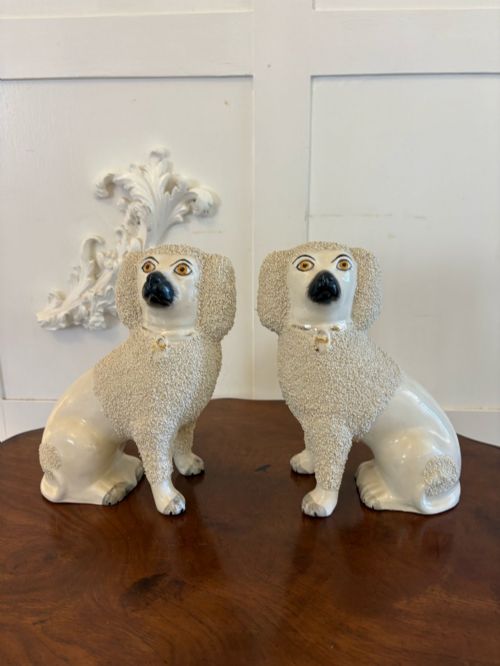
Victorian Staffordshire poodles are nineteenth-century ceramic figures designed to sit on hearths and side tables. These decorative pieces frequently appear as symmetrical pairs facing one another, showing the breed sitting attentively.
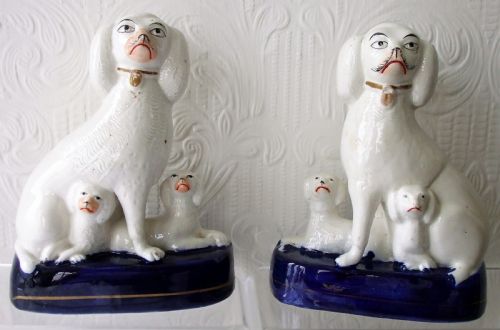
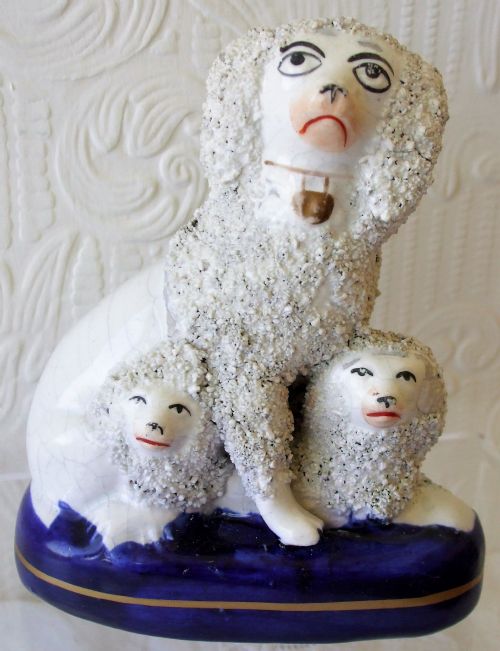
Many examples depict adult poodles accompanied by small puppies or resting on cushions. Other variations include quill holders, clock groups, and miniature versions that demonstrate the range of nineteenth-century pottery production.
The objects stem from the Victorian period, spanning the nineteenth century with specific examples recorded around eighteen-forty-five to eighteen-sixty. They capture the era's fondness for domestic animals represented in glazed earthenware.
Materials and construction methods
Specialist texturing techniques, such as applied clay work often described as wooly or encrusted, created the characteristic curly coat of the breed. Separate front feet and detailed moulding distinguish the more complex nineteenth-century examples.
Some poodles sport heavily textured wooly coats created by applying tiny bits of clay by hand, ensuring no two curly companions look identical.
Distinctions in quality and execution
Quality rests in the crispness of the moulding and the finesse of the hand-painted enamels. Finer pieces display sharply defined facial expressions and carefully applied gold leaf rather than rushed, heavy decoration.
The preservation of the delicate applied clay coat and original glaze surfaces determines the desirability of a pair. Complete sets with well-preserved details and matched components represent the higher end of the range.
James Dudson
The Victorian Staffordshire Poodles Glossary
- Earthenware
- Porous pottery fired at lower temperatures, serving as the standard ceramic body for these nineteenth-century figures. It requires a protective glaze to hold liquids and create a smooth surface.
- Lead glaze
- A glossy coating containing lead that melts during firing to produce a shiny, protective finish. This glaze gives the pottery its characteristic reflective sheen.
- Gilt
- A thin layer of gold leaf or gold paint applied to highlights such as collars and chains. It adds a decorative metallic contrast to the white or coloured pottery body.
- Bisque
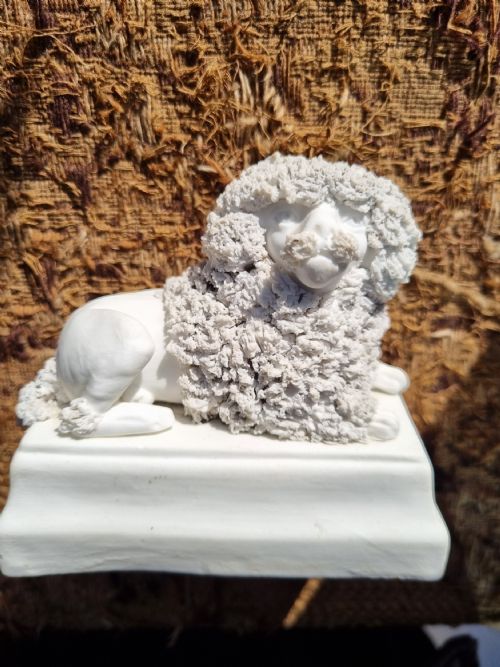
- Unglazed fired pottery that presents a matte, porous white surface. It appears on specific nineteenth-century figures where gloss glaze was omitted.
- Quill holder
- A hollow ceramic desk accessory featuring an opening designed to hold writing feathers. These functional pieces combine animal modelling with practical nineteenth-century deskware.
Victorian Staffordshire Poodles: Frequently Asked Questions
How do I clean my Staffordshire poodle?
Dust the figures gently with a soft, dry brush to prevent the accumulation of dirt within the textured clay coat. Avoid using water or chemical cleaners, which can damage the delicate enamel colours and gold leaf highlights.
Keep the pottery away from direct sunlight and damp environments to protect the historic glaze and surface decorations from fading or flaking over time.
Were these dogs always made in pairs?
Makers frequently produced these ceramic animals as symmetrical pairs designed to sit at opposite ends of a mantelpiece or fireplace. This layout mirrored the formal domestic interior styling of the nineteenth century.
Single figures and specialised items such as clock groups or quill holders also exist within the broader range of Staffordshire pottery production.
How can I tell a nineteenth-century piece from a later copy?
Examine the base and body for the weight, crazing, and wear patterns characteristic of nineteenth-century earthenware. Genuine period examples show signs of age in the glaze and the hand-applied enamel details.
Look closely at the modelling of the clay coat and the application of the gold leaf, as nineteenth-century Staffordshire potters employed distinct hand-finishing techniques.
What do the puppies and cushions signify?
Depictions of poodles with puppies reflect Victorian domestic sentiment and the popularity of pet ownership during the nineteenth century. These group figures added an extra layer of narrative charm to the mantelpiece decoration.
Poodles shown resting on blue cushions or fitted with baskets emphasise the comfortable lifestyle associated with domestic animal portraiture in Victorian ceramics.