


Staffordshire Pottery Dog Ornament
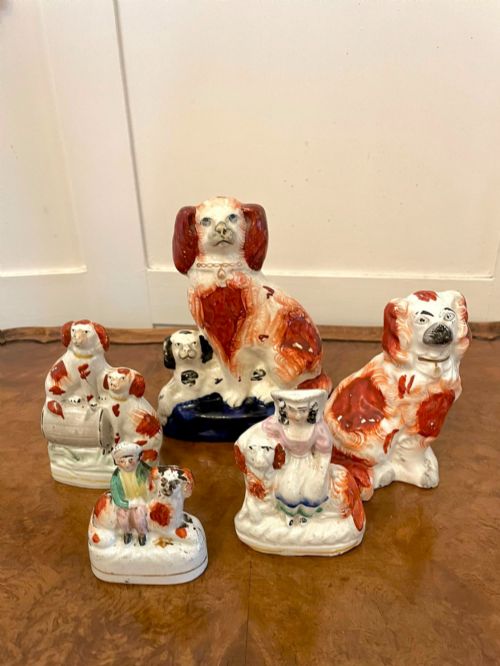
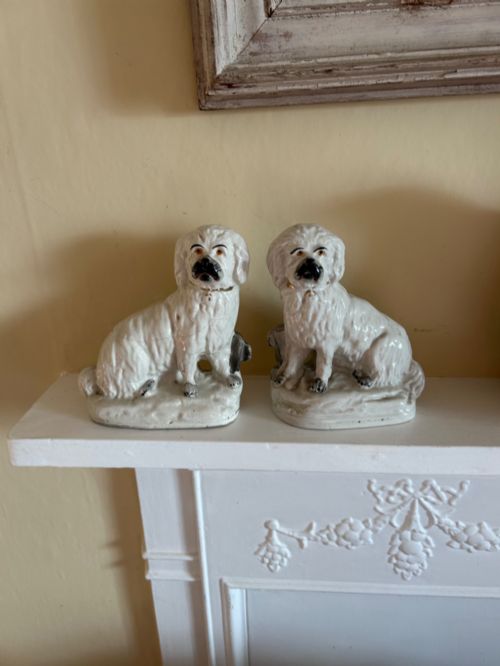
These staffordshire pottery dog ornaments are earthenware figures from the nineteenth century designed to sit on mantelpieces.
Staffordshire Pottery Dog Ornament
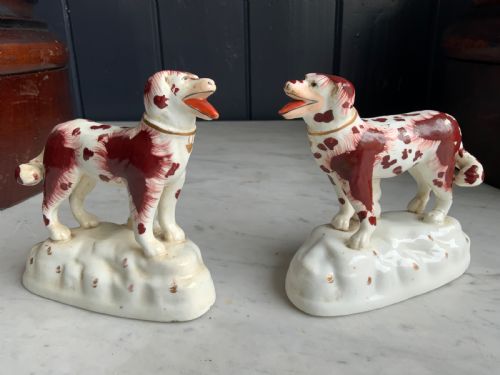
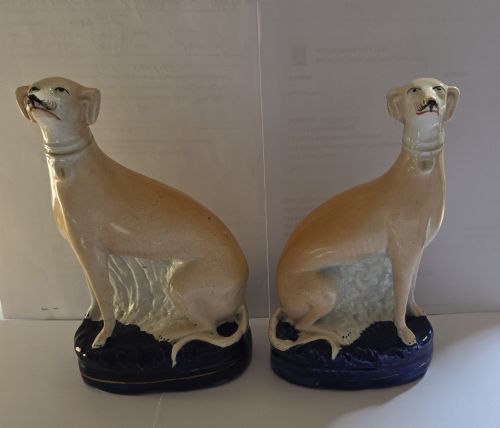
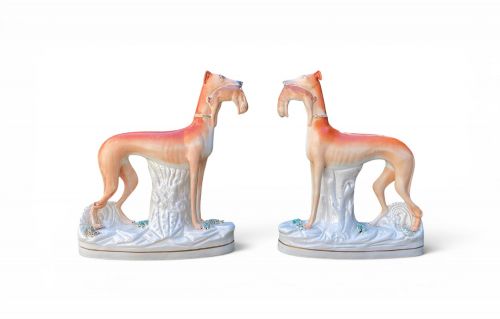
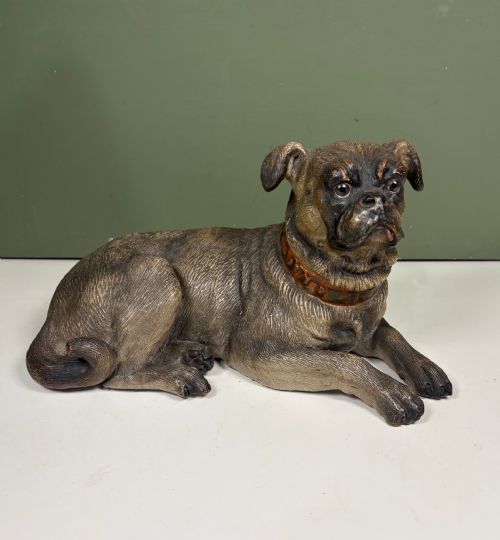
A staffordshire pottery dog ornament is a ceramic figure shaped as a spaniel, greyhound, poodle, whippet, or pug. These figures mostly date from the Victorian period, spanning the nineteenth century from eighteen thirty to nineteen hundred.
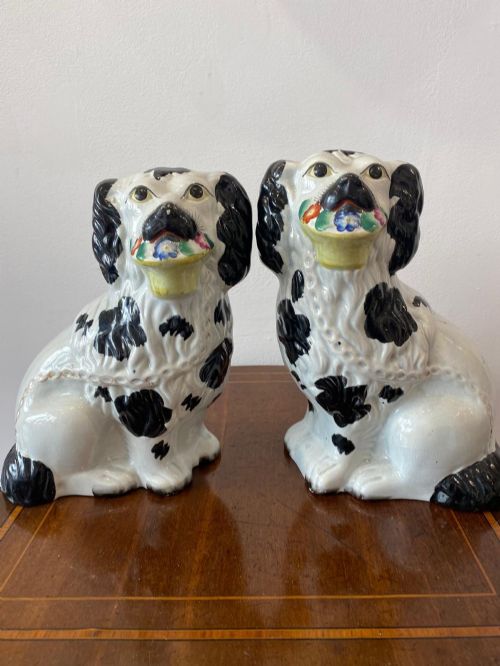
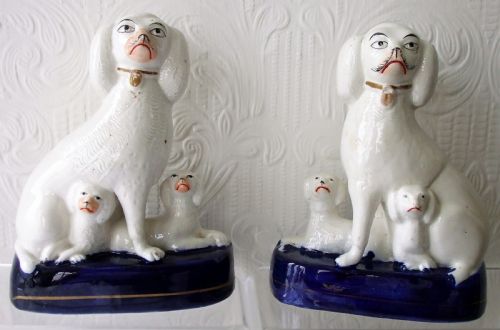
Most examples appear as matched pairs intended to sit on either end of a fireplace mantel. Collectors also find single figures, figure groups with puppies, and functional pieces such as quill holders and inkwells.
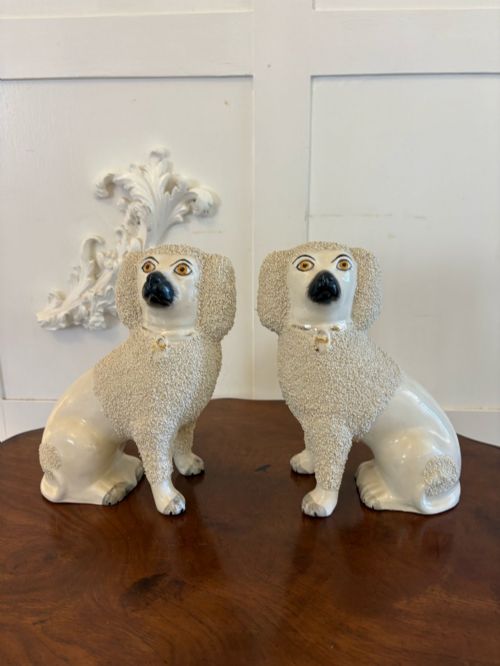
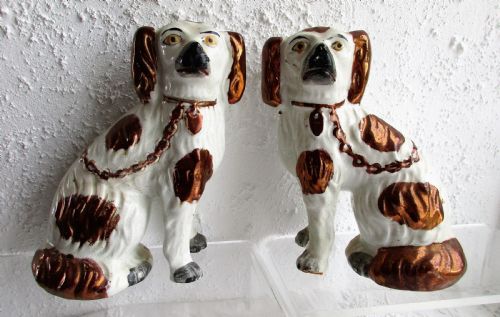
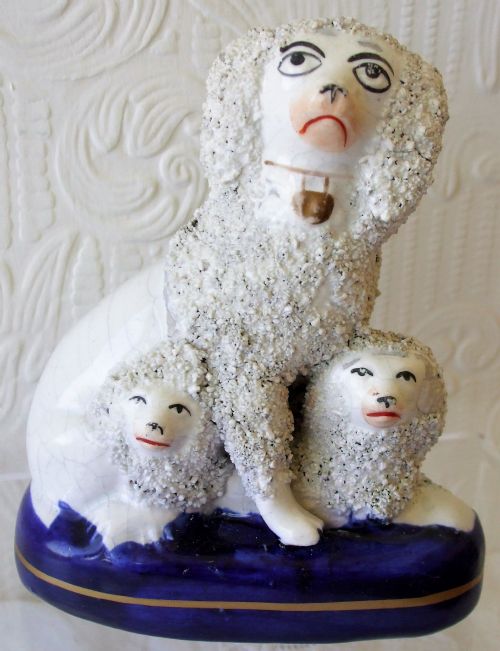
The styles range from Regency and Georgian roots through Victorian country pottery to Edwardian pieces. Comforter spaniels and poodles with textured coats represent the most common forms available on this page.
How they were made
Makers applied hand painted details over the glaze before a final firing. Some specialised variations incorporated copper lustre glazes or moulded textures resembling wool.
Listings feature earthenware figures spanning the Victorian period alongside Regency and Georgian examples.
What varies in quality
Quality rests in the crispness of the moulding and the delicacy of the hand painting on the face and eyes. Softer details and muddy enamel work separate mass produced factory output from finer pieces.
Proportion and scale also define the better examples, particularly in larger greyhound figures or detailed poodles. Matched pairs with uniform glaze coverage command greater attention from collectors.
Thomas Parr·Wooley
The Staffordshire Pottery Dog Ornament Glossary
- Earthenware
- A porous pottery body fired at lower temperatures, commonly used for nineteenth century figures before being glazed.
- Enamel paint
- Vitreous pigments applied over the fired glaze to add colour details to the eyes, collars, and patches.
- Lead glaze
- A glossy coating containing lead oxide applied to ceramic bodies to give a smooth and shiny finish.
- Copper lustre
- A metallic glaze finish producing a reflective coppery sheen seen on specific Victorian figures.
- Quill holder
- A desk accessory moulded with an open channel or well to rest writing feathers.
Staffordshire Pottery Dog Ornament: Frequently Asked Questions
What are staffordshire pottery dog ornaments?
These ceramic figures represent various canine breeds produced in the Staffordshire pottery district during the nineteenth century. They served primarily as decorative mantel ornaments in Victorian homes.
Potters created numerous breeds including spaniels, poodles, greyhounds, and pugs. Many were produced in symmetrical pairs to sit on either side of a fireplace.
How were these dog figures used?
Victorian households placed these ceramic dogs on mantelpieces, sideboards, and tables for interior decoration. They projected a sense of domestic comfort and respectability.
Some specialised forms doubled as functional objects. Examples include inkwells, quill holders, and figures with removable heads.
How do I date an antique dog ornament?
Dating relies on stylistic clues, glaze characteristics, and potting techniques. Earlier pieces from the Georgian era often feature simpler modelling and distinct colour palettes.
Victorian and later nineteenth century examples display sharper mould details and brighter enamel paints. Marked pieces or known maker attributions also help narrow the timeline.
Are all staffordshire dogs found in pairs?
While many survive as matched pairs, single figures appear frequently due to breakage or separation over time. Pairs were standard for mantelpiece display.
Collectors encounter individual dogs, groups with puppies, and larger single showpieces. Matched pairs generally hold more interest for traditional displays.