


Staffordshire Hearth Spaniels
Staffordshire hearth spaniels are classic ceramic figures that bring domestic charm and traditional character to a mantelpiece.

Staffordshire Hearth Spaniels
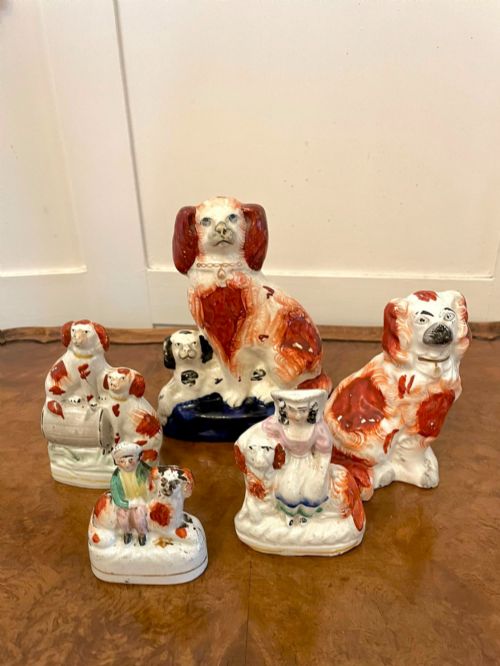
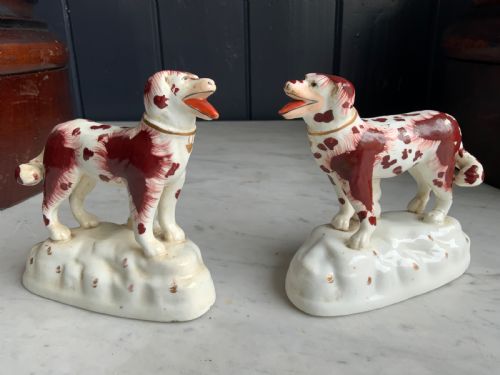
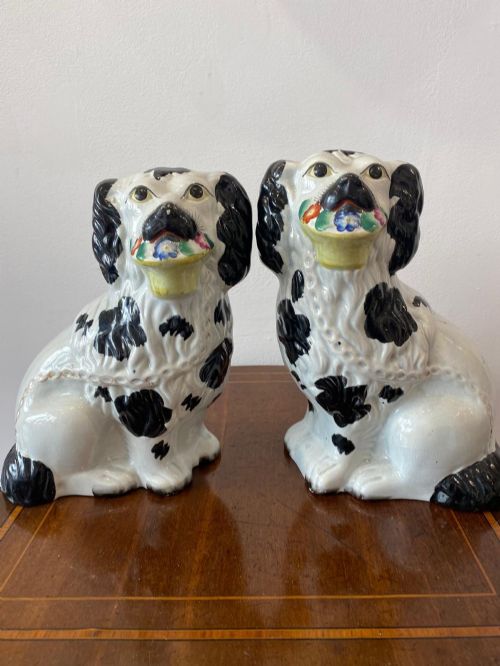
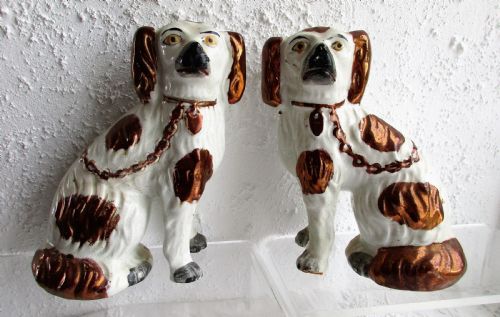
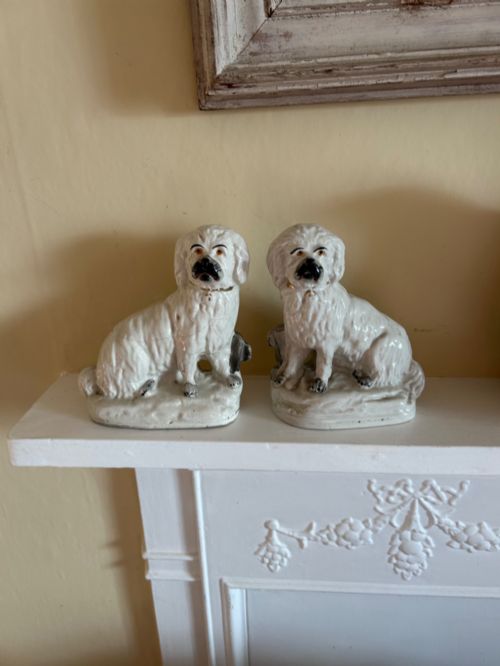
Staffordshire hearth spaniels are decorative ceramic figures modelled as seated dogs, often arranged as facing pairs to sit on either side of a fireplace. When you search for staffordshire hearth spaniels, you encounter earthenware pieces originating mainly from the nineteenth century, including the Victorian period. The selection includes white spaniels, red and white versions, and variations featuring copper lustre or gold leaf accents.
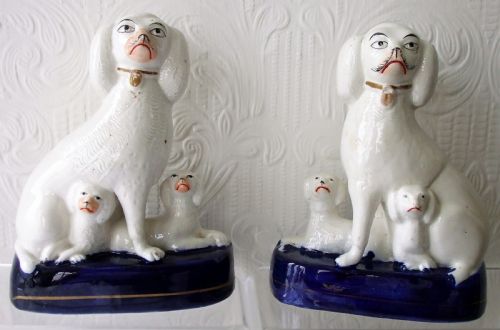
Most examples take the form of pottery spaniels, though the group also extends to include poodles, Maltese terriers, and dogs shown with puppies or resting on blue cushions with encrusting. These objects served as domestic ornaments rather than toys, designed to display on a mantel or shelf. The pieces reflect English traditional style and range from simple earthenware bodies to hand-painted examples.
How they were made
Finishing touches often included copper lustre or gold leaf applied over the glaze to highlight collars, chains, and facial expressions. Some variants incorporate surface encrusting on cushions or bases to add texture and visual weight to the figurine.
Listings feature earthenware materials and glaze finishes spanning the Victorian period, Regency era, and the late nineteenth century.
What varies in quality
The application of glaze and metallic accents also separates standard pieces from finer ones. Smooth, even glazing without heavy pooling and carefully applied copper lustre or gold leaf distinguish the more accomplished examples.
Beswick
The Staffordshire Hearth Spaniels Glossary
- Earthenware
- A porous pottery body fired at lower temperatures, commonly used for nineteenth-century figures before being glazed. It forms the structural base for almost all Staffordshire dog figures.
- Copper lustre
- A metallic glaze finish producing a reflective, coppery sheen. It is frequently found highlighting the collars and lockets of nineteenth-century spaniels.
- Gold leaf
- Very thin sheets of beaten gold applied to ceramic surfaces for decoration. It is often seen on Victorian models to accent collars and tags.
- Encrusting
- Applied ceramic clay particles or decorative elements pressed onto the surface of the base or cushion. This technique creates a textured, three-dimensional effect around the figures.
Staffordshire Hearth Spaniels: Frequently Asked Questions
What are Staffordshire hearth spaniels?
Staffordshire hearth spaniels are ceramic figurines modelled after dogs, traditionally produced in pairs to adorn mantelpieces during the nineteenth century. They capture the Victorian taste for domestic animal ornaments.
These figures range from plain white earthenware to hand-painted varieties with copper lustre or gilt details. They remain popular decorative objects for traditional interiors.
How were Staffordshire spaniels used?
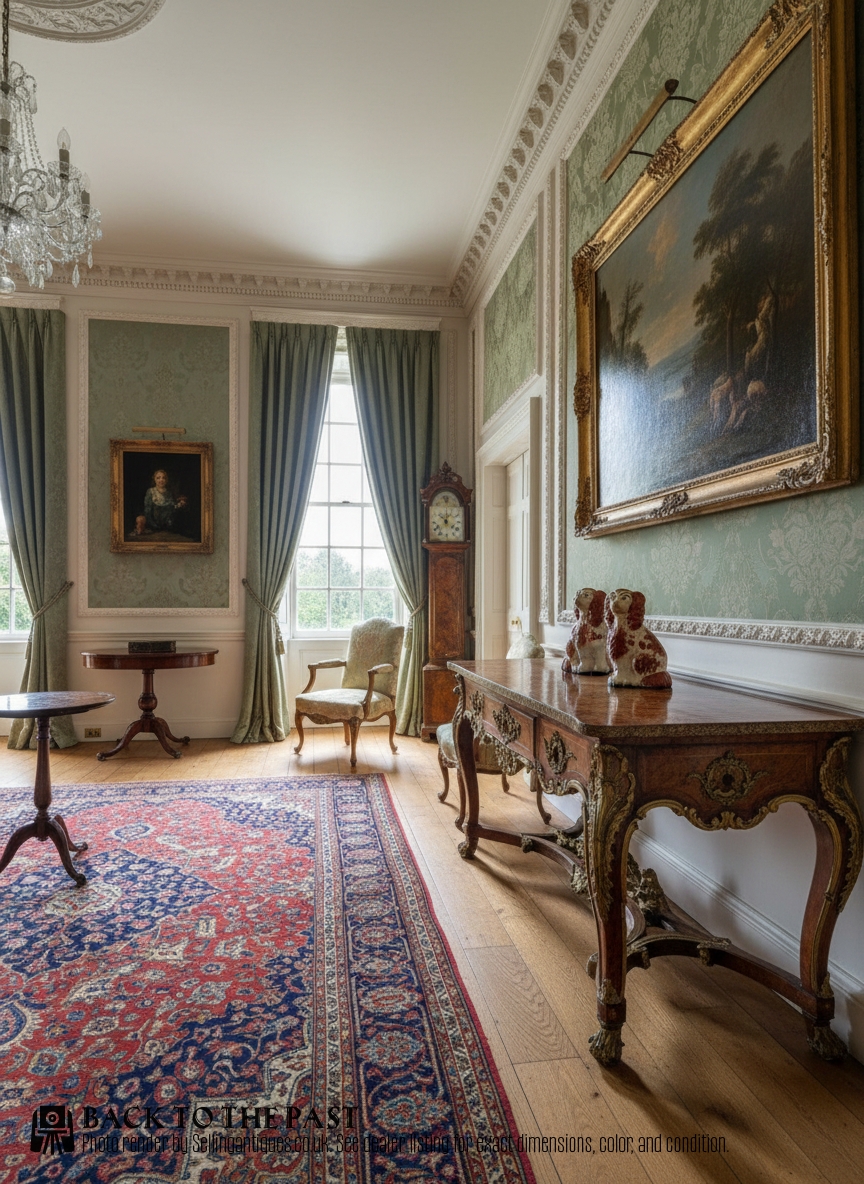
These ceramic dogs were designed strictly for display, typically placed in matching pairs on either side of a fireplace hearth. They functioned as interior decorations that signified respectability and comfort in Victorian homes.
Owners often arranged them facing inward toward the grate. Today, they serve a similar decorative purpose on shelves, sideboards, and mantels.
How do you date Staffordshire spaniels?
Dating these figures relies on observing stylistic markers, clay types, and manufacturing techniques recorded across the nineteenth century. Victorian pieces often display specific glaze characteristics and painting styles typical of the era.
Markings, where present, can also indicate the maker or period. Comparing the modelling style and colour palette helps place a piece within its proper decade.
Are all Staffordshire dogs spaniels?
Not all figures in this category depict spaniels, although they form the vast majority of surviving pieces. The wider group also includes poodles, Maltese terriers, and dogs with puppies.
Variations extend to different breeds and settings, such as animals resting on blue cushions with encrusted details. Each type shares the same ceramic and earthenware construction methods.