


Staffordshire Chimney Ornaments
Staffordshire chimney ornaments are earthenware figures and spill vases made to sit upon the mantelpiece, bringing rustic charm and Victorian character to any room.
Staffordshire Chimney Ornaments
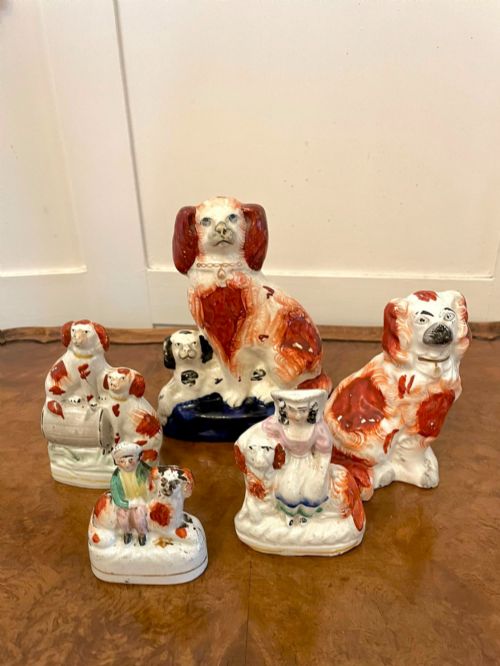
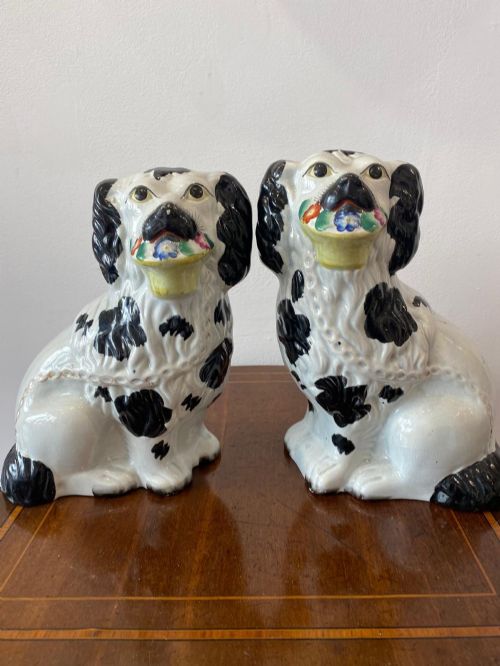
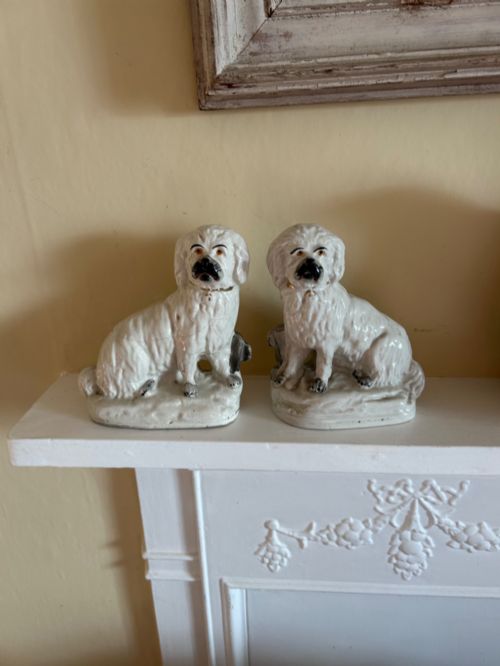
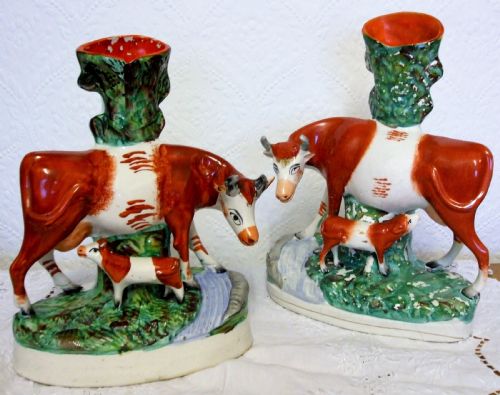
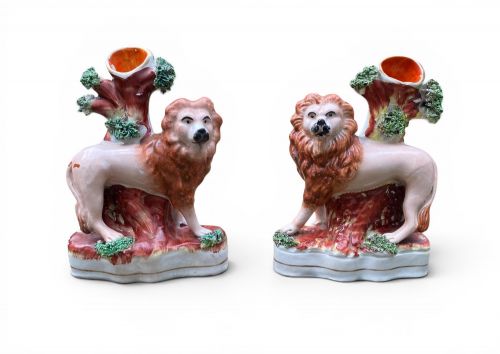
Staffordshire chimney ornaments encompass earthenware figures, decorative objects, and pottery figures designed to sit upon the mantelpiece. The pieces seen here span the Victorian era, with dates stretching from the Regency period through to 1900. Buyers searching for staffordshire chimney ornaments encounter an array of forms, including spaniels, pugs, poodles, lions, cows, and castles.
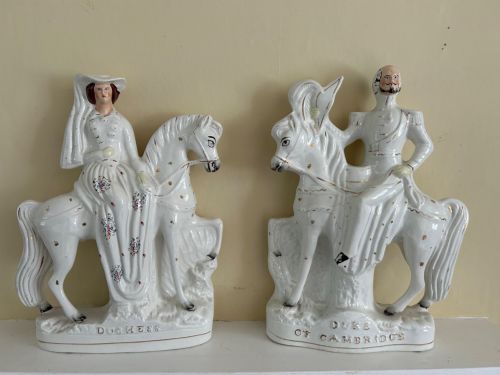
Pairs of dogs dominate the selection, alongside flatback figures depicting historical and literary subjects such as the Duke and Duchess of Cambridge or Will Watch the smuggler. Spill vases featuring deers, dogs, or turrets also appear frequently among the listings. These ceramic figures bring the domestic and rural interests of the nineteenth century directly into modern interiors.
The objects originate primarily from the nineteenth century, reflecting the mass production methods of English potteries during the Victorian period. Most examples are modelled as flatbacks, designed to be viewed from the front upon a shelf or mantel. Collectors find both simple figures and complex architectural spill vases representing castles and cottages.
What Varies in Quality
The scale and ambition of the piece also influence desirability, with large pairs and complex architectural spill vases standing apart from smaller, simpler figures. The condition of the glaze and the preservation of the original enamel colours determine the visual appeal of each ornament.
Object forms span decorative figures, pottery animals, cottages, castles, and functional spill vases.
The Staffordshire Chimney Ornaments Glossary
- Flatback
- A ceramic figure modelled with a finished front and a plain, unglazed or semi-finished back designed to stand against a wall or upon a narrow mantelpiece. This construction method saved clay and reduced weight during firing.
- Spill Vase
- A hollow ceramic vessel incorporating a small upright cylinder designed to hold wooden spills for lighting fires or pipes. These dual-purpose objects combine decorative animal or architectural figures with practical utility.
- Pearlware
- A refined earthenware developed in the late eighteenth century featuring a thin glaze with a faint bluish tint that pooled in recesses. It bridges the gap between creamware and later Victorian white earthenware bodies.
- Earthenware
- A porous pottery body fired at lower temperatures than stoneware or porcelain, requiring a glaze to become impermeable. It served as the primary material for mass-produced nineteenth-century Staffordshire figures.
- Lead Glaze
- A glossy surface coating containing lead oxide applied to pottery before firing to provide a smooth, waterproof finish. It gives these nineteenth-century ornaments their characteristic shine.
Staffordshire Chimney Ornaments: Frequently Asked Questions
Where should I place these ornaments?
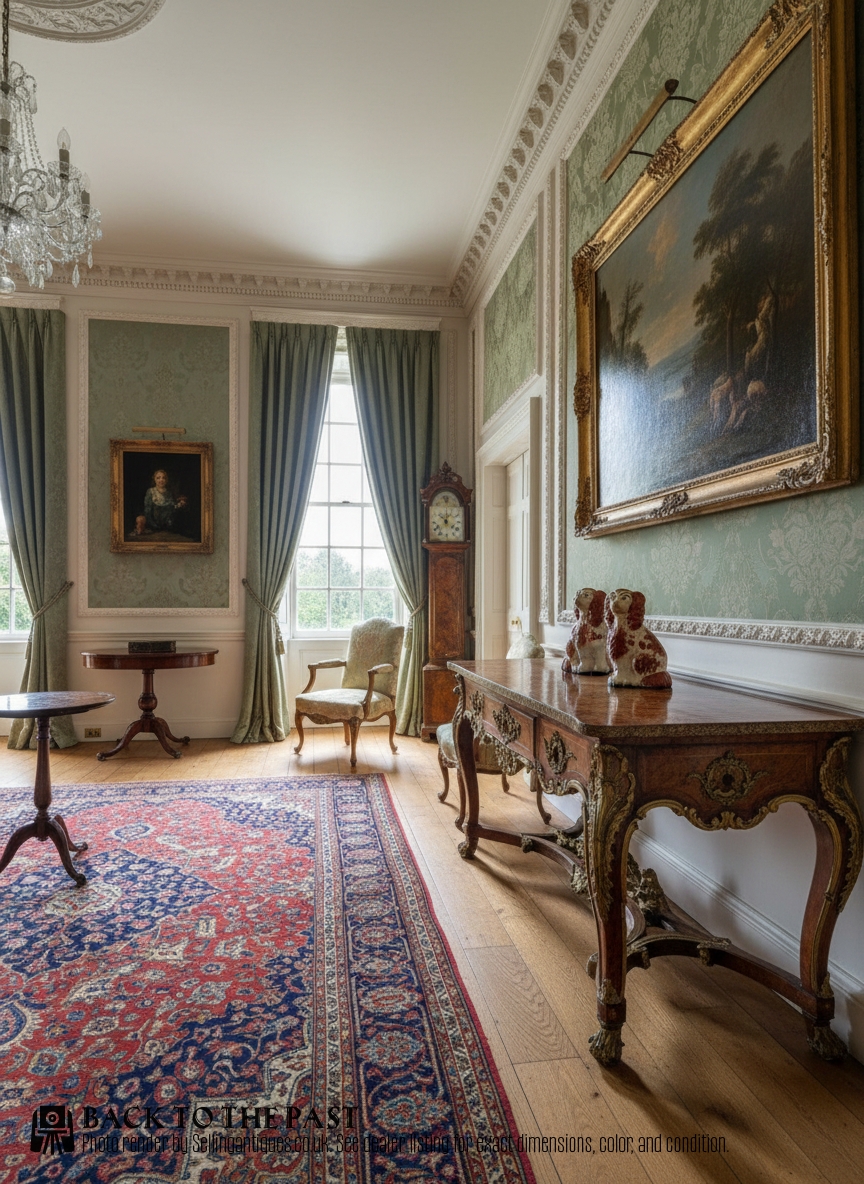
These figures find their traditional home upon a mantelpiece or shelf where their flat backs can rest securely against a wall.
They also suit display cabinets or side tables where viewers can appreciate the hand-painted enamel details at close range.
How do I date a Staffordshire figure?
Dating relies on stylistic clues, ceramic bodies, and the specific moulding techniques employed by nineteenth-century potteries.
Earlier Regency pieces often utilise pearlware, while high Victorian examples display robust earthenware bodies and characteristic enamel palettes.
What is a spill vase?
A spill vase is a decorative ceramic figure combined with an attached tubular holder designed to contain wooden matches or taper lights.
These combination pieces allowed households to keep fire-lighting spills close at hand upon the mantelpiece.
Are these figures always sold in pairs?
Many popular models, particularly spaniels and lions, were produced and sold as matching pairs to flank a clock or ornament on either end of a mantelpiece.
Single figures and architectural models such as castles or cottages also appear independently in the listings.