
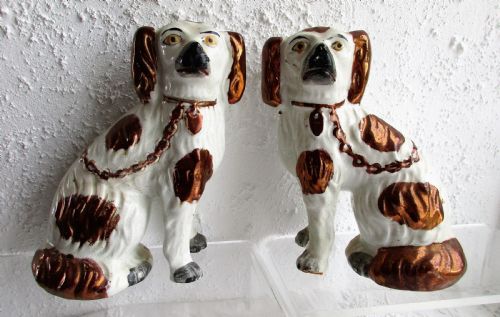


King Charles Spaniel Figurines
King Charles spaniel figurines bring the quiet dignity of a fireside companion into your room, cast in earthenware, bronze or iron.
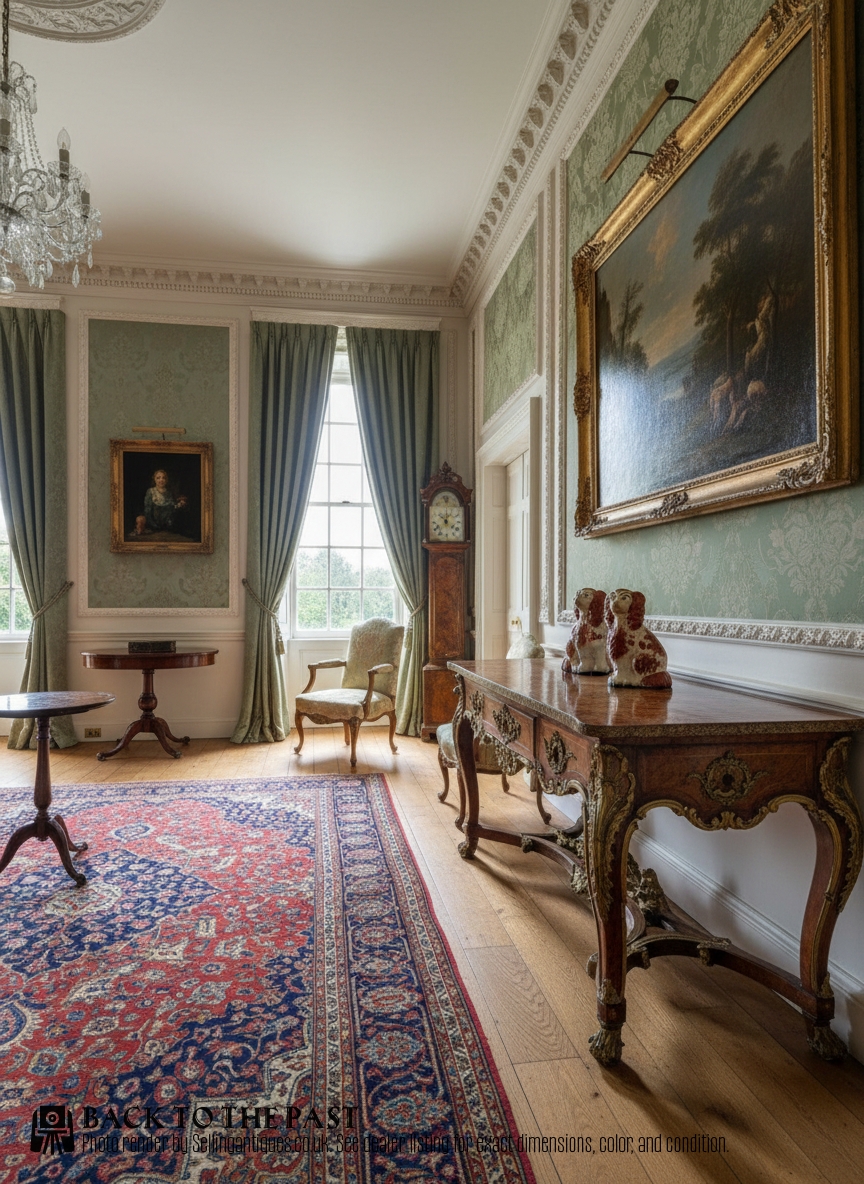
King Charles Spaniel Figurines
King Charles spaniel figurines represent the much-loved toy spaniels that sat beside Victorian hearths and adorned mantelpieces across Britain. When you search for king charles spaniel figurines, you encounter ceramic pairs that faced one another from opposite ends of a shelf, alongside cast iron doorstops and bronze sculptures.
The pieces on this page span the nineteenth century into the twentieth, with Victorian Staffordshire pottery examples appearing most frequently. These ceramic specimens often feature glossy glazes, copper lustre highlights or black and white markings, modelled as seated dogs ready to watch the room.
Beyond earthenware pottery, the selection includes French animalier bronze sculpture and sturdy cast iron doorstops designed for practical service. Makers such as Antoine Louis Barye, Royal Doulton and Beswick contribute alternative interpretations in bronze and ceramic.
How they were made
Potters shaped these earthenware and stoneware figures using moulds before applying lead glaze and hand-painted enamel details to the eyes, muzzles and lockets. Artisans frequently added gilt highlights or copper lustre to collars and chains, bringing metallic warmth to the ceramic surface.
Bronze versions utilised the lost-wax casting method, capturing fine fur texture and anatomical detail before workers applied a patinated bronze finish. Cast iron doorstops required heavy sand casting to create robust, weighted bodies capable of holding open heavy doors.
What varies in quality
The presence of matching pairs with undamaged glaze and minimal wear elevates a set above single figures or examples with extensive restoration. Consistency in the black and white transfer printing or enamel spotting also separates standard commercial output from finer studio pieces.
Antoine Louis Barye·Royal Doulton·Beswick
The King Charles Spaniel Figurines Glossary
- Staffordshire pottery
- Earthenware ceramics produced in the pottery towns of Staffordshire, England, famous for domestic figures and animal pairs. These wares formed the backbone of Victorian mantelpiece decoration.
- Animalier
- A nineteenth-century artistic style focusing on the realistic portrayal of animals, championed by French sculptors working in bronze. This movement produced detailed studies of dogs and wildlife.
- Patinated bronze
- A metal sculpture treated with chemical solutions to produce a specific surface colour and aged texture. This finish protects the bronze while enhancing sculptural depth.
King Charles Spaniel Figurines: Frequently Asked Questions
Why do these spaniels come in pairs?
Victorian mantelpieces were arranged in strict symmetry, so ceramic dogs were modelled and glazed as left-and-right facing pairs to sit at either end of a shelf.
This traditional arrangement created a balanced display flanking a clock or garniture set.
How do I date an antique spaniel figure?
Dating relies on examining the clay body, the weight of the ceramic, the style of the enamel painting and the glazing technique. Nineteenth-century Staffordshire pieces typically show crazing in the glaze and hand-painted touches over a moulded earthenware base.
Later twentieth-century figures often display finer ceramic bodies and printed maker marks.
Were these figures meant as toys?
These pieces were strictly ornamental or domestic accessories rather than children toys, designed to sit upon mantelpieces, tables or hearths. Iron variants served the practical purpose of heavy doorstops.
They allowed households to display the popularity of the royal spaniel breed without keeping a live dog.
What is the difference between earthenware and stoneware?
Earthenware is fired at lower temperatures, resulting in a porous ceramic body that requires a protective glaze to hold water. Stoneware is fired much higher, producing a dense, non-porous and harder material.
Most traditional figurines use earthenware, while occasional sturdier examples utilise stoneware.