


White Staffordshire Dogs
White staffordshire dogs bring nineteenth-century domestic charm to a mantelpiece, offering the classic appeal of ceramic animal figures made for Victorian homes.
White Staffordshire Dogs
White staffordshire dogs comprise ceramic figures and decorative objects modelled as spaniels, poodles, terriers, and greyhounds. These pieces mostly date from the Victorian period, spanning the nineteenth century from the regency era onwards.
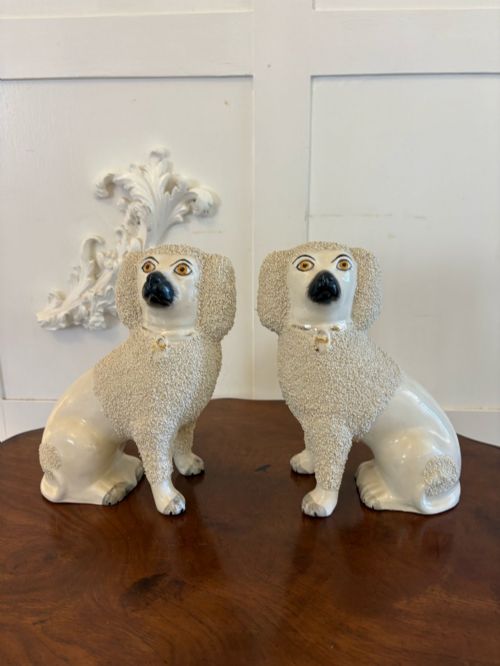
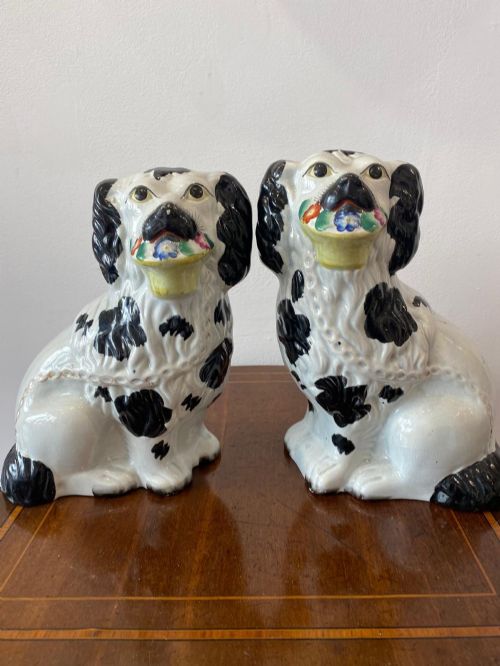
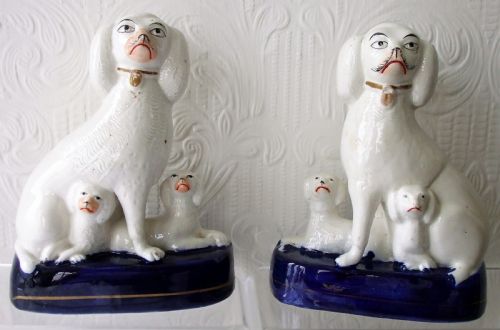
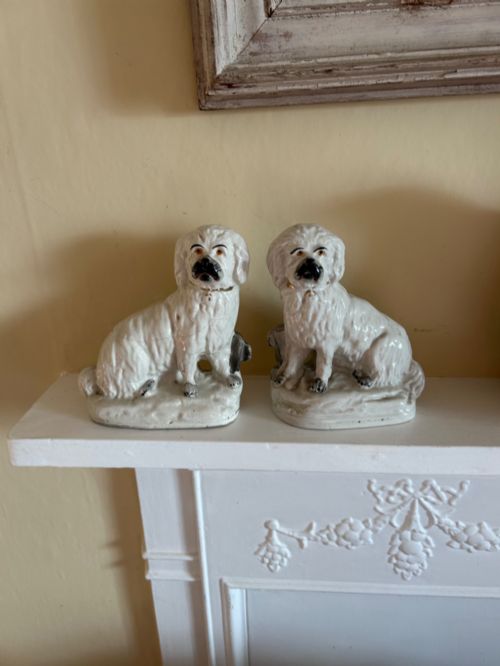
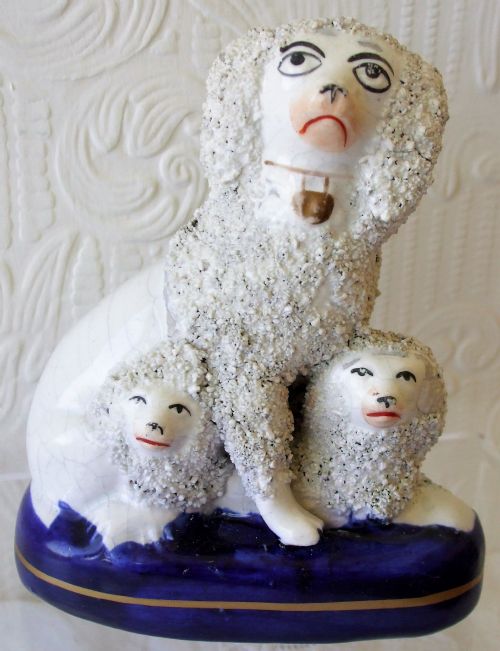
Buyers commonly encounter matched pairs designed to flank a fireplace or sit upon a shelf. The selection includes comforter spaniels alongside poodles with pups, dalmatian inkwells, money boxes, and quill holders.
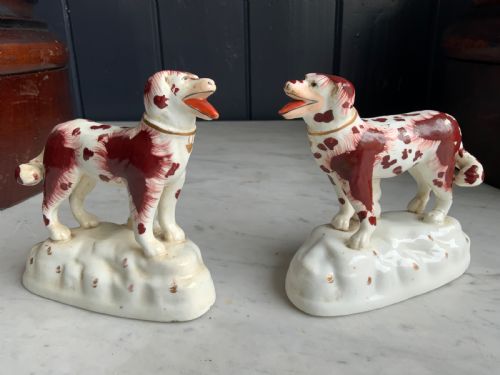
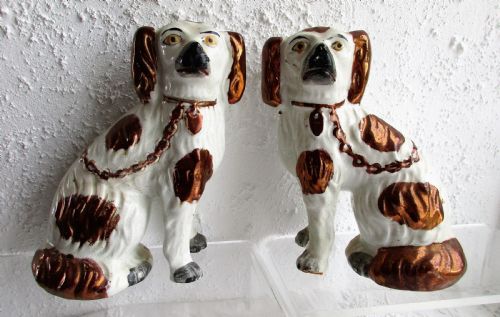
Most examples display a white ground complemented by gilt highlights, copper lustre, or painted patches of black, red, and tan. Makers also produced Toby jugs and figure groups representing these popular canine breeds.
How they were made
Potters shaped these earthenware, porcelain, and porcellanous figures using ceramic moulds before applying a lead glaze. Artisans then hand-painted details using enamel colours and added gold leaf or gilt accents.
Woolly poodles rub shoulders with comforter spaniels, proving the Victorians had a dog for every mood.
What varies in quality
Quality depends upon the crispness of the moulding and the precision of the hand-painted enamel work. Finer figures display detailed facial expressions and well-defined coats rather than simplified painting.
Size and scale dictate the visual impact of a pair, with larger models and grander matched sets commanding stronger presence. The application of gold leaf or gilt highlights also distinguishes standard production from superior examples.
Thomas Parr
The White Staffordshire Dogs Glossary
- Comforter spaniel
- A type of Staffordshire pottery dog modelled on the King Charles spaniel, traditionally kept on hearths and mantelpieces.
- Earthenware
- A porous ceramic body fired at lower temperatures, commonly used for nineteenth-century Staffordshire figures.
- Lead glaze
- A glossy coating applied to pottery before firing that gives these ceramic surfaces their characteristic shine.
- Porcellanous
- A ceramic material sharing properties between earthenware and true porcelain, found in select nineteenth-century dog figures.
White Staffordshire Dogs: Frequently Asked Questions
What are white staffordshire dogs?
White staffordshire dogs are ceramic animal figures produced by nineteenth-century potteries in England. They primarily depict seated spaniels, poodles, and terriers created to decorate Victorian mantelpieces.
Most examples appear as matched pairs intended to sit at either end of a shelf or fireplace. Collectors also find specialised forms like inkwells, money boxes, and quill holders.
Where did these ceramic dogs sit?
These decorative figures traditionally occupied the mantelpiece of a Victorian home, often positioned in pairs facing inward toward the hearth. Their placement reflected domestic respectability and a fondness for household pets.
Beyond the fireplace, owners placed smaller poodles and spaniels on side tables, dressers, and an assortment of living room surfaces.
How do I date these figures?
Dating relies on stylistic clues, glaze characteristics, and the specific modeling techniques used during the nineteenth century. Regency and early Victorian pieces often feature distinct facial painting and simpler clay bodies compared to later Victorian iterations.
Marked pieces or documented makers help narrow the timeframe, though many nineteenth-century earthenware figures remain unsigned. Comparing the weight, scale, and enamel colours against established archive examples assists in confirming the period.
Are all these dogs white?
While white forms predominate, many Staffordshire dogs feature painted patches of black, red, tan, or copper lustre alongside gilt highlights. The base glaze is typically white or off-white, paired with coloured enamel markings representing different canine coats.
Makers produced variations including solid black and white spaniels, red and white terriers, and models decorated with gold leaf. The term white staffordshire dogs describes the general style rather than a strict monochrome colour scheme.