
Victorian Staffordshire Pair
When you search for a victorian staffordshire pair, you step into the world of nineteenth-century shelf ornaments made to mirror the domestic tastes of the era.
Victorian Staffordshire Pair
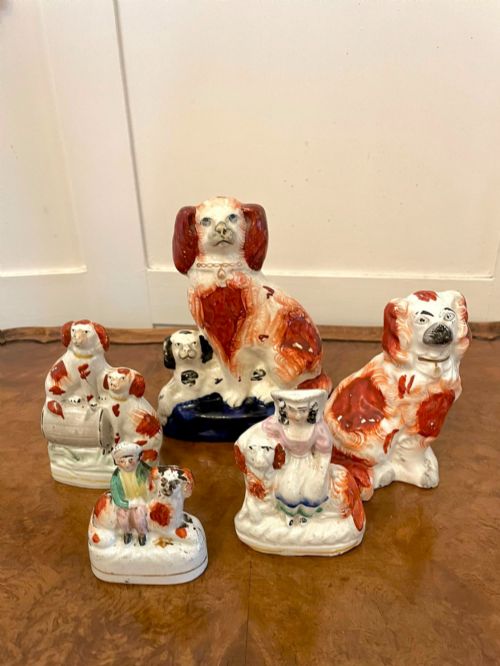
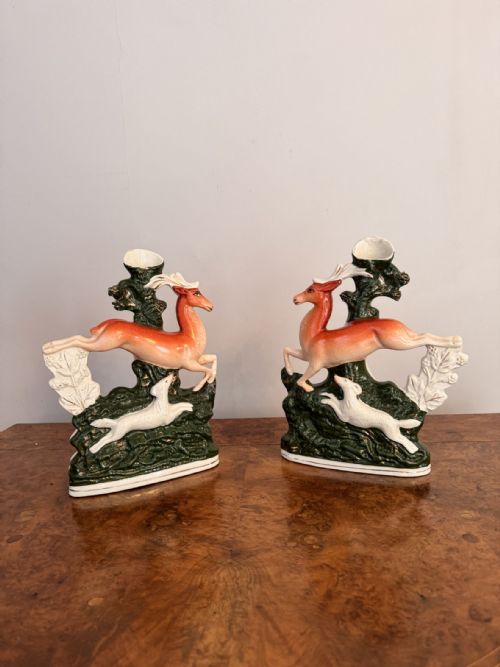
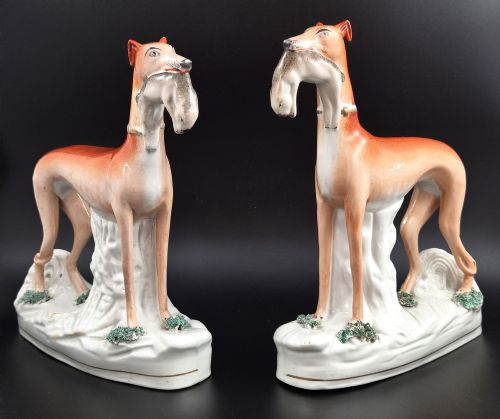
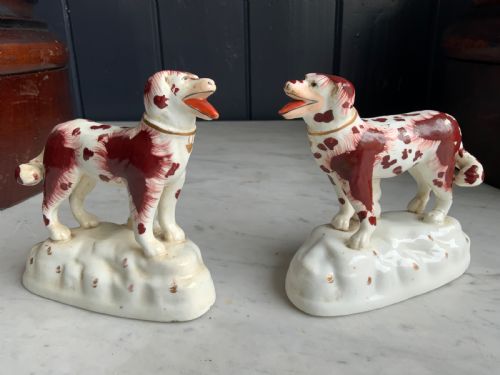
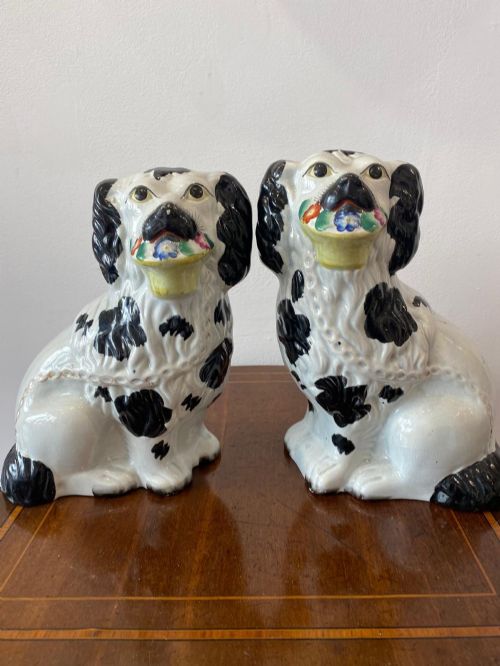
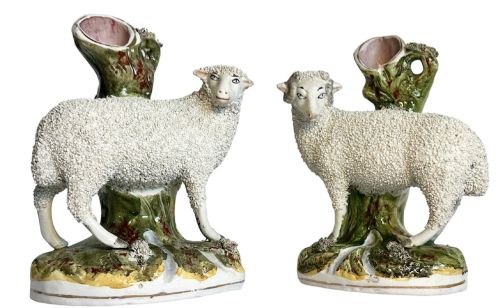
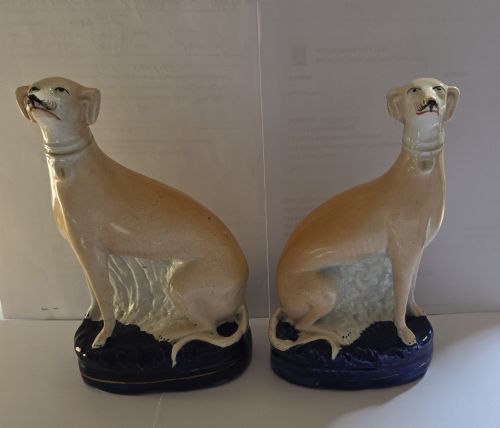
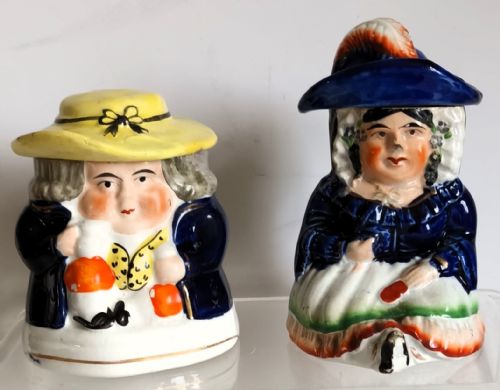
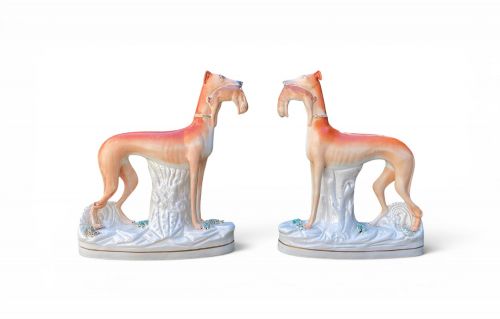
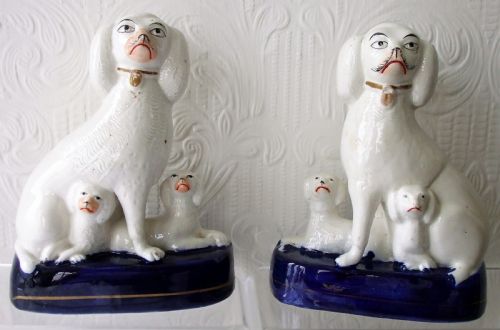
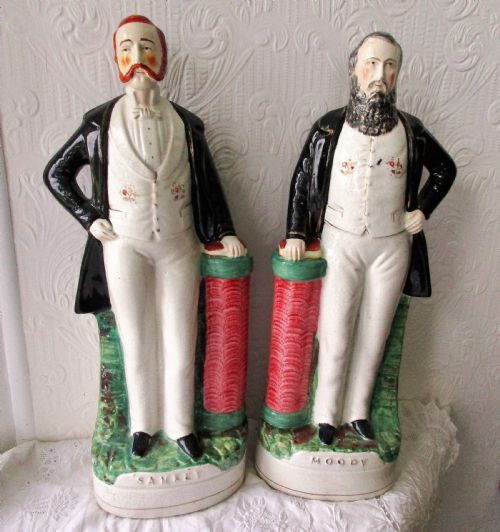
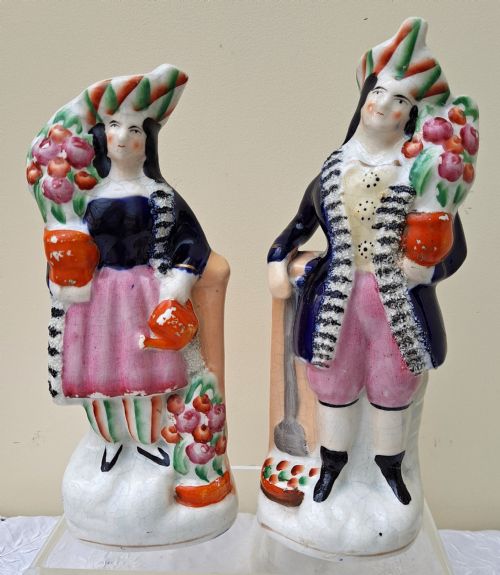
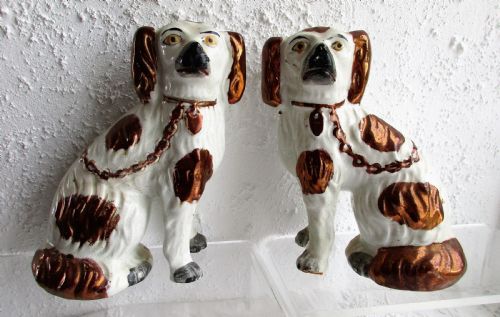
A victorian staffordshire pair comprises matched ceramic figures modelled in the potteries of nineteenth-century England to flank a mantelpiece or sideboard. The selection spans domestic animals such as spaniels, poodles, greyhounds and lions, alongside portrait figures, theatrical characters and spill vases designed to hold wooden matches.
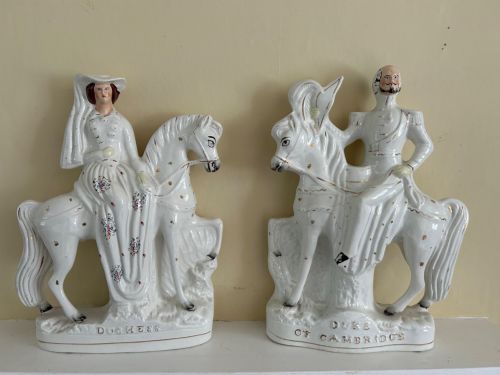
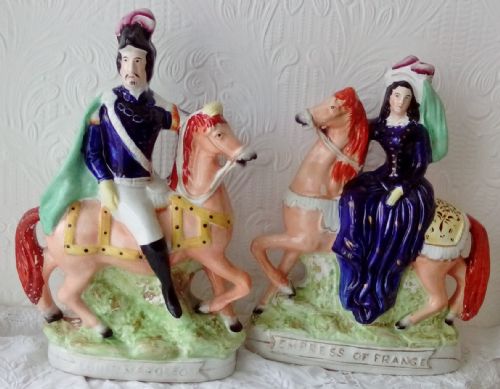
Most examples found here date from the Victorian period, reflecting the Victorian Staffordshire and Victorian Folk Art styles. Buyers encounter both simplified country pottery and more ambitious modelled pairs representing royal personages, literary figures or agricultural scenes.
How they were made
Potters shaped these figures from earthenware and ceramic bodies, often employing press moulds to duplicate standard animal and human forms. Artisans then applied lead glaze to seal the porous clay before firing the pieces in kilns.
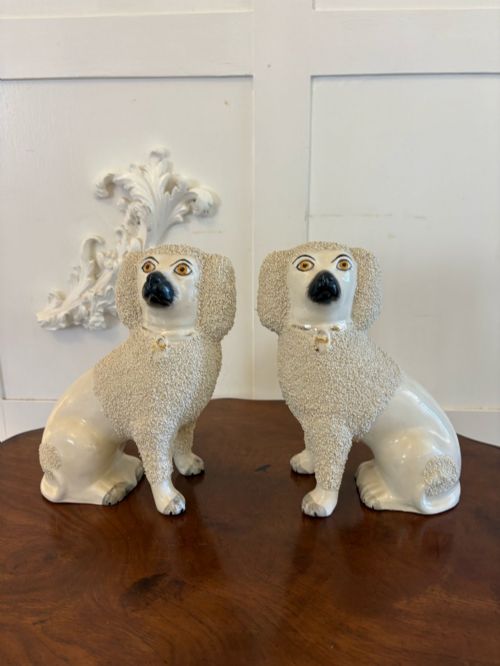
Surface decoration relied on enamel paint and enamel, sometimes highlighted with gold leaf or gilt details. Certain poodles incorporated textured clay applications known as confetti or gravelware to simulate curly fur.
Object forms range from decorative figurines and spill vases to inkwells, candlesticks and tobacco jars.
What varies in quality
Matched sets that retain their original corresponding poses, uniform glaze colouring and balanced scale command greater attention than mismatched partners assembled from different workshops.
Thomas Parr·Sutherland And Sons
The Victorian Staffordshire Pair Glossary
- Earthenware
- A porous pottery body fired at lower temperatures, commonly used for nineteenth-century figures before being glazed. It forms the structural base for the majority of these Staffordshire pieces.
- Spill vase
- A hollow vertical cylinder attached to a figure, intended to hold wooden spills used for lighting pipes, lamps or fires. These vessels combine decorative modelling with practical household utility.
- Flatback
- A figure moulded with a finished front and a plain, unadorned reverse designed to sit flush against a wall. This technique saved time and materials during production.
- Lead glaze
- A glossy coating applied to ceramic ware prior to the final kiln firing to waterproof the clay body. It produces the characteristic shiny finish seen on Victorian pottery.
Victorian Staffordshire Pair: Frequently Asked Questions
What animals appear most often in these pairs?
Spaniels, poodles and greyhounds dominate the surviving animal figures, alongside lions, deer, sheep and cows.
Potters also produced rarer subjects such as dalmatians, maltese terriers, foxes and domestic poultry.
Were these figures meant for display only?
Many served purely as decorative ornaments arranged in mirrored pairs on mantelpieces, chests of drawers and sideboards. Others incorporated functional elements like inkwells, quill holders, tobacco jars, candlesticks or match holders.
Spill vases doubled as mantel ornaments and practical containers for wooden fire-lighters.
How do portrait figures differ from animal pairs?
Portrait figures depict identifiable historical individuals, royalty, theatrical actors or literary characters rather than domestic pets. These pieces frequently bear titles or names on their bases to identify the subjects.
They record the public figures and popular culture of nineteenth-century society.
How are these figures cleaned safely?
Dusting with a soft, dry brush removes surface particles without risking the painted enamel details. Liquid cleaning agents and harsh scrubbing can damage the fragile overglaze enamels and gold leaf.
Gentle maintenance preserves the original nineteenth-century finish.