


Victorian Earthenware Spill Vase
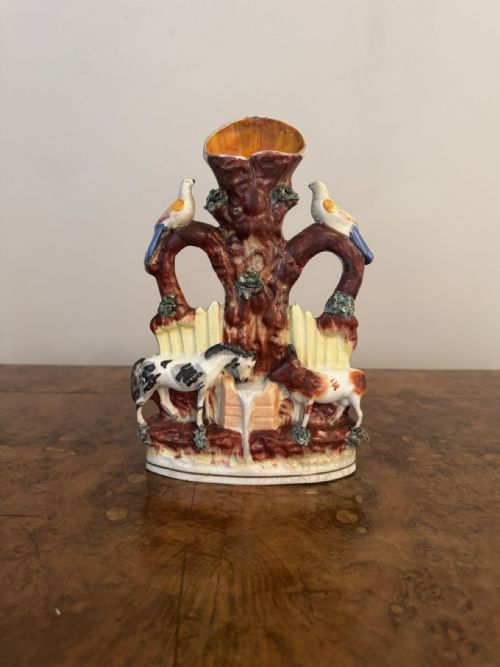
These Victorian earthenware spill vase pieces are charming ceramic holders designed to keep taper matches close at hand.
Victorian Earthenware Spill Vase
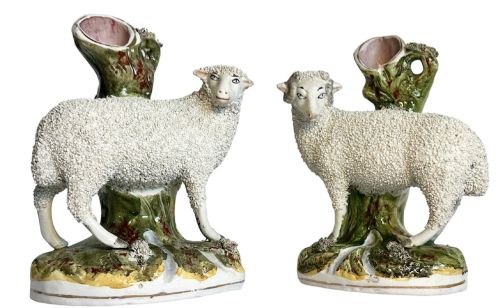
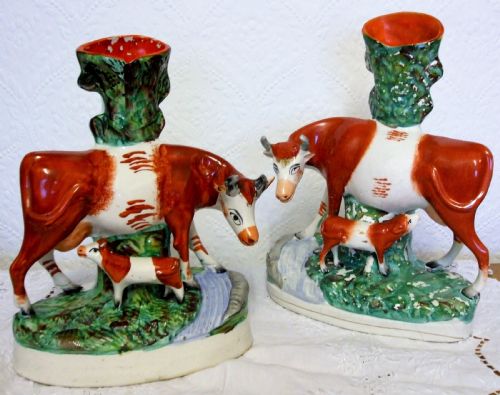
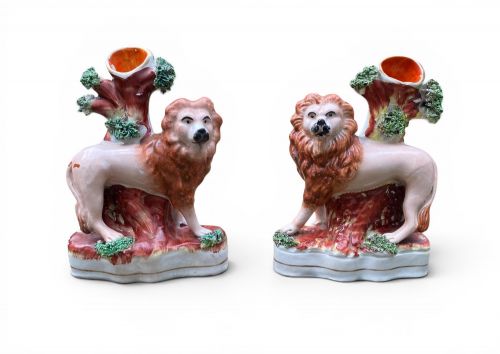
A Victorian earthenware spill vase combines domestic utility with figurative modelling, serving as both a mantel ornament and a practical holder for wooden taper matches. Buyers searching this phrase encounter nineteenth-century Staffordshire pottery forms shaped as animals, human figures, and architectural flatbacks.
The most common examples on this page are pairs of sheep, cows with calves, lions, and dogs, alongside narrative figure groups such as Scots Harvesters and the Band of Hope. Dating across the nineteenth century, these pieces reflect popular Victorian tastes for sentimental and illustrative pottery.
Many items function as spill holders or flatback figures incorporating a cylindrical tube for tapers behind the main subject. The modelling ranges from simple pairs of animals to elaborate castles and multi-figure scenes.
Materials and construction
Potters built these items using earthenware clay, shaped through moulding and finished with hand-painted enamel colours and lead glaze. The ceramic body provides a sturdy base for the hollow cylindrical spill holders integrated into the sculptural compositions.
Makers applied surface decoration using underglaze and overglaze enamels, occasionally highlighting details with gold leaf. The combination of glazed ceramic and painted pigments gives each piece its distinct tactile and visual surface.
Listings feature earthenware materials across nineteenth-century Victorian periods, spanning animal figures and architectural flatbacks.
Assessing quality and craftsmanship
The application of glaze and colour also separates standard production pieces from finer works. Consistent enamel coverage and well-preserved gilt highlights indicate a higher standard of original manufacture.
The Victorian Earthenware Spill Vase Glossary
- Earthenware
- Porous pottery fired at lower temperatures than stoneware or porcelain, requiring a glaze to become impermeable. It forms the primary ceramic body for nineteenth-century Staffordshire figures.
- Spill
- A thin slip of wood or rolled paper used for lighting candles, pipes, or fires from a hearth. The vases on this page were made to hold these tapers.
- Flatback
- A style of ceramic figure moulded with a flat, undecorated rear designed to sit flush against a mantelpiece wall. This technique saved time and materials during production.
- Enamel
- Vitreous coloured decoration applied over a fired glaze and fixed with a lower temperature second firing. It provides the bright surface hues seen on these figures.
Victorian Earthenware Spill Vase: Frequently Asked Questions
What is a spill vase?
A spill vase is a hollow ceramic vessel designed to hold thin wooden splints known as spills. These tapers were used to transfer fire from the hearth to candles or lamps.
In nineteenth-century homes, these decorative holders sat on mantelpieces as both ornaments and practical fire-lighting accessories.
How do I date these figures?
Dating relies on stylistic clues, moulding techniques, and the types of glazes and enamels used by nineteenth-century potteries. Most pieces span the Victorian era from roughly eighteen fifty to nineteen hundred.
Flatback construction and specific subject matter such as literary titles or historical figure groups help narrow down the period of manufacture.
Where were they made?
These ceramic pieces originate primarily from the Staffordshire pottery district in England. Local workshops produced large quantities of earthenware figures for domestic use.
The regional potters specialised in both animal pairs and narrative figure groups designed for working-class and middle-class mantelpieces.
How should I clean my pottery?
Cleaning requires only a soft, dry cloth or a very gently dampened brush to remove accumulated dust. Avoid using harsh chemical cleaners or submerging the ceramic in water.
Because the enamel colours and gold leaf are often delicate and applied over the glaze, gentle handling preserves the surface finish.