


Staffordshire Pottery Flatback
These Staffordshire pottery flatback figures are cheerful Victorian chimney-piece ornaments that capture historical events, royalty and rustic characters for everyday domestic display.
Staffordshire Pottery Flatback
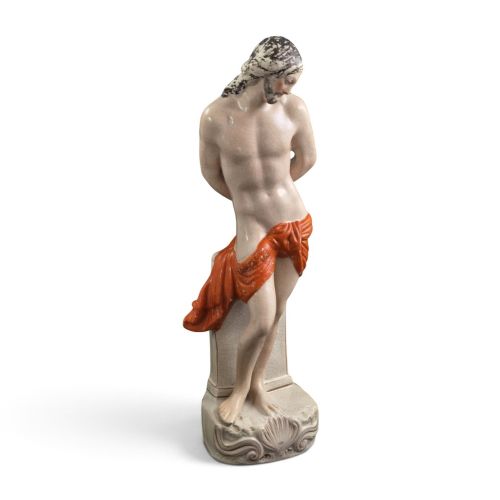
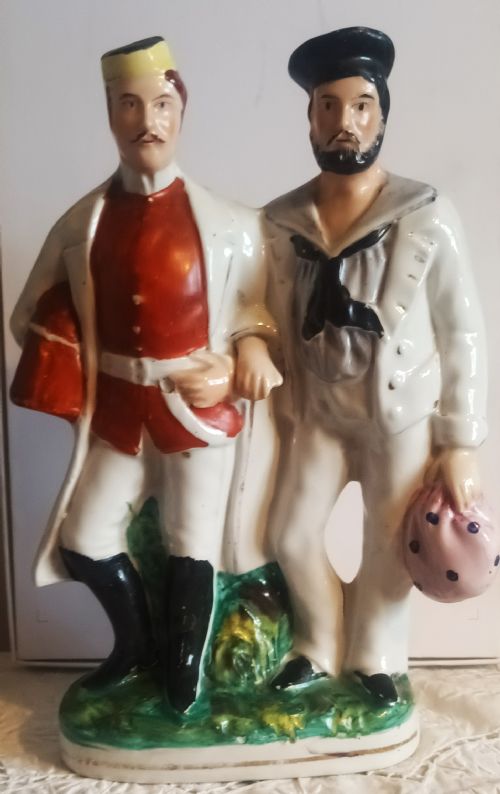
When you search for staffordshire pottery flatback, you encounter ceramic figures designed primarily for display on high mantelpieces where only the front mattered. The backs are left unglazed and flat, which allowed the potters to place them flush against cottage walls.
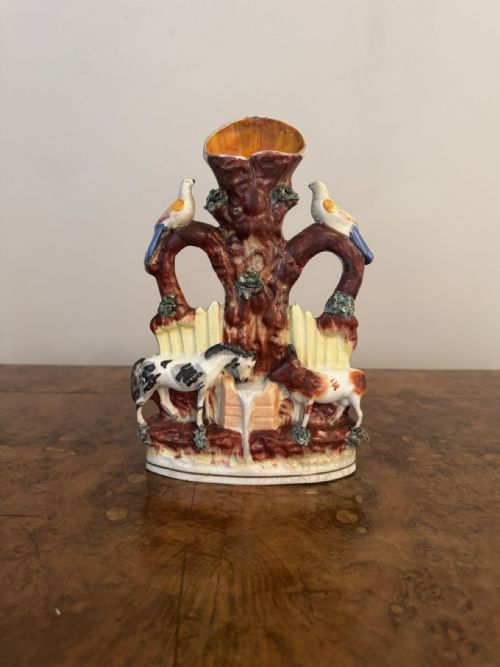
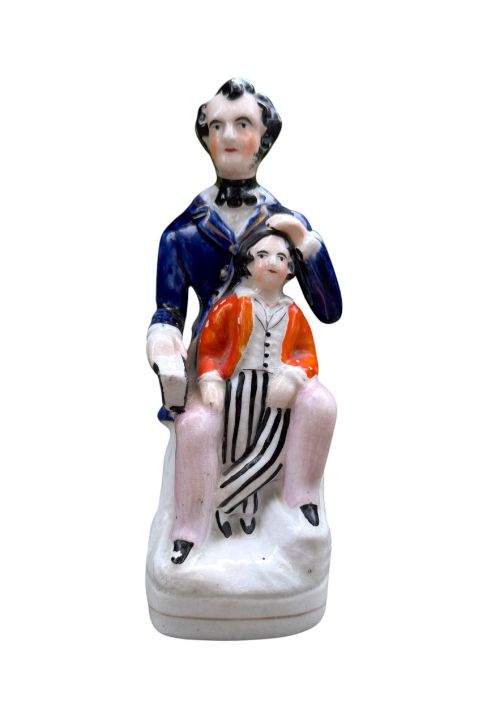
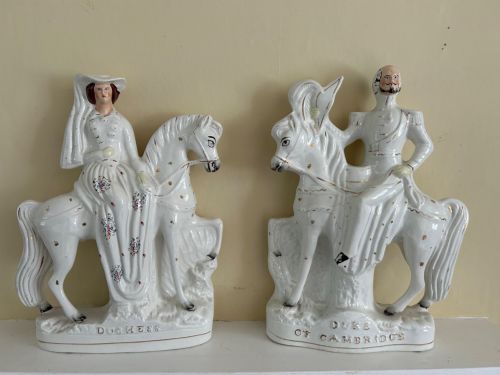
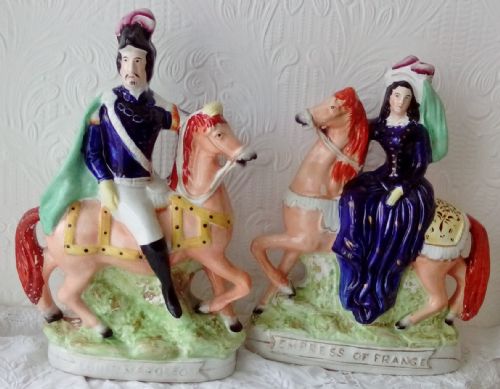
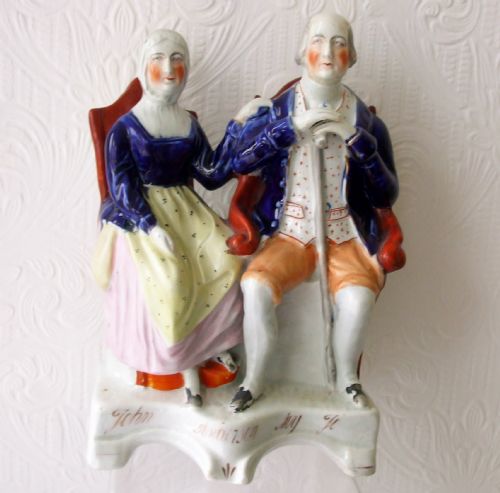
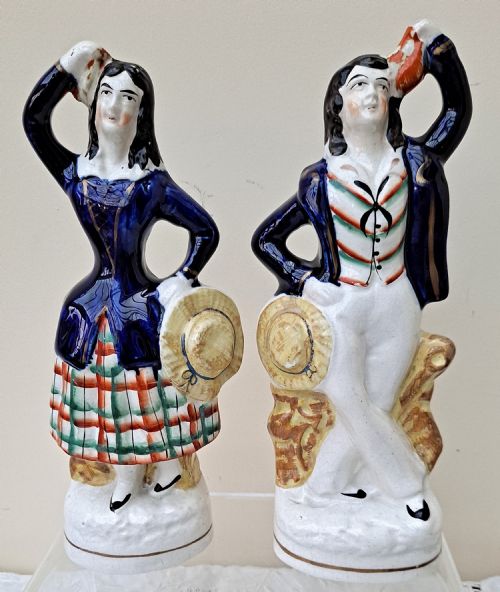
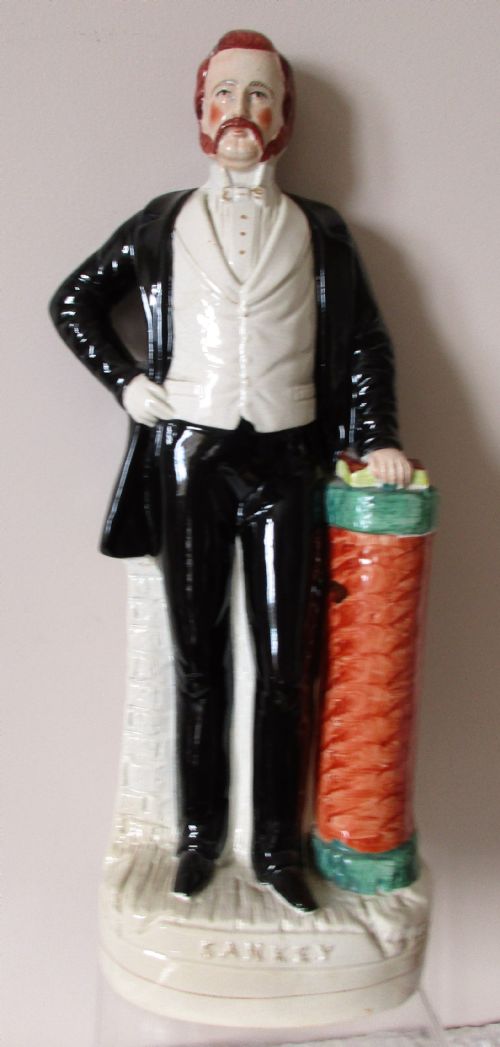
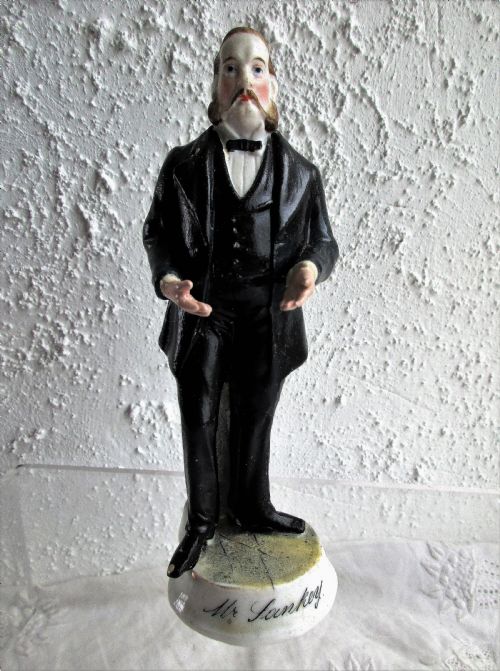
The versions most common on this page span the nineteenth century, particularly the Victorian period from eighteen fifty onwards. They take the form of portrait figures, theatrical pairs, royal groups, and architectural spill vases depicting castles and cottages.
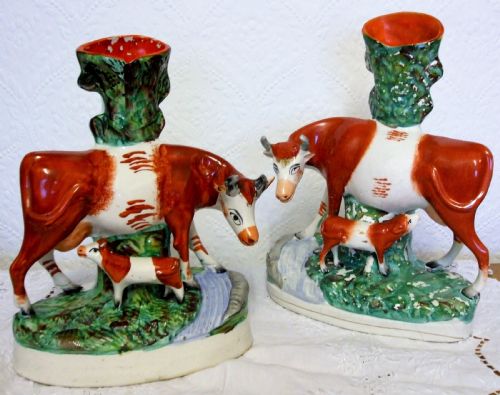
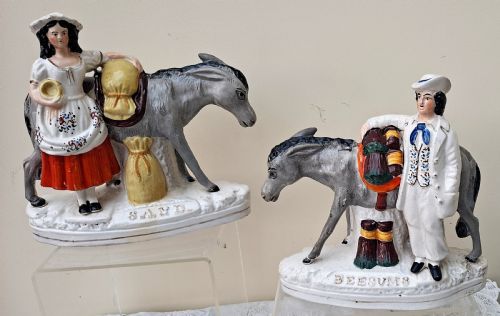
Subjects range from contemporary news items like the Crimean War and revival heroes such as Robin Hood to everyday rural scenes and domestic animals like the cow and calf. They served as affordable decoration for middle-class homes wanting colour and narrative.
How they were made
The unglazed flat backs reveal the porous ceramic body beneath the decorated front surface. Artisans fired the figures in kilns before applying the overglaze enamel paints and any final gilding touches.
Listings span the nineteenth century, incorporating Victorian earthenware, lead glaze, enamel paint and gilt highlights across figures, spill vases and cottages.
What varies in quality
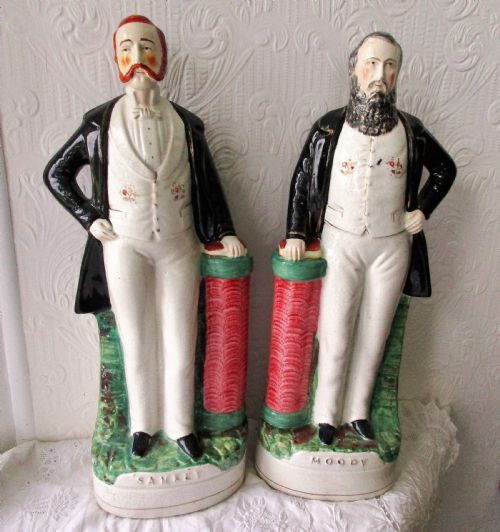
The precision of the enamel painting and the crispness of the mould stamping distinguish better examples from simpler ones. Finer pieces display careful facial expressions and cleanly rendered lettering on the base titles rather than blurred brushwork.
Size and ambition also separate standard figures from large portrait groups or architectural spill vases. Pairs and equestrian subjects demand more complex modelling and successful kiln firing without distortion.
The Staffordshire Pottery Flatback Glossary
- Flatback
- A ceramic figure modelled with a finished, decorated front and a flat, unglazed rear designed to stand against a wall.
- Spill vase
- A hollow pottery vessel incorporating a holder for wooden spills used to light pipes or candles.
- Earthenware
- A porous ceramic body fired at lower temperatures, commonly used for nineteenth-century Staffordshire figures.
- Enamel paint
- Coloured glassy material fused to the glazed surface during a secondary low-temperature kiln firing.
Staffordshire Pottery Flatback: Frequently Asked Questions
What is a flatback figure?
A flatback figure is a moulded ceramic ornament made to stand on a mantelpiece or shelf. The back remains unglazed and flat because it was meant to be seen only from the front.
These pieces were produced in large quantities across the nineteenth century to decorate British homes with portraits, animals and theatrical scenes.
How were spill vases used?
Spill vases combined a decorative figure with an attached hollow cylinder. Users placed thin wooden tapers inside to transfer fire from the hearth.
They sat on mantelpieces alongside standard figures, serving a practical domestic purpose before matches became common.
How do I date these figures?
Dating relies on historical subjects, costume details and the style of the ceramic body. Figures depicting specific historical events like the Crimean War or royal marriages provide a clear starting point for the era.
Most examples on this page belong to the Victorian period, stretching from the mid to the late nineteenth century.
Why are some figures found in pairs?
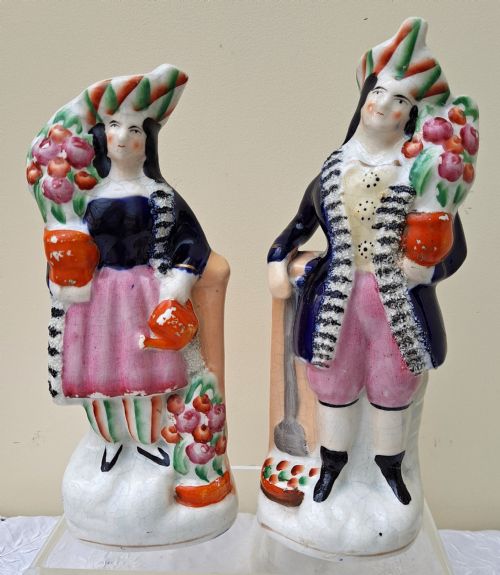
Potters frequently produced portrait figures and decorative subjects as matched pairs to flank a clock or mirror on a mantelpiece. Couples, theatrical characters and animal groups balanced the visual weight of the fireplace display.
Pairs often depicted complementary literary characters, political figures or romantic companions.