


Staffordshire Mantelpiece Figure
A Staffordshire mantelpiece figure brings the robust character of the Victorian parlour straight to your shelf.
Staffordshire Mantelpiece Figure
A Staffordshire mantelpiece figure is a ceramic ornament made to sit upon a shelf, depicting animals, royalty, literary characters, and country folk. When you search for this phrase, you will find earthenware figures spanning the nineteenth century, produced in utilitarian potteries across the Midlands.
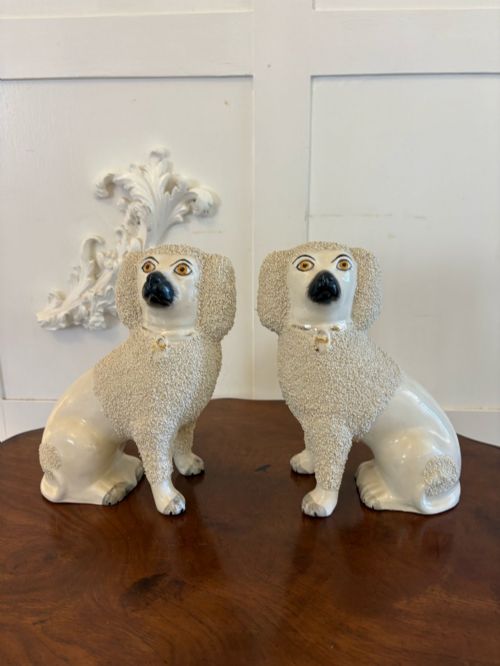
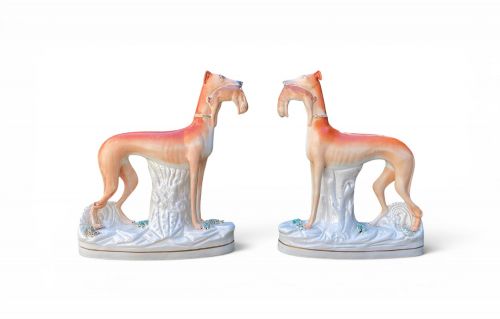
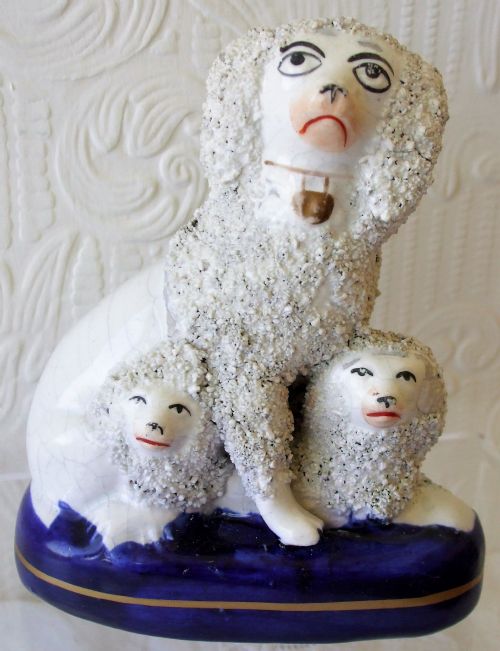
The most common forms on this page include pairs of seated dogs such as spaniels, poodles, and greyhounds, alongside flatback portrait groups and spill vases. These ornaments were designed as domestic decoration for middle-class homes rather than for display in cabinets.
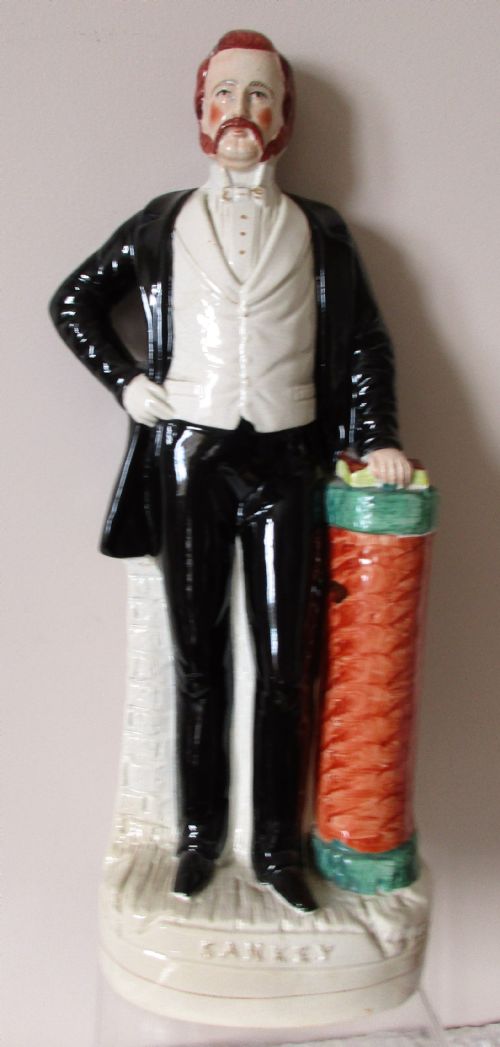
The subjects range from royal figures like Queen Victoria and Prince Albert to theatrical groups, Scottish highlanders, and domestic animals like lions and cats. Many of these pieces were modelled as flatbacks, meaning the reverse is often left unglazed or simply finished since the figure was meant to face outward from a wall.
How they were made
These figures are constructed from earthenware and stoneware, shaped using press moulds that allowed potteries to replicate popular subjects efficiently. Once formed, the pieces received hand-painted enamel colours and gilt highlights over a glaze before being fired in kilns.
Surface treatments vary between lead glazes, plain gloss glazes, and occasional treacle glazes that impart a rich, dark brown sheen. The base materials are typically heavy ceramic bodies, which gave the ornaments enough stability to sit safely on high fireplace mantels.
Listings feature earthenware, stoneware, and glazed ceramic bodies decorated with enamel paints and gilt highlights.
What varies in quality
The weight of the ceramic body and the ambition of the form also divide standard domestic wares from superior studio outputs. Larger pairs and complex figural groups require greater technical skill in the kiln, resulting in sturdier proportions and more expressive poses.
James Dudson·Royal Dolton·Beswick
The Staffordshire Mantelpiece Figure Glossary
- Flatback
- A figure moulded with a fully finished front and a flat, often unglazed reverse designed to stand flush against a mantelpiece wall. This method saved time and materials during production.
- Spill vase
- A hollow ceramic tube incorporated into a figure group, designed to hold taper spills for lighting pipes and candles. They combine practical household utility with decorative sculpture.
- Lead glaze
- A glossy coating containing lead oxide applied to earthenware to seal the porous clay body and deepen the colours underneath. It gives nineteenth-century ceramics their characteristic shiny finish.
- Treacle glaze
- A dark, translucent brown glaze used to coat ceramic bodies, creating a rich treacle-like appearance. It was frequently utilised on utilitarian animal figures and lions.
Staffordshire Mantelpiece Figure: Frequently Asked Questions
What are Staffordshire mantelpiece figures?
Staffordshire mantelpiece figures are nineteenth-century ceramic ornaments shaped as animals, people, and historical scenes. Potters in the Midlands produced them in large quantities for domestic decoration.
They range from utilitarian pairs of spaniels to elaborate portrait groups depicting contemporary royalty and theatrical characters.
How were they used in homes?
These figures were displayed prominently on fireplace mantels, sideboards, and drawing-room shelves. Pairs of dogs or lions were traditionally placed facing inward toward each other at either end of a mantel.
Spill vases served the dual purpose of ornament and container, holding wooden tapers used to transfer flames from hearth fires to candles and pipes.
How do I identify a flatback?
A flatback figure has a highly detailed front while the back is flattened and left relatively plain. This construction allowed the ornament to sit securely against a wall where the rear would not be seen.
Potters adopted this technique to save clay and speed up production for pieces intended specifically for mantel placement.
Are all these figures Victorian?
The majority of the pieces date from the nineteenth century, spanning the Victorian period and earlier decades of the eighteen-hundreds. Certain examples extend into the twentieth century while retaining traditional Staffordshire styles.
Stylistic shifts in clothing, glazing techniques, and subjects help distinguish mid-century items from later productions.