

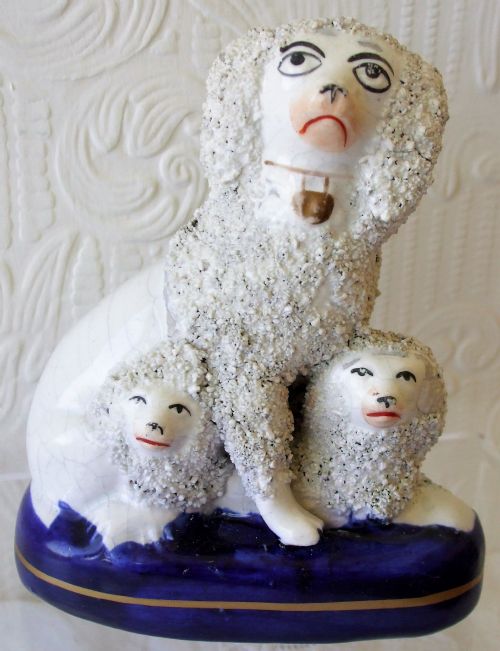


Victorian Pottery Figurine Group
These victorian pottery figurine group pieces capture 19th-century subjects in earthenware, offering charming shelf displays that bring immediate narrative character to a room.
Victorian Pottery Figurine Group
A victorian pottery figurine group brings together multiple figures, animals, or architectural elements modelled in clay. They span the 19th century, with dates clustering around the middle and later decades.
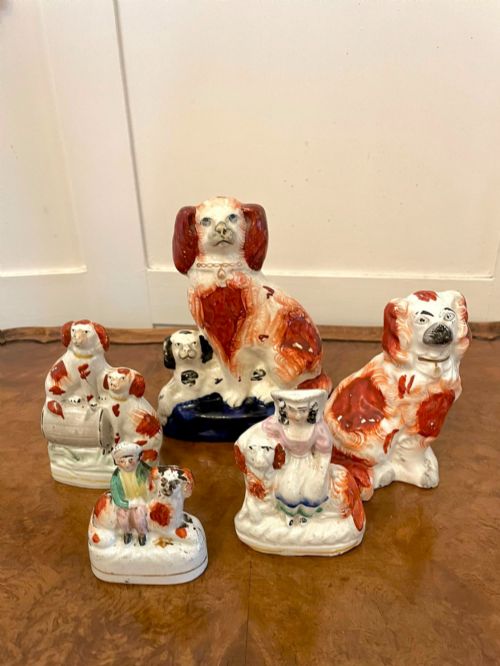
The version most commonly met on this page is the Staffordshire flatback, designed to stand against a wall on a mantelpiece or shelf. Subjects range from domestic animals like poodles and dogs to literary characters, royal portraits, and military alliances.
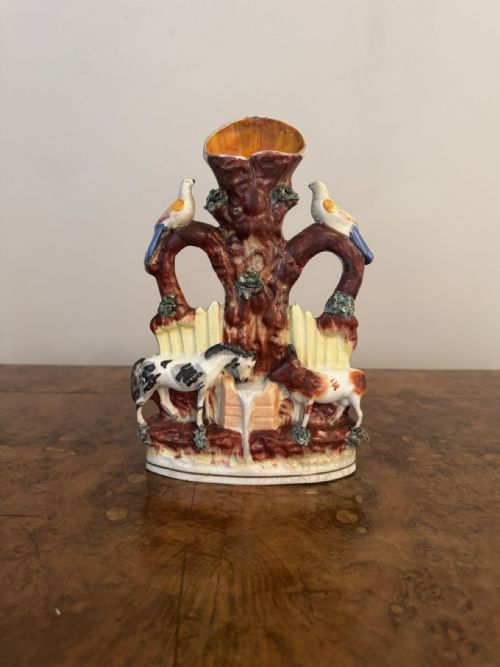
Makers produced spill vases alongside standard decorative figures, combining utility with mantel ornament. These groupings often record popular culture, political events, and folklore of the period.
Materials and production methods
Potters shaped these pieces using earthenware, a porous clay body that fired at relatively low temperatures. Earthenware provided an inexpensive and workable medium for mass production in pottery works.
Listings feature earthenware materials decorated with enamel paint and lead glaze across 19th-century Victorian styles.
Evaluating quality and execution
Quality rests in the crispness of the modelling and the precision of the hand-painting. Better examples display carefully rendered facial expressions and distinct details in clothing and fur, rather than hurried brushwork.
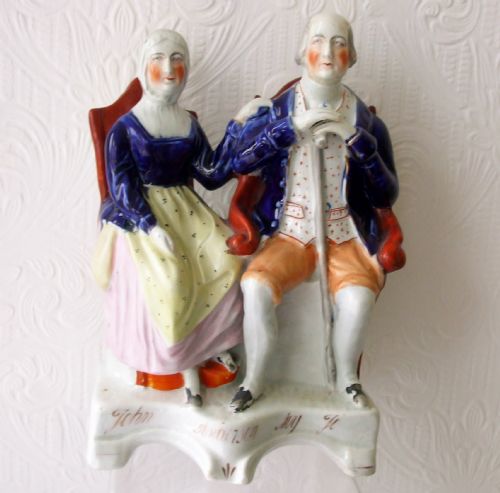
The ambition of the composition also separates standard items from superior works. Multi-figure groups, clock groups, and large spill vases required greater skill in construction to prevent sagging during the kiln firing.
The Victorian Pottery Figurine Group Glossary
- Flatback
- A figure moulded with a finished front and a plain, unpainted flat rear designed to stand against a wall. This construction saved materials and kiln space for shelf ornaments.
- Spill Vase
- A hollow cylindrical holder attached to a figure, intended to hold wooden spills for lighting fires or pipes. They combine practical household use with decorative modelling.
- Earthenware
- A porous pottery body fired at lower temperatures than stoneware or porcelain. It formed the standard substrate for 19th-century Staffordshire figures.
- Lead Glaze
- A glossy coating containing lead oxide applied to ceramic wares before firing. It produced a smooth, vitreous surface that enhanced the painted enamels underneath or above.
Victorian Pottery Figurine Group: Frequently Asked Questions
What are flatback figures?
Flatbacks are pottery figures modelled with detailed fronts and flat backs. They were specifically made to sit on mantelpieces where only the front view mattered.
This design allowed the pieces to stand flush against a wall while saving clay and reducing weight during firing.
How were spill vases used?
Spill vases incorporated a small cylindrical tube alongside the main figure to hold thin wooden spills. Households used these wooden slivers to transfer flames from the fireplace to candles and lamps.
They served a practical daily purpose before matches became common, while doubling as decorative ornaments.
What subjects do these figures show?
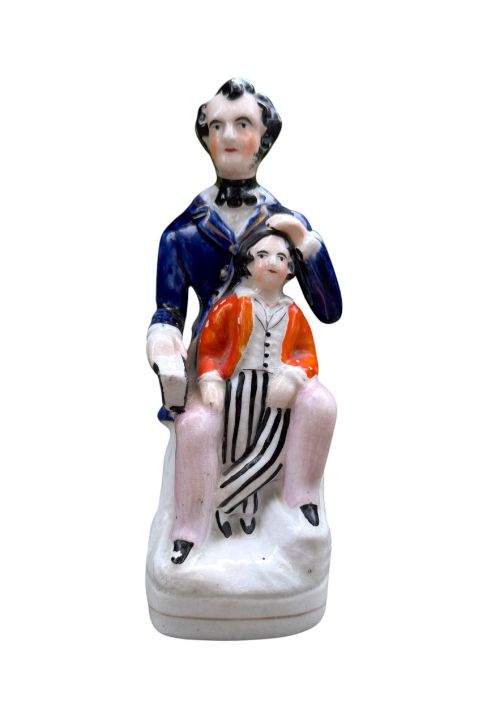
The subjects cover a wide range of Victorian life, including literary characters, historical figures, and royal portraits. Domestic animals such as poodles, dogs, swans, and deer also appear frequently.
Political alliances and contemporary news events provided inspiration for commemorative figure groups.
How do I date a 19th-century figure?
Dating relies on stylistic clues, subject matter related to specific historical events, and characteristics of the clay and glaze. Figures commemorating the Crimean War or specific royal marriages give clear after-dates for production.
Comparing the modelling style with documented factory pieces helps narrow down the decade of manufacture.