




White Pottery Spill Vase
These white pottery spill vase pieces are Victorian Staffordshire figures and holders designed to contain matches, bringing charming nineteenth-century character to any mantelpiece.
White Pottery Spill Vase
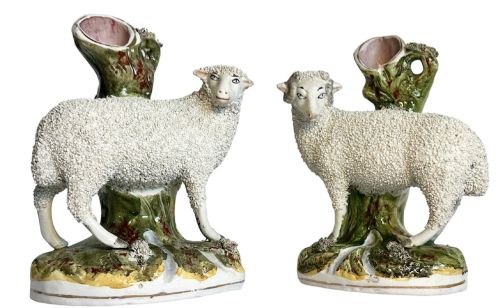
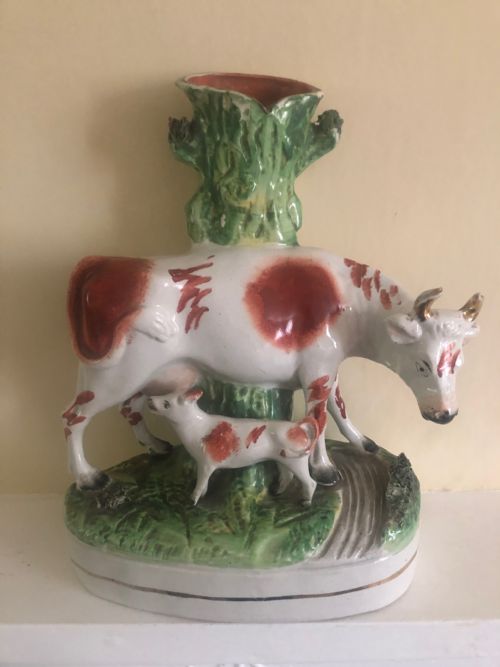
When searching for a white pottery spill vase, collectors encounter nineteenth-century Staffordshire figures, flatback groups, and animal pairs that double as functional spill holders. These decorative ceramic items range from sheep and swans to literary or pastoral figure groups made during the Victorian era.
The most common examples on this page are Victorian Staffordshire figures and spill holders depicting animals such as sheep, cows, and swans, alongside human figures like Scots harvesters or milkmaids. These pieces combine sculptural presence with a practical cylindrical tube meant for holding taper spills.
Originating primarily from nineteenth-century Staffordshire potteries, these objects reflect the domestic tastes of the Victorian period. They bridge the gap between ornamental pottery and utilitarian fireside accessories, often appearing in pairs or sets.
How they were made
Potters shaped these earthenware and ceramic pieces using traditional moulding techniques, creating the hollow flatback bodies characteristic of Victorian Staffordshire production. Lead glazes and enamel paint were then applied to finish the surfaces, adding distinct colour and shine to the figures.
Makers utilised ceramic body materials combined with detailed hand-painting and blue jasper relief work, particularly seen in Wedgwood productions from the late nineteenth century. The interaction between the glaze and the underlying earthenware defines the tactile quality of each spill vase.
Scots harvesters and babes in the wood share mantelpiece space with sheep and cows.
What varies in quality
The sophistication of the glaze and the preservation of the original paintwork distinguish finer pieces from simpler utilitarian output. Pairs and matched sets with balanced proportions represent the higher tier of what is available from the period.
Wedgwood
The White Pottery Spill Vase Glossary
- Spill vase
- A small cylindrical container designed to hold wooden spills used for lighting fires and candles. These vessels often take the form of hollow tree trunks positioned beside animal or human figures.
- Flatback
- A style of Staffordshire figure moulded with a detailed front and a flat, unpainted reverse intended to sit flush against a wall. This technique saved time and material during nineteenth-century production.
- Earthenware
- A porous, non-vitreous pottery fired at lower temperatures, commonly used for nineteenth-century Staffordshire figures. It requires a glaze to become impermeable to liquids.
- Jasperware
- A type of fine stoneware developed by Wedgwood, characterised by a matte finish and contrasting white neoclassical relief figures against a coloured ground. It represents a different ceramic tradition from soft earthenware figures.
- Lead glaze
- A glossy coating containing lead oxide applied to pottery before firing to seal the porous earthenware body. It provides a smooth surface that enhances painted decoration.
White Pottery Spill Vase: Frequently Asked Questions
What is a spill vase?
A spill vase is a nineteenth-century ceramic holder designed to store wooden matches or paper tapers used for lighting fires and lamps. They sat on mantelpieces alongside decorative figures for easy access.
In many Staffordshire pieces, the vase is disguised as a tree trunk or column standing beside animals or people, blending utility with ornamental design.
How old are these pottery spill vases?
The pieces listed date from the nineteenth century, specifically spanning the Victorian era between eighteen-sixty and eighteen-eighty. This period saw massive production of decorative earthenware in central England.
Stylistic cues and backstamps help historians narrow down the decades of manufacture, though many regional pieces remain unmarked.
Are these figures meant to be paired?
Many Victorian Staffordshire spill vases were manufactured as symmetrical pairs to flank a clock or ornament on a mantelpiece. Collectors still prize matching pairs of animals or figures together.
Single figures and sets of five also exist, reflecting diverse domestic arrangements in nineteenth-century homes.
How do I display a flatback figure?
Flatback figures are designed with a plain, unpainted reverse so they rest securely against a wall or mantelpiece back. Placing them at eye level allows the detailed front moulding and enamel paintwork to take focus.
Because they are made of earthenware, they should be kept away from damp environments and unstable edges.