
19th Century Statuette
When you handle a 19th century statuette, you hold a miniature work of sculpture shaped by Victorian artisans and continental founders for domestic display.
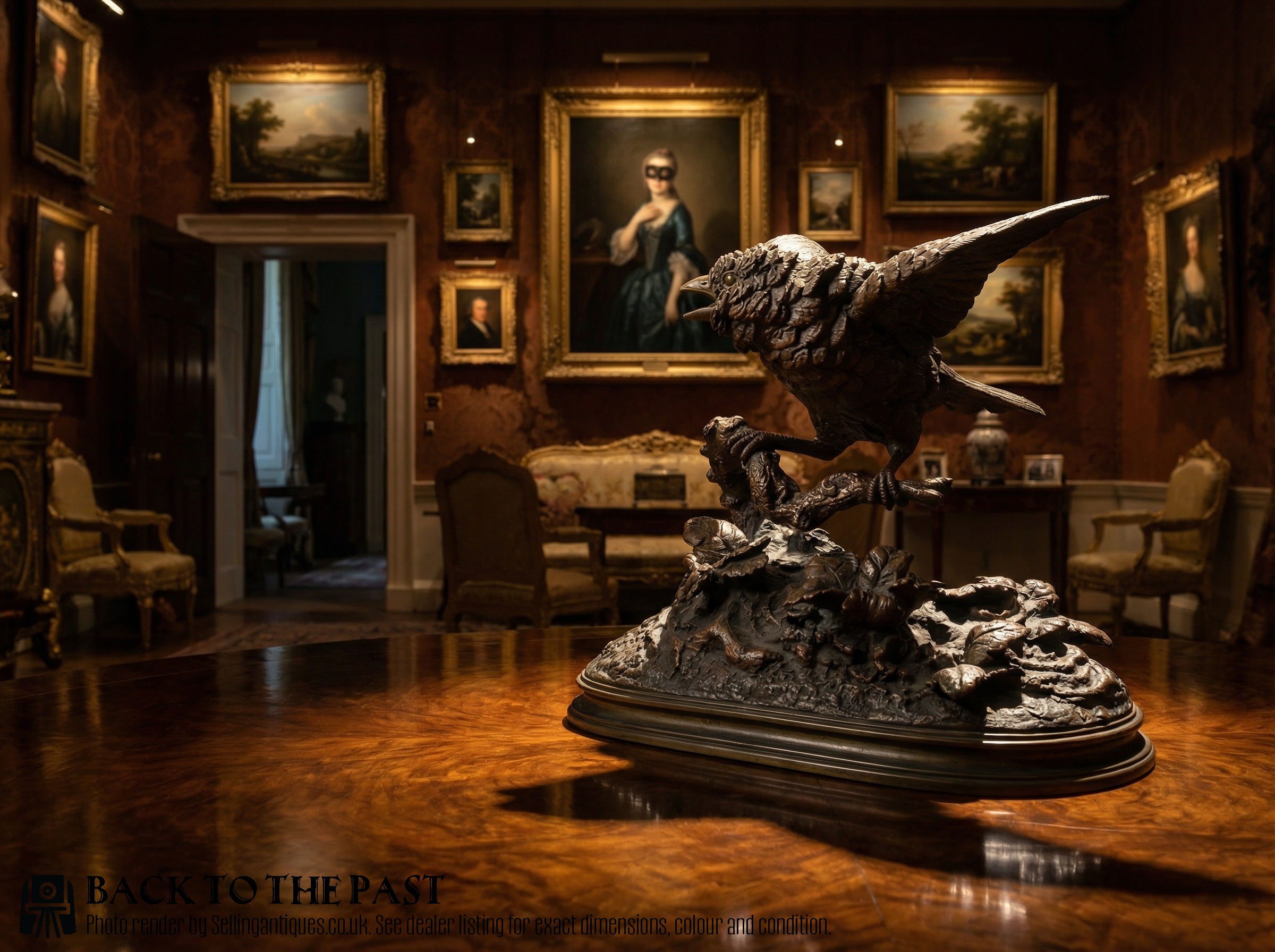
19th Century Statuette
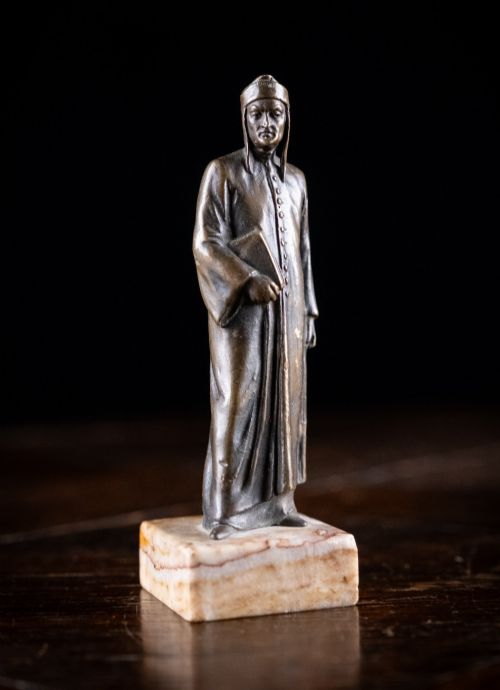
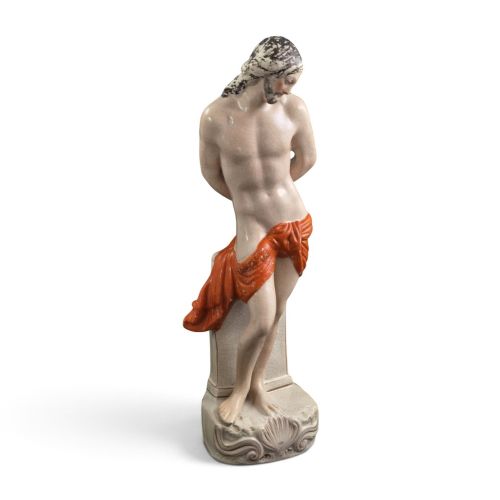
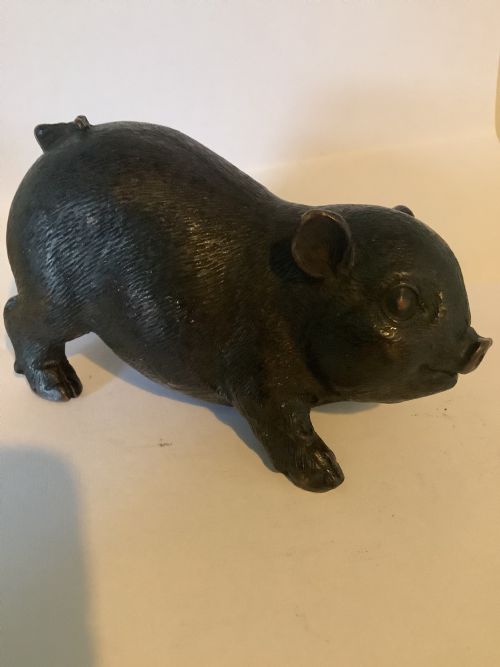
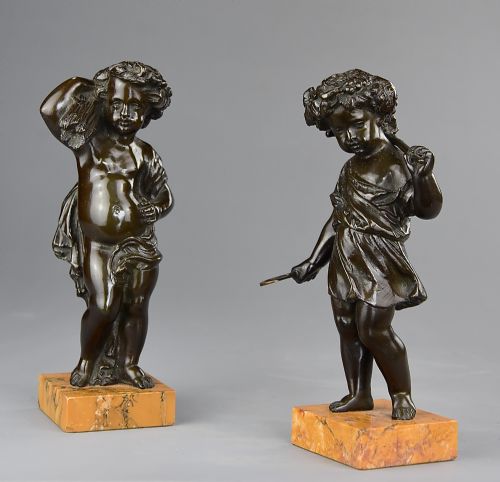
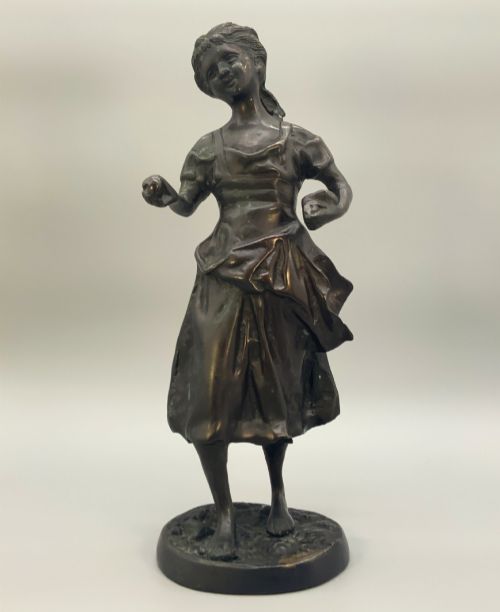
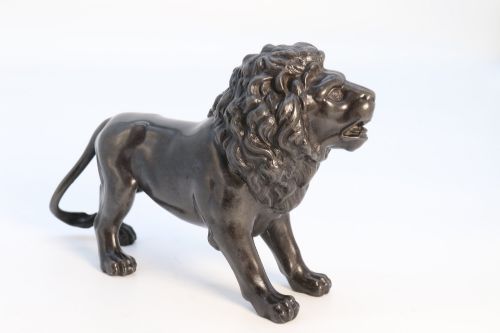
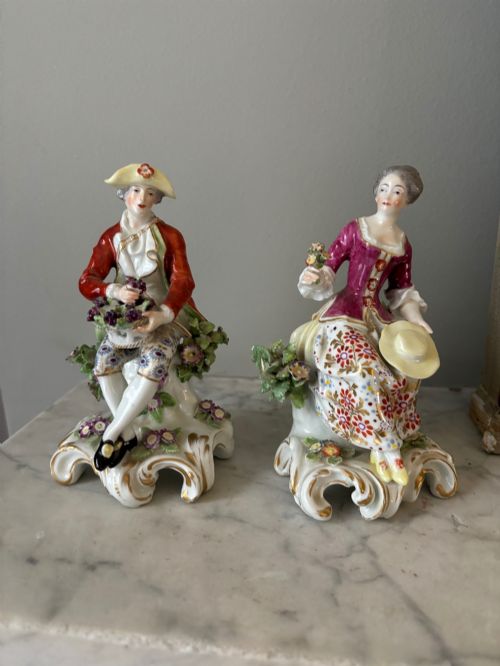
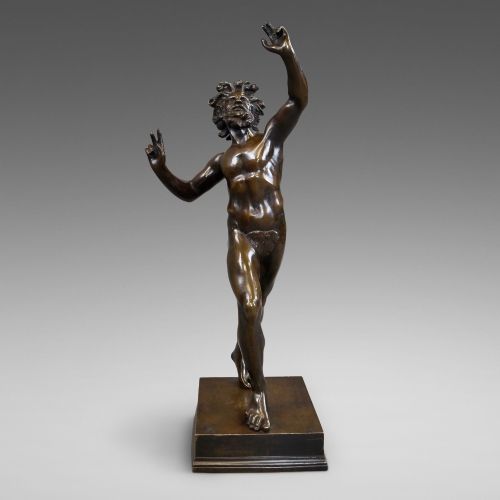
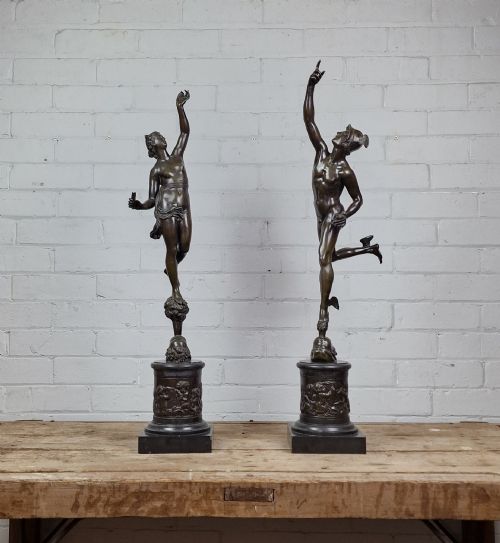
A 19th century statuette takes many forms, ranging from animalier bronzes and classical figures to glazed pottery figures. Buyers seeking these sculptures find both British earthenware and continental metalwork created across the Victorian era.
The objects on this page span mythological subjects, historical portraits, and decorative figures produced in workshops across Britain, France, and Italy. These small-scale sculptures were designed to adorn nineteenth-century mantelpieces, cabinets, and drawing rooms.
How they were made
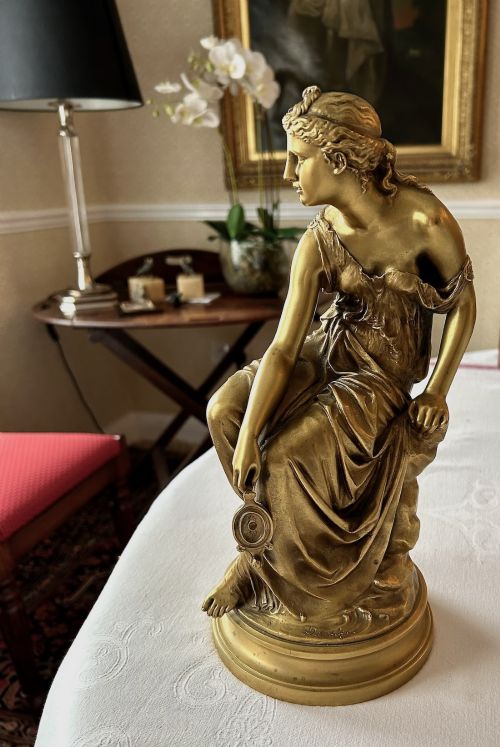
Metal sculptures rely on the lost-wax casting technique for bronze and brass, followed by hand-chasing and patination to achieve deep surface tones. Marble and serpentine provide heavy bases for these metal figures, while porcelain and earthenware pieces receive hand-painted enamel decoration and glaze.
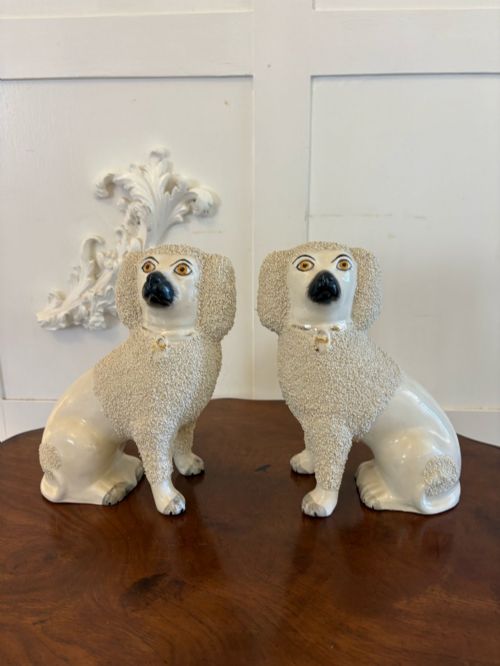
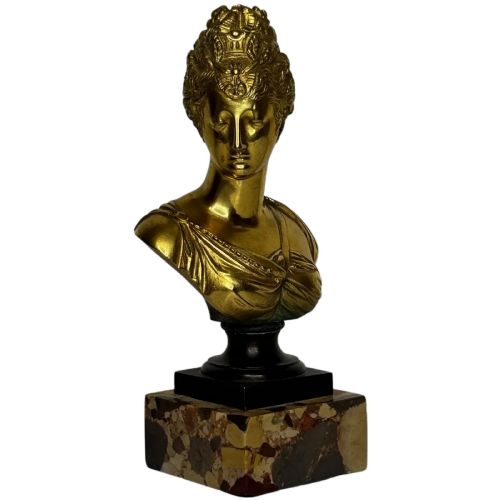
Moulders used press-moulding for Staffordshire pottery figures before applying underglaze and enamel colours by hand. Bronze figures often incorporate fire-gilding or applied gold leaf to highlight specific details of costume and hair.
19th Century Statuette Retail Price Guide 2026
Typical asking prices for 19th century statuette among the pieces listed under this phrase on Sellingantiques today, from the lower quarter to the upper quarter. They describe what is for sale here now, not the wider market.
Listings feature 19th-century statuettes cast in bronze, carved in marble, and modelled in Staffordshire earthenware and continental porcelain.
What varies in quality
In ceramic figures, the precision of the hand-painted enamels and the smoothness of the glaze determine the calibre of the piece. Firings that leave the pottery body warped or the glaze pooled diminish the refinement of the finished statuette.
Carl Kauba·Etienne-Henri Dumaige·Moreau Family·Antoine Louis Barye·Alfred Dubucand·Jules Dalou
The 19th Century Statuette Glossary
- Animalier
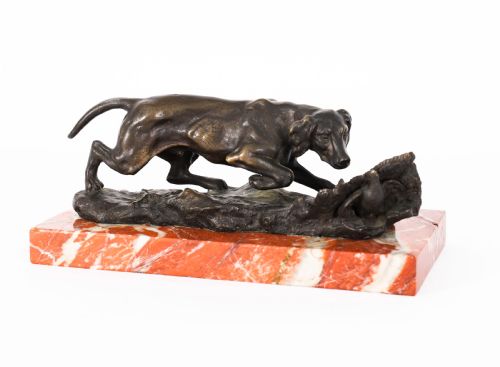
- A nineteenth-century artistic movement dedicated to the realistic portrayal of animals, particularly in bronze. Sculptors in this style studied live beasts in menageries.
- Grand Tour
- A traditional trip through Europe undertaken by upper-class scholars, yielding bronze and marble souvenirs of classical antiquities. These reduced-scale copies were purchased in Italy and France.
- Patinated Bronze
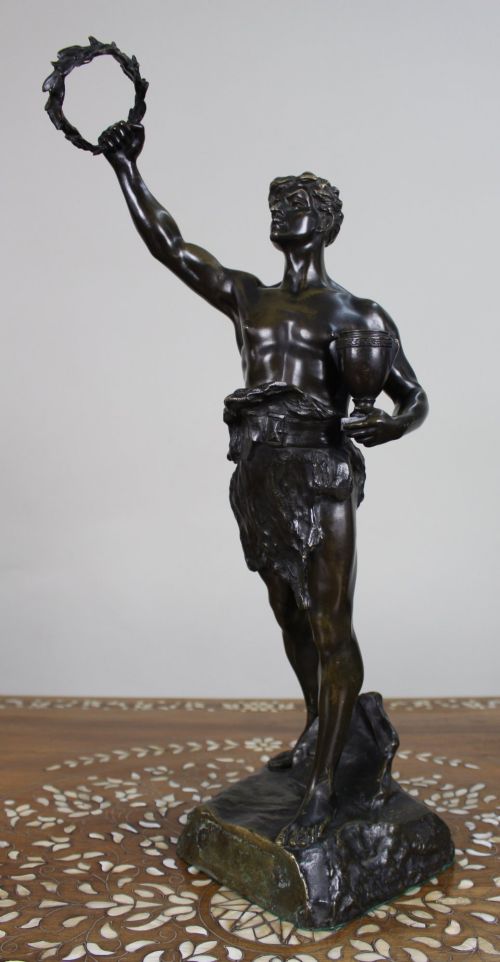
- Metal sculpture treated with chemical solutions to produce a specific surface colour and tone. This finish protects the bronze while enhancing sculptural depth.
- Flatback
- A pottery figure moulded with a flat, unpainted reverse side designed to stand directly against a wall. This technique reduced production time and material costs in Staffordshire potteries.
- Rococo Revival
- A design style drawing on asymmetrical eighteenth-century motifs of scrolls, shells, and foliage. It reappeared frequently in nineteenth-century decorative arts and metalwork.
19th Century Statuette: Frequently Asked Questions
What is an animalier statuette?
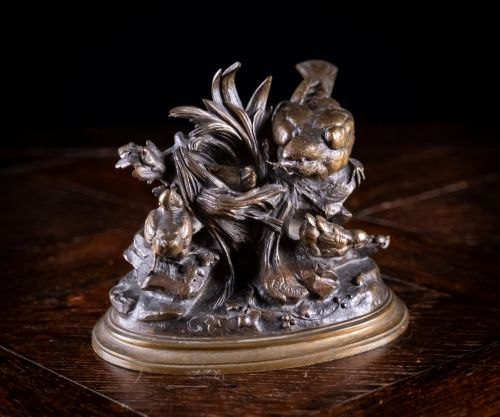
An animalier statuette depicts animals in naturalistic poses, capturing the tension and movement of wildlife or domestic beasts. These bronze sculptures gained immense popularity during the mid-nineteenth century across French workshops.
Founders focused on anatomical accuracy, often observing captive animals in European zoos to inform their modelling and subsequent bronze casts.
How do I display a marble base bronze?
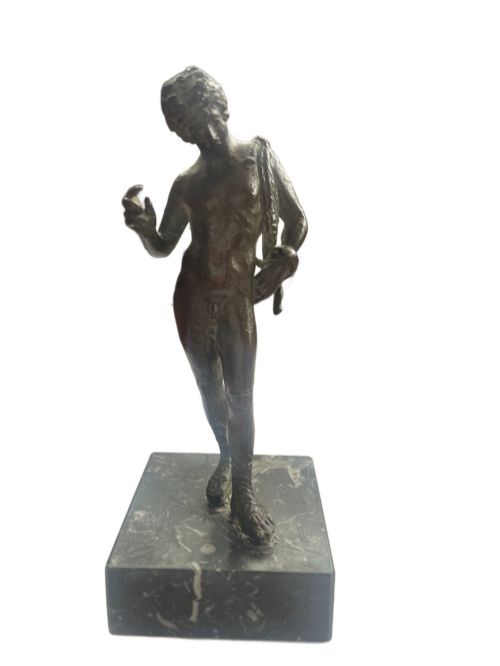
Bronzes mounted on heavy marble or fossil marble bases require stable, level surfaces away from direct heat sources. The weight of the stone provides natural balance for the metal figure above.
Avoid placing these mixed-media pieces in areas prone to dampness, which can affect both the stone base and the metal patina over time.
What distinguishes Grand Tour bronzes?
Grand Tour bronzes are small-scale souvenir sculptures modelled after famous classical antiquities seen by travellers in Italian museums and sites. They reflect the neoclassical taste of nineteenth-century collectors.
These pieces typically feature dark patination and are frequently mounted on shaped marble or serpentine plinths designed to recall ancient architecture.
Are Staffordshire figures marked?
Nineteenth-century Staffordshire pottery figures rarely bear maker stamps or signatures, relying instead on characteristic modelling styles, flat backs, and underglaze colouring. Certain makers utilised painted titles on the base to identify the subject.
Collectors attribute pieces through comparison with documented factory patterns, glaze types, and the specific palette of enamel colours applied before firing.