




French Porcelain Statuette
A French porcelain statuette brings classical mythology, allegorical figures and pastoral charm into nineteenth-century interiors through delicate ceramic form and fine hand painting.
French Porcelain Statuette
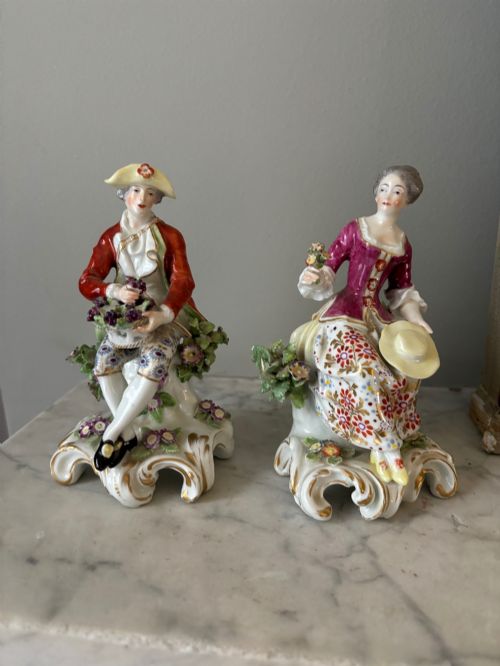
When you search for a French porcelain statuette, you encounter nineteenth-century decorative objects, porcelain figures and figural groups shaped by Parisian factories and regional makers. These pieces range from large pairs depicting mythological deities and musicians to solitary bisque figures of young children and ladies.
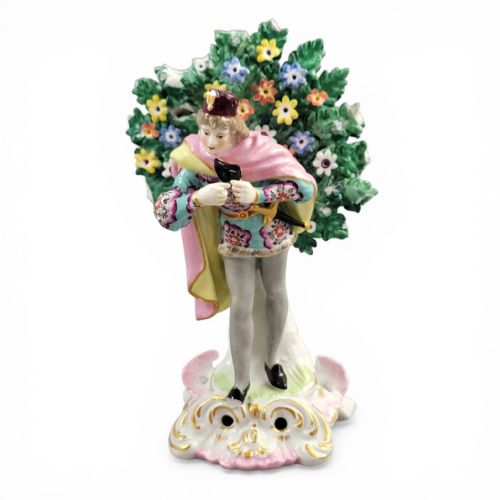
The most common examples on this page are nineteenth-century Paris porcelain and Samson workshop pieces produced in the styles of eighteenth-century English factories such as Chelsea and Derby. You frequently find rococo revival designs, allegorical subjects like the seasons, and bocage backgrounds filled with applied leaves and flowers.
How they were made
These statuettes utilise hard-paste porcelain and unglazed bisque porcelain, which gives the figures either a smooth, glossy glazed finish or a matte, marble-like texture. Artisans shaped the clay in moulds before applying detailed hand painting, enamel colours, and precise touches of gold leaf and gilding.
Many nineteenth-century Paris and Samson works incorporate intricate secondary elements such as bocage foliage and gilt metal mounts, requiring multiple firings in the kiln to set the delicate pigments and metallic accents.
French Porcelain Statuette Retail Price Guide 2026
Typical asking prices for french porcelain statuette among the pieces listed under this phrase on Sellingantiques today, from the lower quarter to the upper quarter. They describe what is for sale here now, not the wider market.
Listings feature hard-paste porcelain, bisque porcelain, enamel, and gold leaf applied across nineteenth-century French figures and groups.
What varies in quality
The complexity of the form also dictates quality, distinguishing simple single-figure bisque pieces from large, multi-figure glazed groups featuring intricate rococo scrollwork and elaborate bocage backgrounds.
Edme Samson·Vion et Baury·Letu and Mauger·La Coutille Factory·Eugene Clauss
The French Porcelain Statuette Glossary
- Bisque porcelain
- Un-glazed white porcelain with a matte, textured surface resembling marble. This finish was widely utilised for nineteenth-century figures and portrait groups.
- Hard-paste porcelain
- A durable ceramic compound fired at very high temperatures. It forms the solid body of traditional Paris porcelain statuettes.
- Bocage
- A decorative background of applied ceramic foliage, leaves and flowers. It is commonly found behind figures styled after eighteenth-century English models.
- Gilding
- The application of gold leaf or powdered gold to highlights and bases. This technique enhances the decorative elegance of rococo revival pieces.
- Enamel
- Coloured vitreous glass fused to the porcelain surface by heat. It provides the vibrant hues seen on painted garments and accessories.
French Porcelain Statuette: Frequently Asked Questions
How do I care for a porcelain statuette?
Dust your statuette gently with a soft, dry brush to prevent dirt from settling into the intricate folds of the robes or delicate bocage leaves. Avoid using chemical cleaners or submerging the piece in water, as moisture can damage old gilding and fragile enamel pigments.
Keep the figure away from direct sunlight and areas prone to sudden temperature changes. Stable indoor conditions protect the ceramic body and preserve the hand-painted details for the future.
Where were these figures made?
The majority of these statuettes originated in Parisian workshops and factories during the nineteenth century. Makers such as Samson produced pieces in the capital, often drawing inspiration from earlier eighteenth-century English and French models.
Other regional centres, including Niderviller and Chantilly, also contributed to the rich tradition of French ceramic figures. Each workshop brought distinct modelling techniques and stylistic preferences to their porcelain production.
How do I identify a Samson piece?
Samson of Paris figures often bear imitation marks from earlier factories, such as Chelsea or Derby, as the workshop specialised in reproducing historic styles during the nineteenth century. Look closely at the paste, painting style and overall modeling quality, which typically reflect nineteenth-century production methods rather than eighteenth-century originals.
The workshop's output includes distinctive subjects like allegorical groups, street sellers and musicians rendered in hard-paste porcelain with rich enamel colours and gilt accents.