

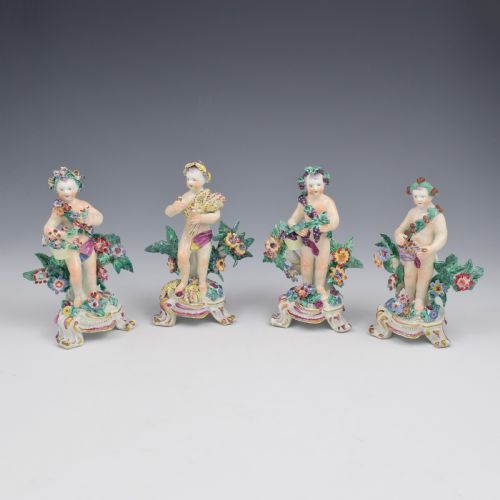


Gilded Porcelain Ornament
A gilded porcelain ornament brings tactile warmth and cabinet presence to a room, uniting fragile ceramic body with bright metallic surface.
What these pieces are
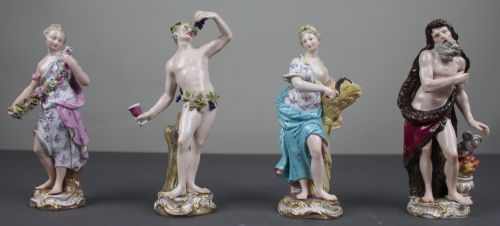
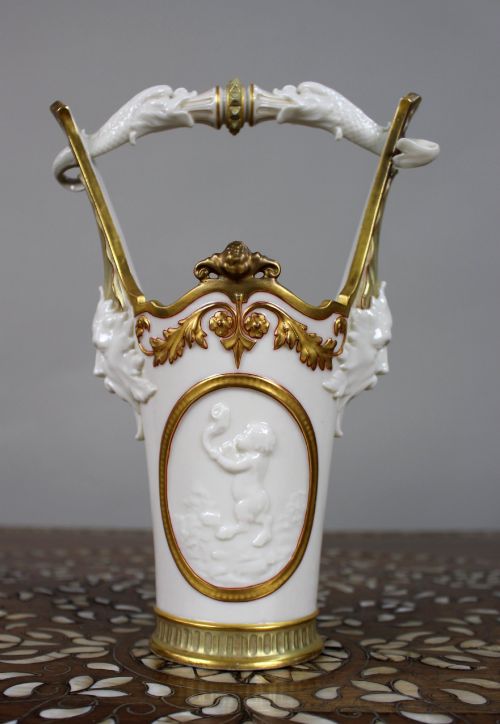
A gilded porcelain ornament represents a diverse group of figures, vases and sculptural groups shaped from hard-paste and biscuit ceramics. The examples found here span the eighteenth century, the Georgian era, the nineteenth century, and the year 1900.
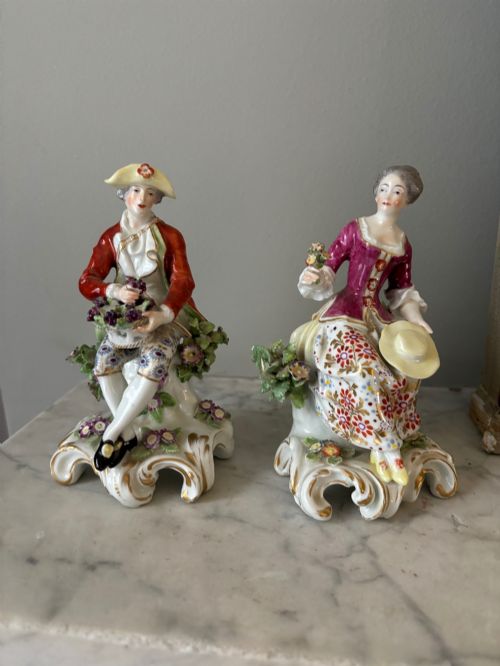
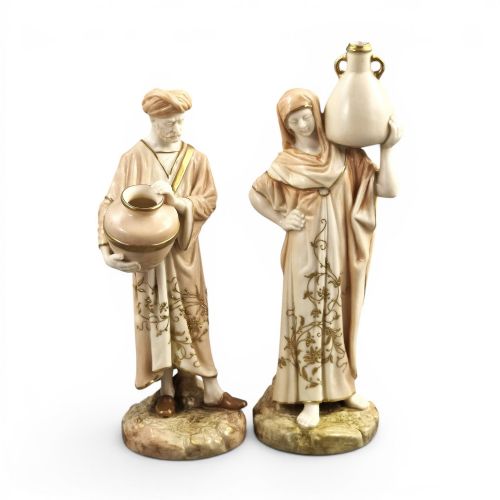
Buyers encounter decorative figures, porcelain groups, exhibition vases and domestic figures displaying varied stylistic influences. The selection draws on Victorian Neo-Classical tastes, Rococo forms and French Rococo Revival aesthetics.
The objects derive from English and continental European traditions, encompassing works by historic makers such as Royal Worcester, Meissen, Limbach and Vion et Baury Paris.
How they were made
Gold leaf, gilding and gilt enrich the ceramic surfaces, highlighting raised mouldings, drapery folds and decorative borders. Artisans applied these metallic elements by hand before final firing stages.
Retail Price Guide 2026
Typical UK retail prices for gilded porcelain ornament, calculated from the Sellingantiques database of over a million retail prices indexed since 2003. This retail price guide relies exclusively on Sellingantiques data; no external sources or auction records are used, so the figures do not describe the wider market.
Listings feature four distinct periods: the 18th Century, Georgian, 19th Century, and 1900.
What varies in quality
Quality rests in the crispness of the porcelain modelling and the delicacy with which facial expressions and hand gestures are rendered. Superior examples display precise anatomical structure and well-defined drapery.
The application of the metallic enrichment dictates visual richness, with finer pieces showing deeply burnished gold leaf rather than flat, uniform washes of gilt. The integration of enamel painting with the gilded details determines the overall harmony of the piece.
Royal Worcester·Meissen·Limbach·Vion et Baury Paris·A.B. Daniell & Son
The Gilded Porcelain Ornament Glossary
- Hard-Paste Porcelain
- A dense, vitrified ceramic composition fired at very high temperatures. It provides a durable base for detailed sculptural modelling.
- Biscuit Porcelain
- Unglazed ceramic fired to a matte, tactile finish resembling marble. It was favoured for sculptural figures and intimate portrait groups.
- Gilding
- The application of gold leaf or powdered gold to the surface of an object. This technique accentuates relief details and adds luminance.
- Rococo Revival
- A nineteenth-century design movement drawing on eighteenth-century asymmetrical scrolls and natural motifs. It manifests in curving bases and exuberant ornamentation.
- Enamel
- Opaque glass-based colour fused to the ceramic body during firing. It supplies vibrant hues for garments, natural backgrounds and facial details.
Frequently Asked Questions
How do I clean a gilded porcelain ornament?
Dust the surface gently with a soft, dry brush to prevent accumulation in recessed moulded areas. Avoid liquid cleaners and abrasive cloths, as moisture and friction can damage fragile enamel and delicate gold leaf.
Keep the piece away from direct sunlight and areas of high humidity to preserve the integrity of the ceramic body and metallic highlights.
Where were these pieces made?
The objects originate from notable European and English ceramic manufacturing centres. Continental works come from German and French factories, while English contributions reflect regional production.
Each region employed distinct clay bodies and firing techniques, resulting in varied surface textures and characteristic stylistic details across the eras.
How do I date a porcelain figure?
Examine the stylistic cues, such as Victorian Neo-Classical austerity or Rococo Revival curves, alongside the character of the ceramic body. Factory marks and painter numbers applied to the base often provide a specific chronological window.
Comparing the modelling technique with documented pieces from the same workshop helps narrow the period of manufacture.
What is the difference between biscuit and glazed porcelain?
Biscuit porcelain leaves the fired clay body unglazed, resulting in a porous, matte texture reminiscent of carved marble. Glazed porcelain receives a glassy coating before a secondary firing, producing a shiny, sealed exterior.
Sculptural figures frequently utilise biscuit porcelain to emphasise fine modelling, while vases and functional vessels employ glazes for practical reasons.