




19th Century Spill Vase
These 19th century spill vase examples held thin tapers for lighting fires, bringing painted earthenware and turned wood into period rooms.
19th Century Spill Vase
A 19th century spill vase is a small receptacle designed to hold wooden spills used to transfer flames from a hearth fire to candles or pipes. The evidence shows these pieces appear most frequently as earthenware figures and pottery groups from the Victorian era.
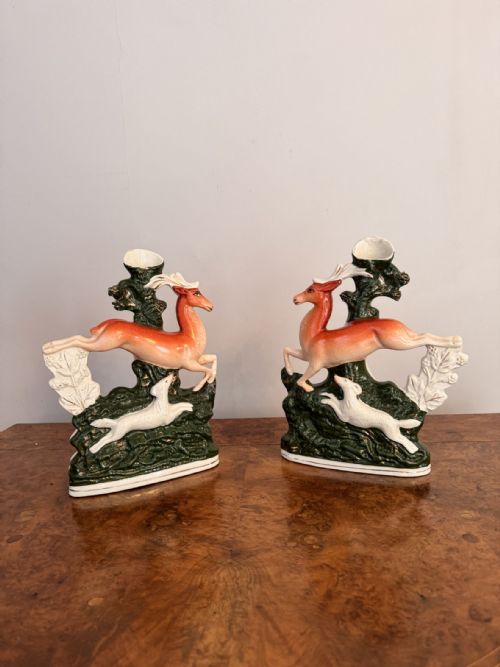
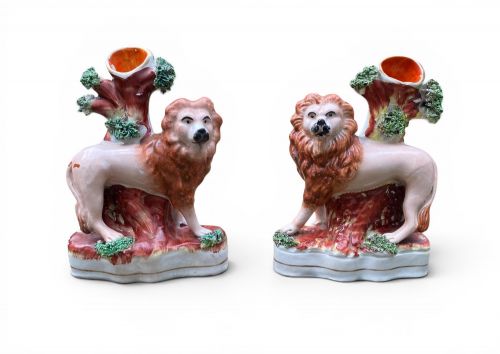
Buyers will encounter pairs depicting animals such as deer, sheep, swans, and lions, alongside turned wooden stems in yew, laburnum, and lignum vitae. Some examples take the form of castles, turrets, or architectural figure groups.
Origins span across Staffordshire potteries, Regency Worcester factories, and Japanese export workshops, reflecting the diverse domestic and international output of the period.
How they were made
Ceramic spill vases utilise earthenware, porcelain, and pearlware bodies finished with lead glaze, enamel paint, and occasional applications of gold leaf. Figures were often press-moulded in sections, hand-painted, and fired in regional kilns.
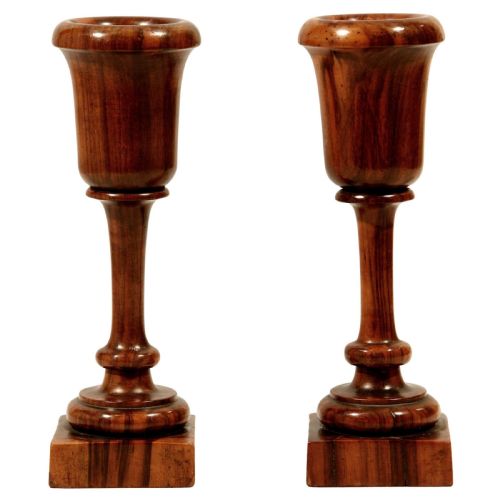
Wooden spill stems are turned from dense timbers such as boxwood substitutes, laburnum, and yew on a lathe to create urn and column profiles. Bisque porcelain examples demonstrate fine relief modelling without the reflective finish of a standard glaze.
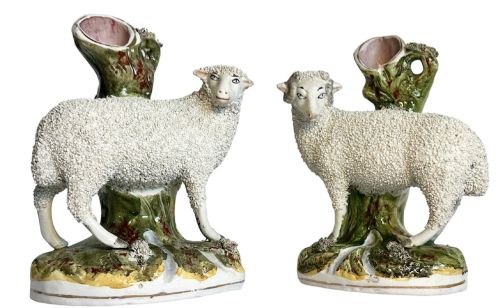
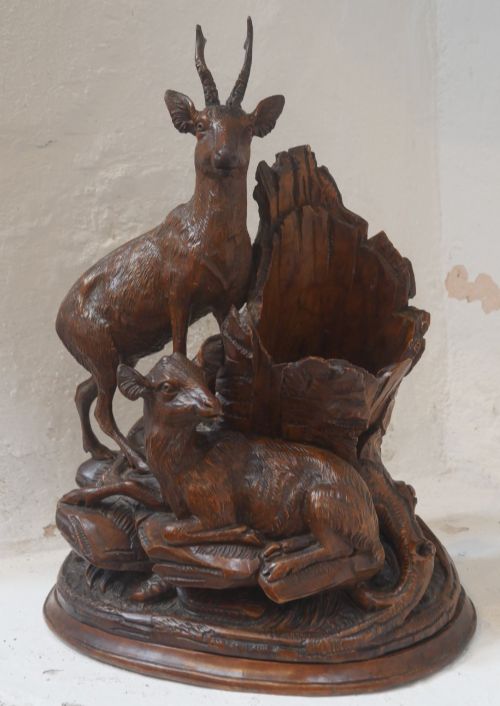
Staffordshire sheep and mountain goats keep quiet company on the mantelpiece, holding dry wooden spills ready for the hearth fire.
What varies in quality
Quality in ceramic figures rests upon the crispness of the mould transfer and the precision of the hand-painted enamels, where finer examples retain bright pigments and sharp facial details. Simpler pieces show softer contours and hurried brushwork from mass production.
Wooden examples depend upon the grain definition of the timber and the balance of the turned profile, distinguishing workshop pieces from standard utilitarian items.
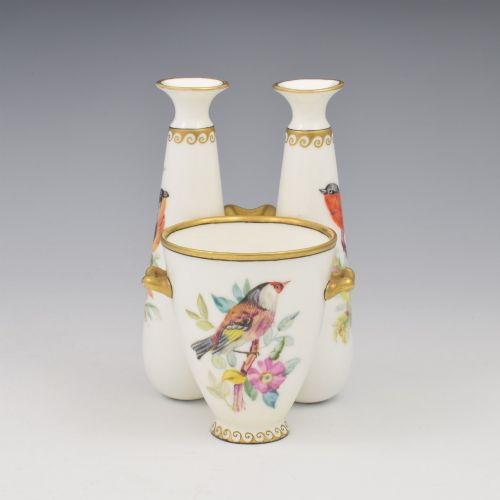
Flight Barr and Barr·Walton·Royal Worcester·Vion et Baury
The 19th Century Spill Vase Glossary
- Spill
- A thin slip of wood or rolled paper used to transfer a flame from the hearth to a candle or pipe. These vessels were placed near fireplaces to keep supplies tidy.
- Pearlware
- An earthenware developed in the late 18th century featuring a slightly bluish glaze that pooled in recesses to imitate Chinese porcelain. It forms the body of many early spill holders.
- Flatback
- A ceramic figure moulded with a plain or unpainted reverse designed to sit flush against a mantelpiece wall. This method saved materials and production time.
- Bisque
- Unglazed porcelain fired once to produce a matte, white surface resembling marble. It was utilised for delicate Victorian decorative sculptures.
- Imari
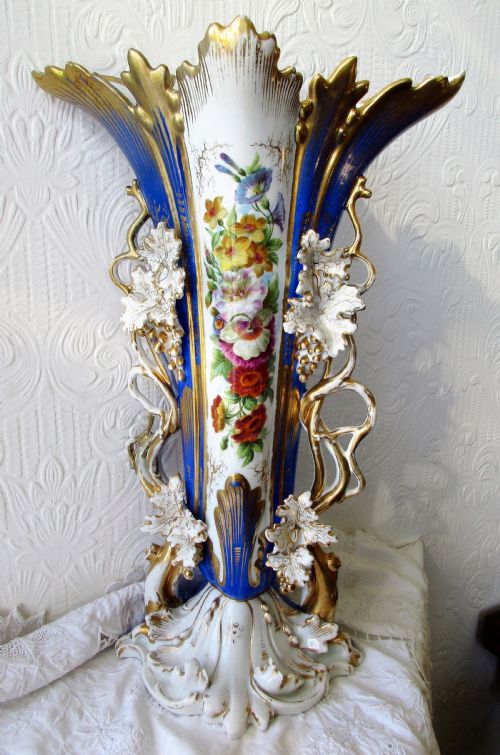
- A Japanese export style characterised by underglaze blue and iron red highlights with added gold. Large specimens appear among the ceramic selections.
19th Century Spill Vase: Frequently Asked Questions
What were 19th century spill vases used for?
These vessels sat on mantelpieces to hold slender wooden tapers known as spills. People used them to safely carry a flame from the fireplace fire to candles or oil lamps.
By keeping the tapers upright and dry, households avoided wasting matches or burning paper scraps. They functioned as both practical fireplace accessories and decorative mantel ornaments.
How do I identify Staffordshire spill vases?
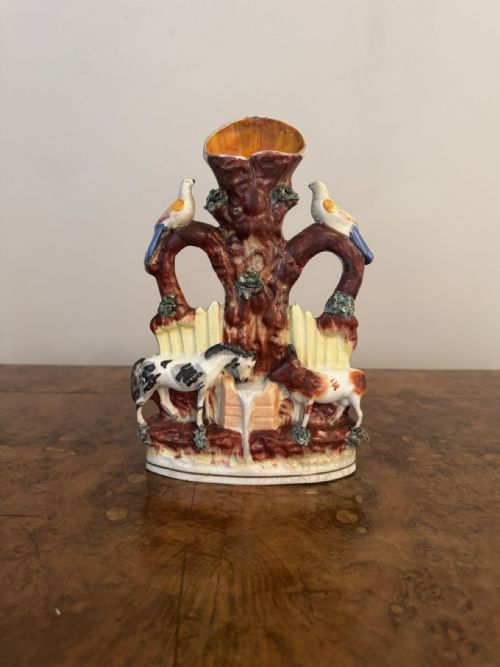
Staffordshire pieces typically feature hollow ceramic figures of animals, people, or architectural settings with a hollow tube attached for holding spills. Many display characteristic underglaze enamel painting and flat backs.
Common subjects include sheep, deer, lions, and literary or historical figure groups. The earthenware bodies often show crazing in the glaze from age.
Are wooden spill vases from the same period?
Turned wooden spill vases were produced in durable hardwoods like yew, laburnum, and lignum vitae during the Georgian and Victorian eras. Woodturners shaped them on lathes into urn or stem forms.
Unlike ceramic figures, these rely entirely on the natural grain and polished finish of the timber rather than painted decoration. They served the same hearthside function in different interiors.
How should I display spill vases today?
Spill vases look best placed on mantelpieces, side tables, or open shelving where their colours and forms can be appreciated at close range. Pairs of animal figures create a balanced display.
Keep them away from direct heat sources and bright sunlight to protect the enamel colours on ceramics and the polished finishes on wood.