




Victorian Earthenware Spill Holder
These Victorian earthenware spill holder pieces are robust Staffordshire ceramic figures designed to hold wooden spills for lighting fires.
Victorian Earthenware Spill Holder
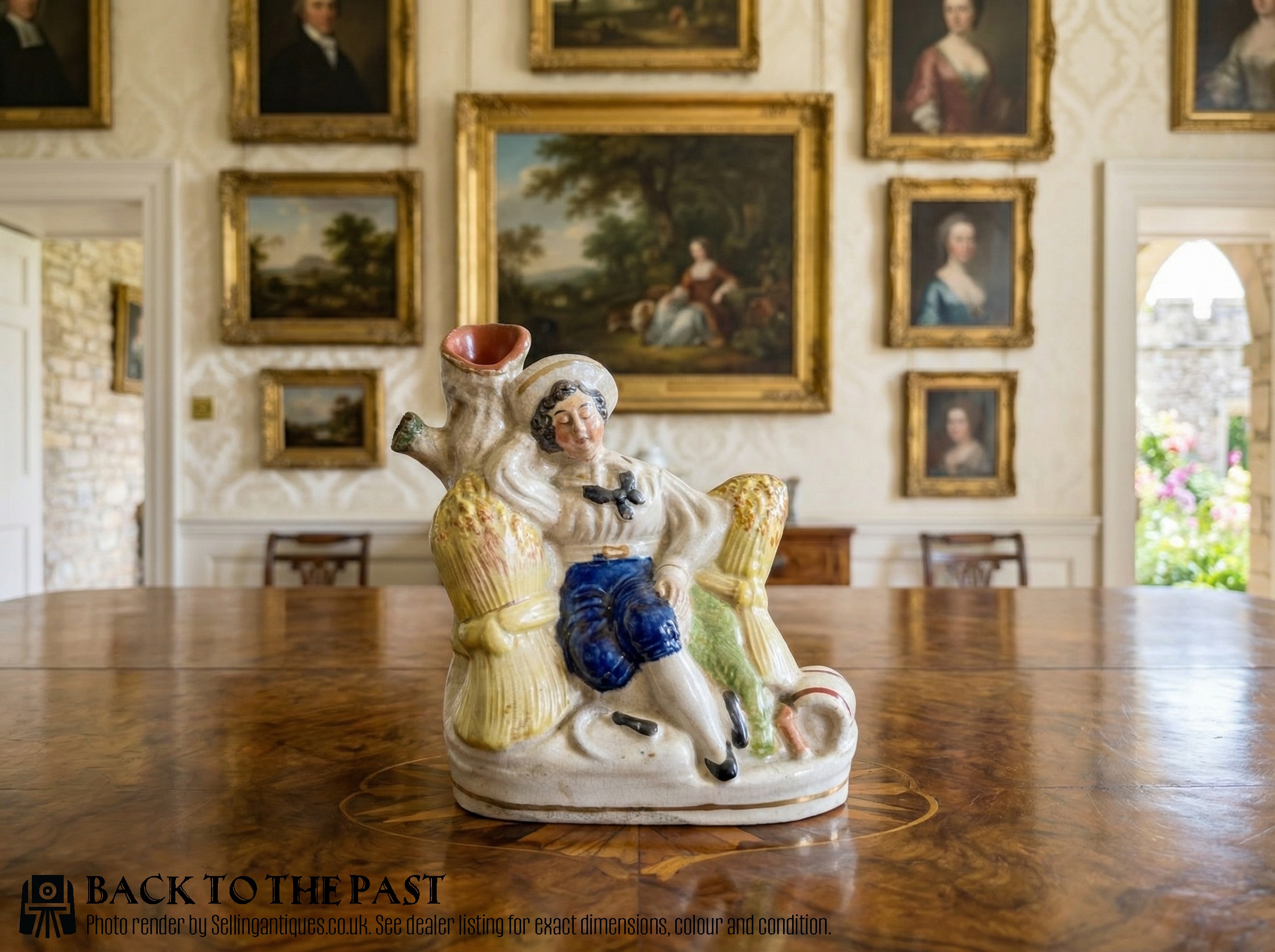
A Victorian earthenware spill holder takes the form of Staffordshire pottery figures, animals, and figural groups paired with a hollow cylindrical tube. These pieces date across the nineteenth century, including specific years such as eighteen fifty, eighteen sixty, eighteen eighty, and nineteen hundred.
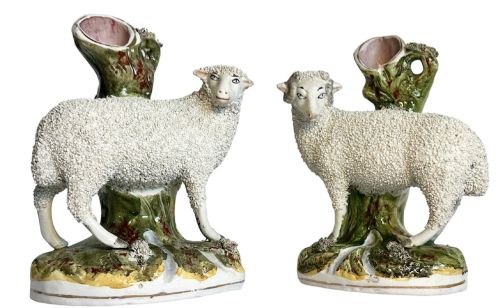
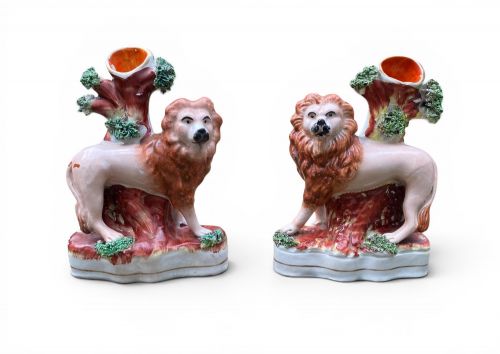
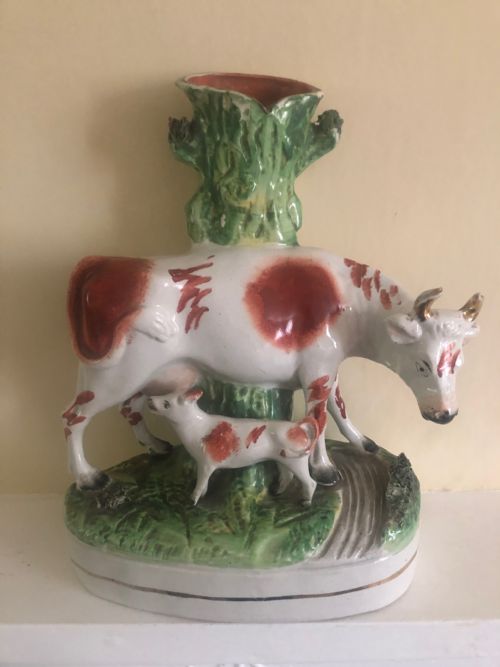
Collectors frequently encounter pairs of animal figures, such as sheep, lions, deer, dogs, cows with calves, and swans with cygnets. Human subjects also appear in the selection, ranging from Scots harvesters and figures representing babes in the wood to generic couples.
The primary forms on this page include spill vases, flatback figures, and ceramic figurines modelled in the characteristic Staffordshire manner. Most examples belong firmly to the Victorian period, combining ornamental appeal with a domestic hearth function.
How they were made
Potters shaped these objects using earthenware clay, forming them into hollow flatback bodies that sat neatly on mantelpieces against a wall. The manufacturing process relied on regional ceramic techniques developed across Staffordshire potteries during the nineteenth century.
The listings show nineteenth-century Staffordshire earthenware shaped into flatback figures, animals, and cylindrical spill vases decorated with enamel paint.
What varies in quality
Mould definition also plays a central part in overall quality, as sharper potting preserves the contours of the animals and human subjects. Stronger glazes that retain their gloss without excessive crazing separate the better-surviving Victorian pieces from heavily worn ones.
The Victorian Earthenware Spill Holder Glossary
- Earthenware
- Porous pottery fired at a lower temperature than stoneware or porcelain. It requires a glaze to become impermeable to liquids.
- Spill
- A thin wooden splinter or rolled paper taper used for transferring a flame from the hearth fire to a candle or pipe.
- Flatback
- A ceramic figure with a finished front and sides but a largely unadorned, flat rear designed to stand flush against a wall.
- Enamel paint
- Coloured vitreous paint applied over the fired glaze and fixed with a secondary, lower-temperature firing.
Victorian Earthenware Spill Holder: Frequently Asked Questions
What is a spill holder?
A spill holder is a hollow ceramic vessel designed to hold thin wooden splinters called spills. These were kept on the mantelpiece to transfer flames from the fire.
Victorian households used them daily before safety matches became common. The ceramic figures combined practical storage with decorative mantelpiece ornament.
How do I date these figures?
Dating relies on stylistic markers, potting characteristics, and known Staffordshire production periods across the nineteenth century. Figures often span decades from eighteen fifty to nineteen hundred.
Flatback construction and specific subject matter help narrow down the manufacturing era. Glaze appearance and enamel colours provide further clues to age.
Are these pieces always made in pairs?
Many animal and human subjects were produced as symmetrical pairs to adorn either end of a mantelpiece. Sheep, lions, deer, and dogs frequently appear this way.
Single figures and spill vases also exist within the tradition. Both matched pairs and individual pieces are common across the period.