


Vintage Staffordshire Flatback Ornament
These vintage staffordshire flatback ornament pieces bring nineteenth-century folk art into the room, cast to be seen from the front on a mantelpiece.
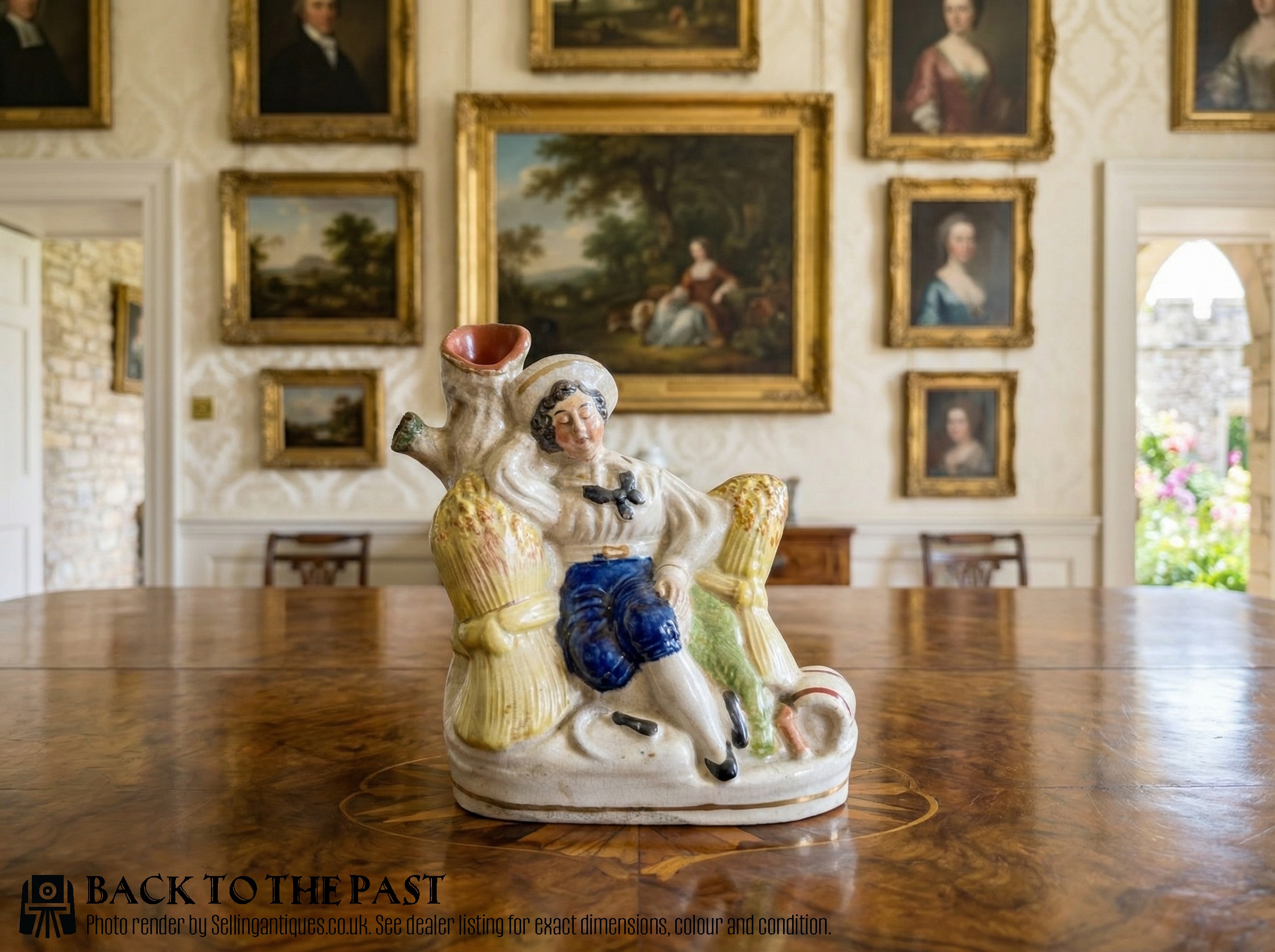
Vintage Staffordshire Flatback Ornament
When you search for a vintage staffordshire flatback ornament, you find nineteenth-century earthenware figures and architectural models designed specifically for display on mantels and shelves. Because these pottery pieces were modelled to be viewed solely from the front, the backs remain unglazed, flat, and largely unpainted. The selection here spans Victorian domestic subjects, historical portraits, and literary characters, reflecting the rich visual culture of the period.
The subjects range from equestrian figures such as Joan of Arc and highwayman Tom King to domestic pairs like gardeners, children with setters, and miniature poodles. You will also encounter architectural flatbacks depicting castles and cottages, alongside portrait figures including the Queen of England and religious revivalists Moody and Sankey. These decorative ornaments capture the era's appetite for storytelling and hero worship, rendered in accessible ceramic form.
How they were made
Potters built these figures using earthenware, shaping the clay in press moulds before applying a smooth lead glaze to seal the surface. This ceramic body provided an inexpensive and reliable base for mass production in the nineteenth century.
Highwayman Tom King shares space on the mantel with Queen Victoria and Scottish lairds, proving that nineteenth-century shelf display possessed zero snobbery.
What varies in quality
The crispness of the mould impression separates finer pieces from softer, worn examples where details of the face and clothing have blurred. Sharp modelling ensures that the subject's expression and costume remain distinct beneath the glaze.
The precision of the enamel paintwork and gilding also dictates the standard of the piece. Skilful application of colour and gold leaf brings life to the figures, whereas hasty brushwork leaves the finish flat.
The Vintage Staffordshire Flatback Ornament Glossary
- Flatback
- A ceramic figure modelled with a detailed front and a flat, unglazed reverse intended to sit flush against a wall or mantelpiece. This construction saved materials and kept the pieces light.
- Earthenware
- A porous pottery body fired at lower temperatures, commonly used for nineteenth-century Staffordshire figures. It requires a glaze to become impermeable to liquids.
- Lead glaze
- A glossy coating containing lead that provides a smooth, protective finish over the ceramic body. It enhances the brightness of the underlying enamel colours.
- Enamel paint
- Vitreous coloured pigments applied over the fired glaze and subjected to a second, lower-temperature firing. This technique allowed makers to add vibrant hues to the finished pottery.
- Gilt
- A thin layer of gold leaf applied to accentuate specific details on the costume or base. It adds a decorative flourish characteristic of Victorian ornament.
Vintage Staffordshire Flatback Ornament: Frequently Asked Questions
Where were flatback ornaments displayed?
Victorian households placed these figures on mantelpieces, chiffoniers, and high shelves in the parlour. Because the backs were flat and unglazed, the pieces sat securely against the wall.
This arrangement allowed families to showcase their literary tastes, political loyalties, and moral values to visiting guests.
How do I date a Staffordshire figure?
Dating relies on stylistic clues, the type of ceramic body, and the character of the glaze and enamel colours. Most pieces date from the Victorian era, spanning the nineteenth century.
Examining the base and the crispness of the moulding helps place the piece within this broader Victorian timeframe.
Why are the backs unglazed?
Potters left the backs flat and unglazed to save on costly materials and production time. Since these ornaments stood against a wall, decorating the reverse served no practical purpose.
This construction method is a defining characteristic of Staffordshire flatback figures from the period.
What subjects are most common?
Common subjects include literary characters, historical figures, royalty, and domestic animals like poodles and dogs with setters. Architectural models of castles and cottages also appear frequently.
These themes reflect the popular culture and interests of nineteenth-century British society.