

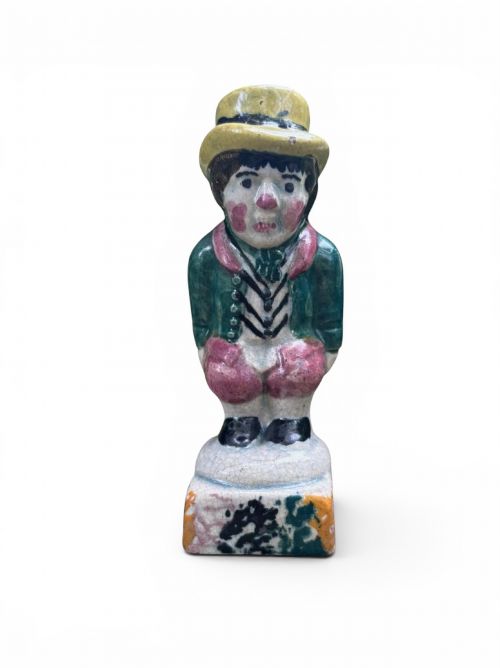


Polychrome Staffordshire Figure
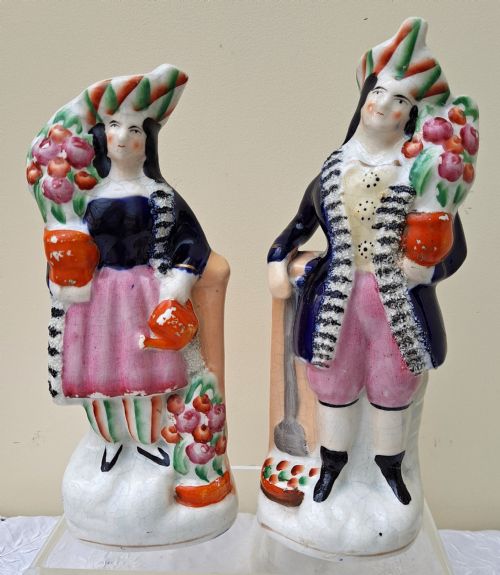
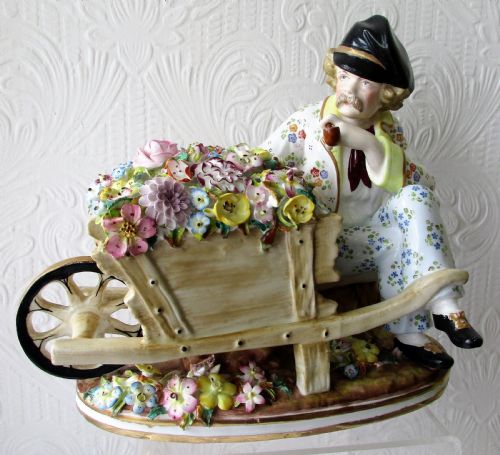
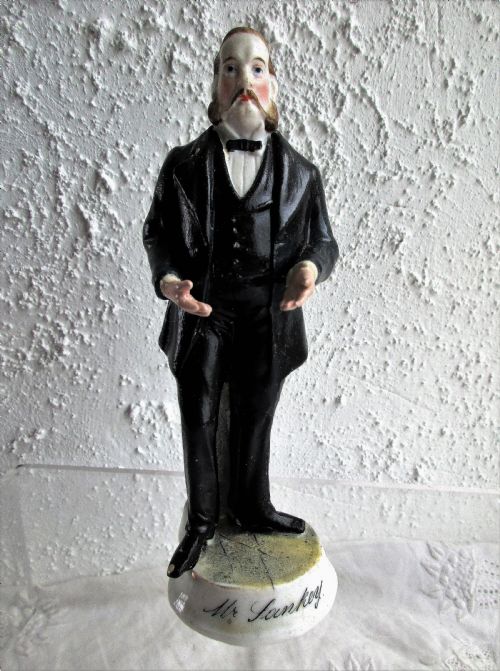
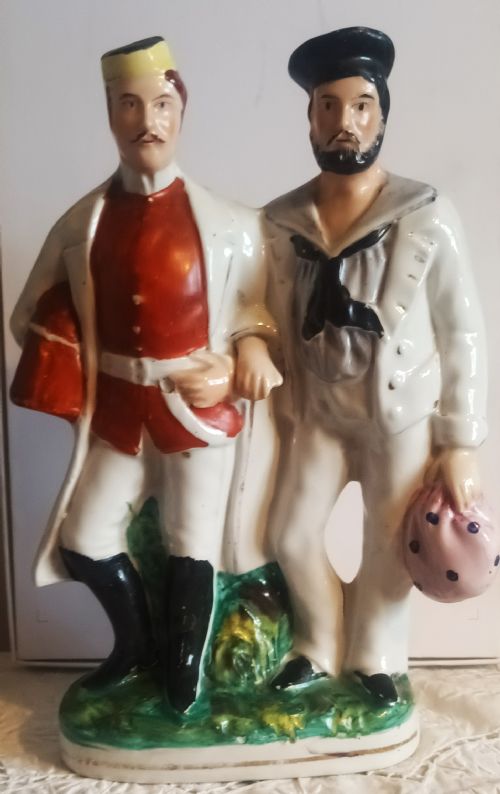
A polychrome staffordshire figure brings cabinet portraiture into three dimensions, capturing political heroes, literary groups and rustic figures in bright earthenware colours.
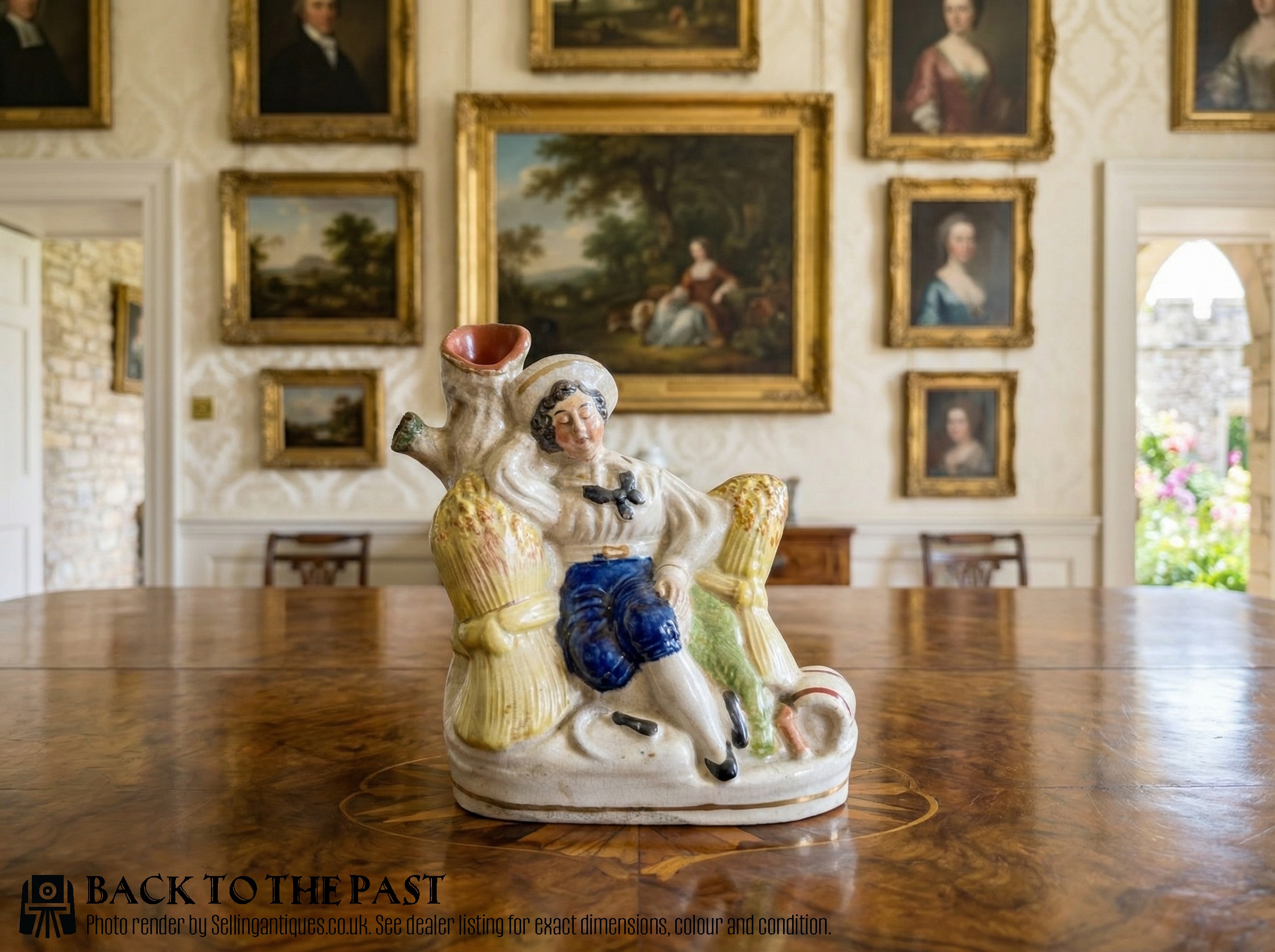
Polychrome Staffordshire Figure
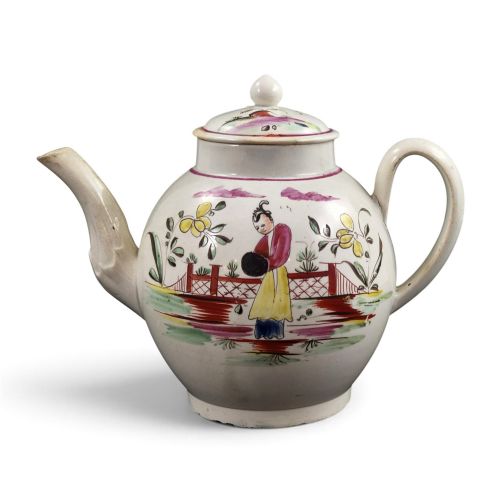
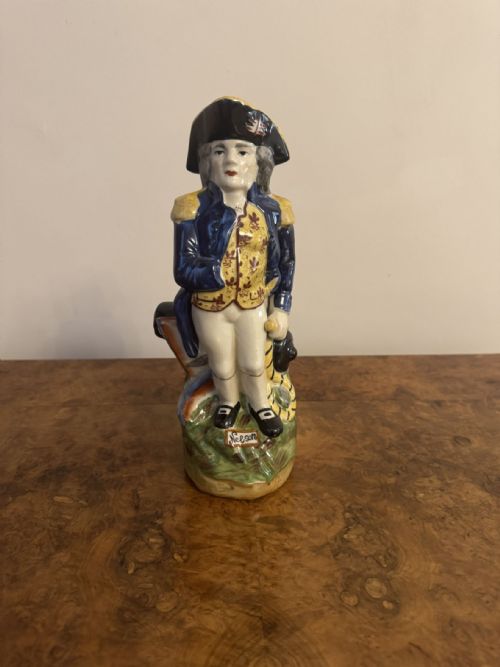
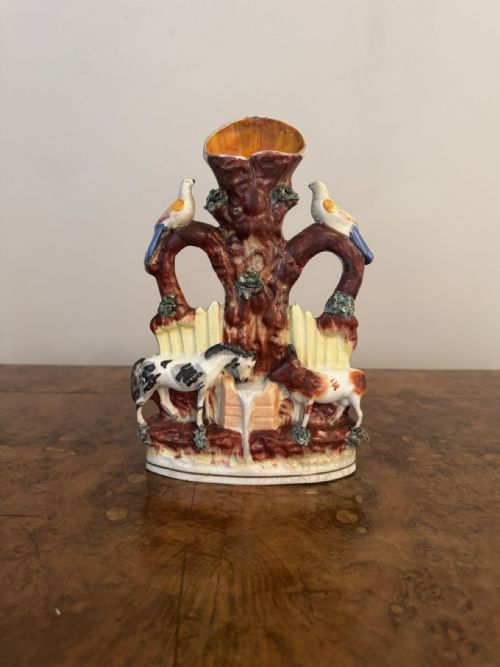
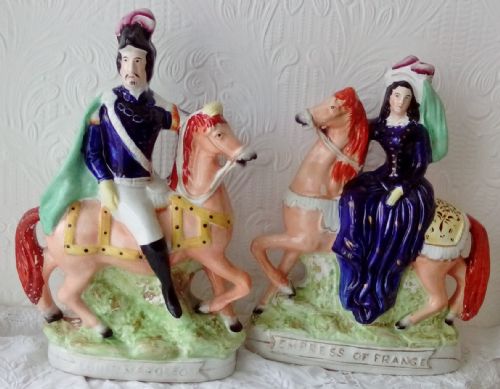
A polychrome staffordshire figure portrays historical personalities, royal portraits, literary scenes and rustic characters intended for mantelpiece display. The selection on this page draws heavily from Victorian flatbacks, spill vases and portrait groups produced across the nineteenth century.
Makers shaped these ornaments to commemorate contemporary events like the Crimean War or public figures such as Lord Nelson, Napoleon III and William Shakespeare. Collectors encounter both single models and symmetrical pairs designed to flank a fireplace or mirror.
Materials and construction
Potters formed these pieces using earthenware, pearlware or porcelain, applying lead glazes and enamel colours to hand-modelled or slip-cast bodies. Many incorporate a flat back painted with minimal detail because artisans intended them to stand against a wall.
The decorative palette relies on underglaze oxides and bright overglaze enamels fired multiple times to fix the pigments. Workshops utilised simple press moulds for repetition while retaining individual touches in the brushwork.
Smugglers, Scottish Highlanders on horseback and tobacco jars share mantel space with solemn statesmen.
Distinctions in craftsmanship
Quality rests on the crispness of the moulding and the control of the enamel brushwork. Finer examples display detailed facial expressions and distinct gilding, whereas lesser pieces show blurred transfers and runny pigments.
Scale also separates standard ornaments from exceptional models, with larger figures and pairs demanding greater technical skill during the drying and firing stages to prevent warping.
John Bevington·Ralph Wood·Mexborough·Minton
The Polychrome Staffordshire Figure Glossary
- Flatback
- A figure modelled with a finished front and a plain, unpainted or minimally glazed rear designed to sit flush against a wall.
- Pearlware
- A refined earthenware body developed in the late eighteenth century, possessing a subtle bluish tinge in the glaze.
- Spill vase
- A hollow hollow-backed figurine incorporating a cylindrical holder intended to contain wooden tapers for lighting pipes or candles.
- Toby jug
- A ceramic jug modelled as a robust seated figure, usually depicted holding a mug and a pipe.
- Prattware
- Early earthenware decorated with characteristic muted underglaze colours, typically blue, ochre, brown and green.
Polychrome Staffordshire Figure: Frequently Asked Questions
Where were these figures placed?
Makers designed these ornaments to stand on mantelpieces, window sills and side tables within domestic parlours. Their colourful glazes brightened dark interior spaces heated by coal fires.
Pairs often flanked central ornaments or clocks, creating a balanced display that visitors noticed immediately upon entering the room.
How do flatbacks differ from standard figures?
Flatback figures feature unglazed or simply painted rears because potters intended them to be viewed strictly from the front against a wall. This construction saved materials and prevented the pieces from tipping forward.
Fully modelled figures, by contrast, receive careful detail on all sides since they stood on central tables where people walked entirely around them.
What subjects are most common?
Portrait figures depict royalty, military heroes, political leaders and theatrical performers drawn from contemporary newspapers and events. Literary groups and pastoral characters like gardeners and hunters also appear frequently.
These subjects allowed ordinary households to display an interest in current affairs, literature and moral improvement through accessible ceramic art.
How should I clean my figure?
Dust the surface gently with a soft dry brush to remove particles without disturbing old enamel paints. Avoid running water or chemical detergents, which can penetrate hairline cracks and damage fragile glazes.
Keep the piece away from direct sunlight to prevent the overglaze enamel colours from fading over extended periods.